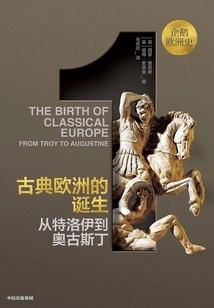
Penguin History of Europe·the Birth of Classical Europe: from Troy to Augustine
by (uk) Simon Price Peter Thornman
About This Novel
Today, there is a statue of Europa in front of the European Parliament. It was donated by the residents of Crete in the early 21st century and was intended to highlight the island's status in European history. After all, Europe was named after Europa, who was reportedly brought to Crete by Zeus, and the Minoan civilization was named after her son. However, it was only in the 19th century that the myth of Europa became a symbol of Europe; in the eyes of the Greek ancestors, Minos was not the founder of primitive civilization. Our understanding of the classical world and the origins of Western civilization stems from both the past and the present. What drives the classical world forward is not our understanding of their history, but the ancestors' own understanding of history. The ancient Greeks and Romans who carved out the cornerstone of what we now call Western culture also had their myths, their past, their own memories and histories. To understand their world, we must first understand their memories. From the mid-2nd millennium BC to the early fifth century AD, generations of ancestors from the Bronze Age to the Roman Empire stood in the present, looked back at the past, reconstructed the past, and constantly defined themselves and the world they lived in. From clay tablets, relics, pottery, and writings, we explore history spanning two millennia and the traces left by memory. Like us today, people in ancient times recounted, beautified, and used memories of the past. Classical Europe was born from such layers of memories.
Official Sources
What Readers Think
Rating
Community(0)
Official(1)Scraped 2mo ago
feels good
I just started reading it in the past two days and I feel good about it, but I have to read it slowly.
Rating
Community(0)
Official(1)Scraped 2mo ago
feels good
I just started reading it in the past two days and I feel good about it, but I have to read it slowly.