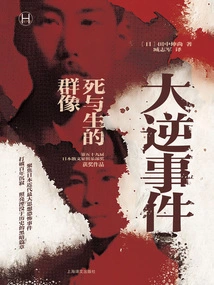
The Great Rebellion: Group Portraits of Death and Life (history School)
About This Novel
The winning work of Japan's 59th Essayists Club Award focuses on Japan's biggest ideological terror event in modern times, breaks a century of silence, and illuminates a dark chapter buried in history. Starting with the bomb-making by the anarchist Taiyoshi Miyashita, twenty-six people including Kotoku Shusui were accused of attempting to assassinate the emperor and were handed over to the court for "gross treason." The Special Criminal Department of the Grand Inquisition did not call any witnesses in a closed trial, and it only took about three weeks to make a verdict on January 18, 1911. Twenty-four people were sentenced to death for "treason" and two others were sentenced to fixed-term imprisonment. Only about a week after the verdict, 12 people including Qiu Shui, who was sentenced to death, were hanged respectively, and the remaining 12 people were commuted to life imprisonment. Known as the "Great Rebellion" in history. Post-war research shows that this was a state crime that stifled freedom of the mind by trying individuals' ideas - liberty, equality, fraternity - as crimes on the basis of frame-up charges. The author of this book, Tanaka Nobuno, began his journey to visit the survivors and surrounding areas of the "Great Rebellion Incident" around 1979. Those who were forcibly joined together opposed war and advocated a lifestyle that did not exploit others. As religious figures, they cared about those who suffered discrimination and thought about how to achieve an equal and free society and how to deal with the relationship between the country, the emperor and individuals. These are issues that every living individual cannot avoid. The problems they discovered under the influence of ideas such as socialism and anarchism were not only topics in literature and thought at that time, but also topics in the media at that time, and they were also issues today.
Official Sources
What Readers Think
Rating
Community(0)
Rating
Community(0)
