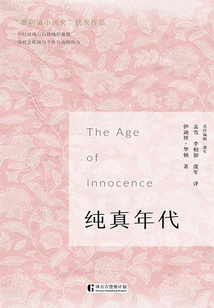
Age of Innocence
About This Novel
"The Age of Innocence" is a 1920 work by Edith Wharton. In 1921, the book won the Pulitzer Prize for Literature, making Mrs. Wharton the first female writer to win the award. In this work, May and Newland, a pair of golden girls from the upper class, are about to get married. At this time, the bride's cousin Ellen escaped from a bad marriage and returned to New York from Europe. She was plagued by rumors. Her arrival shook Newland's mind. At first, Newland was worried that Ellen's stain would affect the family about to get married. Soon, he began to be attracted to this woman who ignored the obsolete rules of New York's upper class society, and he had doubts about whether he wanted to marry May, the perfect product of old New York society. This is a dilemma between red roses and white roses, as well as a struggle between social stereotypes and individual freedom. Compared with "Fun House", "The Age of Innocence" is a novel with a softer and more elegant tone. In her biography, Wharton wrote that the book "The Age of Innocence" allowed her to "temporarily escape from the present, return to her childhood, and return to an America that has long disappeared... In 1914, the world I grew up in and heard was destroyed." Many scholars and readers also agree that "The Age of Innocence" is fundamentally a story that attempts to reconcile the contradictions between the old and the new world.
What Readers Think
Rating
Community(0)
Rating
Community(0)