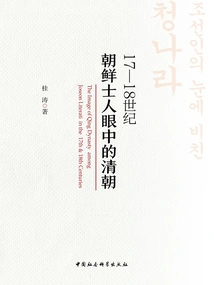
The Qing Dynasty in the Eyes of Korean Scholars in the 17th and 18th Centuries
by Guitao
About This Novel
The transition from Ming to Qing in the mid-17th century was a major political change in China, but it also had a profound impact on East Asia. How the surrounding countries understood the Qing Dynasty and how they maintained their long-term rule is the focus of this book. The Joseon Kingdom had deep feelings for the Ming Dynasty and was proud of its Confucianism, so it naturally despised the Qing Dynasty. In the early days when the Qing Dynasty took over the Central Plains, North Korea maintained its inherent concept with the historical understanding that "Hu had no luck for a hundred years." With the deepening of exchanges, North Korea's understanding of the Qing Dynasty gradually enriched. However, for a long period of time, North Korea stuck to its old views. There are certainly emotional factors of Zhongming behind this, but North Korea's Zhu Xixue's worldview and its "quiet" way of thinking are the root cause of North Korea's inability to identify with the Qing Dynasty and the legitimacy of the Qing Dynasty. This book focuses on examining the way Korean scholars observed the Qing Dynasty and the ideological basis behind it, and strives to communicate the interconnectedness of thoughts, emotions and politics.
Official Sources
What Readers Think
Rating
Community(0)
Rating
Community(0)