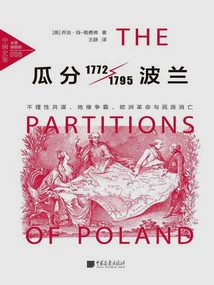
The Partition of Poland: Irrational Collusion, Geographical Hegemony, European Revolution and National Destruction
About This Novel
When George Shaw-Lefebvre's masterpiece "The Partition of Poland: Irrational Collusion, Geographical Hegemony, European Revolution and National Destruction" was published, it coincided with the outbreak of the First World War. He believed that World War I was the inevitable result of the partition of Poland. Before Poland was partitioned, it was a major power in Europe, serving as a buffer state for the three great powers of Russia, Prussia and Austria. At this time, the war in Europe was at best a war for hegemony. However, after Poland was partitioned, the three major powers of Russia, Prussia and Austria were bordered and the buffer was lost. From then on, the war for hegemony became an accessory to the war of unification, and the war of unification became the essential form of European war. Therefore, war on a larger scale - intercontinental or world war - is inevitable. The first person to dream of unifying Europe was Napoleon, but his dream was broken in Moscow; the second was Nicholas II, but his dream was broken in Crimea; the third was Kaiser Wilhelm II, but his dream was broken in World War I. Later, Hitler also wanted to unify Europe, but his dream was shattered by World War II. Historical experience shows that it is not feasible to unify Europe by force, but European unification is in the interests of all countries and nations. In the end, peaceful unification became the mainstream, and the "European Union" entered the stage of history. All this originated from the partition of Poland.
Official Sources
What Readers Think
Rating
Community(0)
Rating
Community(0)