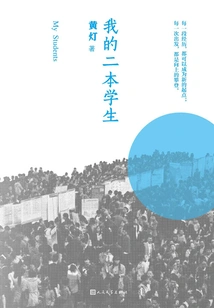
My Second Student
by Yellow Light
About This Novel
"Two Books I Photographed by Students" is Huang Deng's summary and reflection on his thirteen years of teaching practice as a college teacher. It is also a sincere feedback on the marketization practice of Chinese colleges and universities. In the long-term contact and observation of his teaching subjects, that is, ordinary second-tier college students, the author presents to readers their youth, hesitation, confusion, innocence and struggle, and follows up on their future, showing the hidden life situation of this group in a relatively comprehensive way. At the same time, this book also reflects the growth conditions and destiny of the most ordinary young people in China. This is an original non-fiction work with detailed information and in-depth perspectives.
Official Sources
What Readers Think
Rating
Community(0)
Official(13)Scraped 2mo ago
Behind the scenes that people cannot see, there are many second-level students who are working hard to transform into what they want to be. Even in this era of economic development, there are still poorer families.
Students from second-tier universities are not necessarily stupider than students from first-tier universities. In that era, perhaps it was their background that constrained them, and they were not as equipped with more learning resources as students in big cities.
Being ordinary is not necessarily bad. After all, this society has always needed ordinary workers. Even if you cannot become what others call an elite, you can still do your best to contribute to society.
Second-level students, please work hard too
I also got into a second-level college, but I didn't go. I hope I can do better next time.
Highly recommended
It directly expresses the voices of our students and has very important practical significance.
Personally, I feel that it is a bit redundant. Although the examples in it vividly reflect the direction of most second-book students, and they can more or less find their own shadows, they have a heavy sense of fate and make the reading rather depressing.
After reading the entire book, there are always some examples that remind me of my classmates. I follow what a teacher said, if you don't know what to do, just keep reading.
On the importance of original family and historical background
In fact, when I looked at it, I felt that there was not much difference in the qualifications of the students in the second school. They did not have particularly outstanding IQs, were not particularly self-disciplined in their study habits, and had no special plans for the future. Especially with the expansion of university enrollment, the foundations of students in the second school in 2006 and those in 2016 were not at the same level. Therefore, the original family plays a decisive role in the education of the children and the influence of the times on the children. Those from good families don't worry about their livelihood, while those from poor families are poor children, and there is no way out if they fight against the odds. However, personal efforts are just footnotes in the flow of the times.
I was attracted by the title of the book, but was moved by the simple and profound narrative!
I have a deeper understanding of the living conditions encountered by people of the same educational age as myself, which has guiding significance for current life and children's education.
The content is in the form of a running account and has little reading value.
The whole article is about the trivial matters of my students' life, and the content is recorded in a journal style. I feel that it is just filling the word count and has little value. I regretted buying this book because it was a waste of 27 yuan. I do not recommend other readers to buy it.
Rating
Community(0)
Official(13)Scraped 2mo ago
Behind the scenes that people cannot see, there are many second-level students who are working hard to transform into what they want to be. Even in this era of economic development, there are still poorer families.
Students from second-tier universities are not necessarily stupider than students from first-tier universities. In that era, perhaps it was their background that constrained them, and they were not as equipped with more learning resources as students in big cities.
Being ordinary is not necessarily bad. After all, this society has always needed ordinary workers. Even if you cannot become what others call an elite, you can still do your best to contribute to society.
Second-level students, please work hard too
I also got into a second-level college, but I didn't go. I hope I can do better next time.
Highly recommended
It directly expresses the voices of our students and has very important practical significance.
Personally, I feel that it is a bit redundant. Although the examples in it vividly reflect the direction of most second-book students, and they can more or less find their own shadows, they have a heavy sense of fate and make the reading rather depressing.
After reading the entire book, there are always some examples that remind me of my classmates. I follow what a teacher said, if you don't know what to do, just keep reading.
On the importance of original family and historical background
In fact, when I looked at it, I felt that there was not much difference in the qualifications of the students in the second school. They did not have particularly outstanding IQs, were not particularly self-disciplined in their study habits, and had no special plans for the future. Especially with the expansion of university enrollment, the foundations of students in the second school in 2006 and those in 2016 were not at the same level. Therefore, the original family plays a decisive role in the education of the children and the influence of the times on the children. Those from good families don't worry about their livelihood, while those from poor families are poor children, and there is no way out if they fight against the odds. However, personal efforts are just footnotes in the flow of the times.
I was attracted by the title of the book, but was moved by the simple and profound narrative!
I have a deeper understanding of the living conditions encountered by people of the same educational age as myself, which has guiding significance for current life and children's education.
The content is in the form of a running account and has little reading value.
The whole article is about the trivial matters of my students' life, and the content is recorded in a journal style. I feel that it is just filling the word count and has little value. I regretted buying this book because it was a waste of 27 yuan. I do not recommend other readers to buy it.