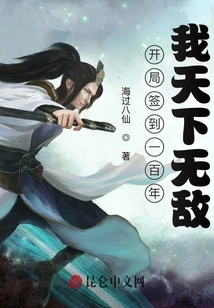
If I Sign in for a Hundred Years at the Beginning, I Will Be Invincible
About This Novel
Traveling to a world of immortal cultivation, Qin Bai became a low-qualified handyman disciple of the Qingyun Sect. In front of the Sutra Pavilion, he suddenly got a sign-in system, and he could sign in anytime and anywhere! Bite! Successfully signed in to the Sutra Pavilion and obtained the [Nine Transformations to Immortality Secret]. Bite! Successfully signed in to the ancestral hall and obtained [Tongtian Sword Body]. Bite! Successfully signed in to the forbidden area and obtained [Xuanyuan Sword]. ... Qin Bai originally thought that he could stay in the sect until he became an immortal. However, a hundred years later, the Wu Dynasty in the north raised troops and went south to destroy the sect. At this moment, Qin Bai couldn't sit still and slashed out with one sword, killing thousands of monks!
Official Sources
What Readers Think
Rating
Community(0)
Official(6)Scraped 2mo ago
Um, poisonous
If your own qualifications are so poor, it is really poisonous to improve other people's qualifications instead of improving your own qualifications. I said before that as your strength improves, the better things you sign in will be better, and if your qualifications are improved, wouldn't it mean that your cultivation will be faster? . . .
To be honest, it's a bit toxic, and I can't stand Chapter 32 anymore
"If you sign in for a hundred years at the beginning, I will be invincible"
This novel about cultivating immortality has caught the attention of many readers from the beginning, especially the setting of the "sign-in system", which cleverly combines the exciting points of "growing up while lying down" with "accumulation and accumulation". The protagonist Qin Bai traveled through time and became a low-qualified handyman disciple of the Qingyun Sect. He was originally the lowest level existence in the world of immortality, but accidentally activated the super sign-in system. By signing in anywhere in the sect, you can harvest top-notch skills, physiques, and magical weapons. From the "Nine Revolutions of Immortality" in the Sutra Pavilion to the Heaven-Bearing Sword in the ancestral hall, and then to the Xuanyuan Sword in the forbidden area, every sign-in is like opening a blind box, which not only makes people look forward to the next surprise, but also lays the groundwork for his subsequent explosion. This setting breaks away from the traditional "hard work for thousands of years" routine of cultivating immortals. Using "check-in" to accumulate strength in a relaxed way not only conforms to the current readers' preference for "efficient growth", but also makes Qin Bai's idea of "successfully becoming an immortal" seem real and interesting - after all, who doesn't want to secretly become stronger while fishing? The character of Qin Bai is created with a sense of contrast. In the early stage, he just wanted to be a low-key handyman, signing in silently in the sect to build up his strength. This "gou Tao" mentality was very down-to-earth, just like an ordinary person in reality who wanted to work hard quietly and amaze everyone. But when the sect faced the threat of the Wu Dynasty, he was able to instantly break the "salted fish" persona and kill thousands of monks with one sword. This transformation from forbearance to explosiveness made him feel "pretending to be a pig and eating a tiger". He is not a born hero, but he takes up responsibilities at critical moments. This growth makes the character more three-dimensional and makes it easier for readers to empathize with him. The plot rhythm is also very particular. The chapter begins with the assignment of handyman tasks, and shows the Qingyun Sect's hierarchy through Qin Bai's perspective - the status of handyman disciples is low, promotion channels are narrow, and it is difficult to have a foundation-building period in thirty years. This depressing environment just reflects the preciousness of the sign-in system, and also makes Qin Bai's hidden strength more impactful. The hundreds of years of sign-in preparations are not mentioned in one stroke, but through sign-in rewards at different locations, showing the passage of time and the qualitative change of his strength. Finally, the incident of the Wu Dynasty going south detonated the conflict, allowing all the previous accumulation to explode at this moment, which made people excited to watch. It is worth mentioning that the setting of cultivating immortals in the novel has both traditional elements and innovations. For example, the appearance of classic magic weapons such as the Wind-Cheng Ye and the Storage Bag can allow readers who are familiar with cultivating immortals to quickly enter the world; and the setting of "the sign-in location determines the type of reward" makes every place in the sect full of desire for exploration - the Sutra Pavilion corresponds to the exercises, the ancestral hall is related to the physique, and the forbidden areas contain magical weapons. It seems that the entire Qingyun Sect is Qin Bai's "treasure house", and people can't help but wonder what surprises will be revealed at the next check-in point. Seeing Qin Bai transform from a handyman who couldn't even train Qi to a strong man who can decide the world with one sword, have you been struck by this plot of "silently developing and then sweeping the whole place"? In addition, in addition to the rewards mentioned in the article, what other powerful treasures do you think Qin Bai might have received during these hundred years of signing in? Come and share your thoughts in the comment area!
This was too fast, so sudden, it was gone in an instant
generally
Water water water water water water water experience
The book is very good, but the plot is not written and the ending is too fast. I am not satisfied with it😝
Rating
Community(0)
Official(6)Scraped 2mo ago
Um, poisonous
If your own qualifications are so poor, it is really poisonous to improve other people's qualifications instead of improving your own qualifications. I said before that as your strength improves, the better things you sign in will be better, and if your qualifications are improved, wouldn't it mean that your cultivation will be faster? . . .
To be honest, it's a bit toxic, and I can't stand Chapter 32 anymore
"If you sign in for a hundred years at the beginning, I will be invincible"
This novel about cultivating immortality has caught the attention of many readers from the beginning, especially the setting of the "sign-in system", which cleverly combines the exciting points of "growing up while lying down" with "accumulation and accumulation". The protagonist Qin Bai traveled through time and became a low-qualified handyman disciple of the Qingyun Sect. He was originally the lowest level existence in the world of immortality, but accidentally activated the super sign-in system. By signing in anywhere in the sect, you can harvest top-notch skills, physiques, and magical weapons. From the "Nine Revolutions of Immortality" in the Sutra Pavilion to the Heaven-Bearing Sword in the ancestral hall, and then to the Xuanyuan Sword in the forbidden area, every sign-in is like opening a blind box, which not only makes people look forward to the next surprise, but also lays the groundwork for his subsequent explosion. This setting breaks away from the traditional "hard work for thousands of years" routine of cultivating immortals. Using "check-in" to accumulate strength in a relaxed way not only conforms to the current readers' preference for "efficient growth", but also makes Qin Bai's idea of "successfully becoming an immortal" seem real and interesting - after all, who doesn't want to secretly become stronger while fishing? The character of Qin Bai is created with a sense of contrast. In the early stage, he just wanted to be a low-key handyman, signing in silently in the sect to build up his strength. This "gou Tao" mentality was very down-to-earth, just like an ordinary person in reality who wanted to work hard quietly and amaze everyone. But when the sect faced the threat of the Wu Dynasty, he was able to instantly break the "salted fish" persona and kill thousands of monks with one sword. This transformation from forbearance to explosiveness made him feel "pretending to be a pig and eating a tiger". He is not a born hero, but he takes up responsibilities at critical moments. This growth makes the character more three-dimensional and makes it easier for readers to empathize with him. The plot rhythm is also very particular. The chapter begins with the assignment of handyman tasks, and shows the Qingyun Sect's hierarchy through Qin Bai's perspective - the status of handyman disciples is low, promotion channels are narrow, and it is difficult to have a foundation-building period in thirty years. This depressing environment just reflects the preciousness of the sign-in system, and also makes Qin Bai's hidden strength more impactful. The hundreds of years of sign-in preparations are not mentioned in one stroke, but through sign-in rewards at different locations, showing the passage of time and the qualitative change of his strength. Finally, the incident of the Wu Dynasty going south detonated the conflict, allowing all the previous accumulation to explode at this moment, which made people excited to watch. It is worth mentioning that the setting of cultivating immortals in the novel has both traditional elements and innovations. For example, the appearance of classic magic weapons such as the Wind-Cheng Ye and the Storage Bag can allow readers who are familiar with cultivating immortals to quickly enter the world; and the setting of "the sign-in location determines the type of reward" makes every place in the sect full of desire for exploration - the Sutra Pavilion corresponds to the exercises, the ancestral hall is related to the physique, and the forbidden areas contain magical weapons. It seems that the entire Qingyun Sect is Qin Bai's "treasure house", and people can't help but wonder what surprises will be revealed at the next check-in point. Seeing Qin Bai transform from a handyman who couldn't even train Qi to a strong man who can decide the world with one sword, have you been struck by this plot of "silently developing and then sweeping the whole place"? In addition, in addition to the rewards mentioned in the article, what other powerful treasures do you think Qin Bai might have received during these hundred years of signing in? Come and share your thoughts in the comment area!
This was too fast, so sudden, it was gone in an instant
generally
Water water water water water water water experience
The book is very good, but the plot is not written and the ending is too fast. I am not satisfied with it😝
You Might Also Like
Lord of Mysteries
Squid That Loves Diving
Douluo Dalu Iv Ultimate Douluo
The Third Young Master Of The Tang Family
I Just Want to Play Games Quietly
Twelve Winged Dark Seraph
Reborn Female General
Qianshan Tea Guest
Cang Yuan Tu
I Eat Tomatoes
Super Pet Shop
Gu Xi
Dragon Priest
Chaos
The Mad God of Reverse Sword
A Fresh Sword

Jingtian Douluo of the Peerless Tang Sect
Show Brother's Family
The Supreme Being
Squid That Loves Diving