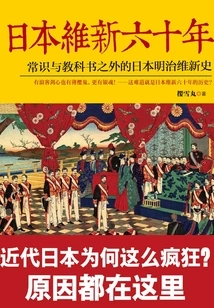
Sixty Years of Japanese Restoration
About This Novel
What is it that makes Japan the country it is today? From the arrival of the black ships to the death of Emperor Meiji, this was almost a 60-year period that completely changed the destiny of Japan. In 1853, the actual ruler of Japan, the Tokugawa Shogunate, announced the founding of the country. In 1867, the shogunate returned power to the emperor, and the reformists announced the "restoration of royal government." The overthrow of the shogunate, the sabotage faction, the anti-barbarian faction, and the founding faction all came on stage one after another. In 1875, Japan announced that it had entered a preparatory constitutional period. In 1890, Japan held a parliament, and then began its crazy expansion, launching the Sino-Japanese Sino-Japanese Sino-Japanese Sino-Japanese Naval War and the Russo-Japanese War. The victory of the Sino-Japanese War and the Russo-Japanese War made Japan a world-class power. In 1912, Emperor Meiji died and the Meiji era came to an end. It was the end of an era and the beginning of another crazy era.
Official Sources
What Readers Think
Rating
Community(0)
Official(3)Scraped 1mo ago
First time reading Japanese history
Is there no more behind?
Is there no more behind? I haven't finished writing it yet. Will there be a second part?
Quite a great book. First of all, what needs to be affirmed is that the author has used extraordinary writing power and talent to cleverly sort out the chaos of modern Japan in such an orderly manner. Secondly, from the careful research on the personal identity of the characters and the truth of the matter in the book, it can be seen that the author's writing attitude is as serious as a scholar, and most current historical novel writers pale in comparison. Thirdly, it is also very important to use relaxed conversational language to make the content lively and fresh, while not destroying the readers' exploration of the profound national character of the Japanese. In summary, the author is very good and will continue to support it. Finally, I would like to express my gratitude to him for the inspiration this book has given me!
Rating
Community(0)
Official(3)Scraped 1mo ago
First time reading Japanese history
Is there no more behind?
Is there no more behind? I haven't finished writing it yet. Will there be a second part?
Quite a great book. First of all, what needs to be affirmed is that the author has used extraordinary writing power and talent to cleverly sort out the chaos of modern Japan in such an orderly manner. Secondly, from the careful research on the personal identity of the characters and the truth of the matter in the book, it can be seen that the author's writing attitude is as serious as a scholar, and most current historical novel writers pale in comparison. Thirdly, it is also very important to use relaxed conversational language to make the content lively and fresh, while not destroying the readers' exploration of the profound national character of the Japanese. In summary, the author is very good and will continue to support it. Finally, I would like to express my gratitude to him for the inspiration this book has given me!