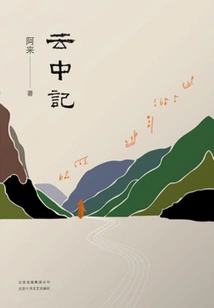
Yunzhongji
by Alai
About This Novel
Alai, a Maoist award-winning writer from Sichuan, has a new book, a requiem dedicated to the victims of the "5.12" Earthquake. After the Wenchuan earthquake, Yunzhong Village, which has thousands of years of legend, immigrated to the plains. Year after year. The priest Abba felt that his strength was dissipating, and he wanted to return to the disappearing village to be with the dead. However, a miracle happened and he created a paradise...
Official Sources
What Readers Think
Rating
Community(0)
Official(67)Scraped 2mo ago
Man is determined to defeat nature, or is destiny irresistible?
As early as primitive society, people have been passively accepting "God's will" At that time, humans were still very small. Really small. It's so small that it can't do anything about the dangers of nature. But they are ignorant, which also means fearless. Later, humans gradually grew up. The young man understood that destiny could not be violated, so he attributed all the tragedies that happened to them to the word destiny. They were avoiding natural disasters, but they were just avoiding them. Later, human beings developed the bloody nature of adulthood. They fight against the sky, they dare to fight against the sky, they want to fight against the sky, even if they die, they will not regret it. Now, mankind has gone through great changes. His eyes sparkled with the wisdom of old age, his bones were engraved with the spirit of youth, and his brain was still full of youthful spirit. But his body exudes greed. They steal a lot of resources from nature. Oh, they said it was for development, for the future. They enjoy the charity of nature, and they preach that man can conquer nature. However, when the punishment comes, it can only be avoided. Yes, they can only hide. Yes, there is nothing they can do. Even though they have all kinds of high technology, even though they can destroy the earth by themselves, they still can't resist natural disasters, can they? It is said that man can conquer heaven, but when natural disasters come, mankind can only, and perhaps only then, know that destiny cannot be violated.
support
Support support support support support
I haven't started reading it yet. To be honest, it was my 4th birthday on the day of the earthquake. I am looking forward to this book. Today is exactly 11 years. May the deceased rest in peace.
Life - Comment on "The Story in the Cloud"
With the "5.12 Earthquake" as the background, the novel tells the story of Abba, the last priest of the Garrong Tibetan people in the Aba area of Sichuan, who offers sacrifices to the villages and the dead in the ruins after the earthquake. It responds to the proposition of nature and social ecology in multiple senses, and uses a disappearing folk belief ritual to settle the souls of the deceased in the disaster, heal the physical and mental trauma of the living, and reconstruct the meaning of life in an aesthetic way. This work, which the author has been preparing for ten years, has found a unique art form for writing about the "5.12" Earthquake disaster and composed an Alai-style requiem for the disaster. Alai chose "a person" (the priest Abba) and "a village" (Yunzhong Village) as the basic narrative structure to inspire and express the culture and traditional memory of an ethnic group (Jiarong Tibetans), and to cast the multi-layered relationship between the author, narrator, characters and their cultural prototypes in a tragic formal structure, so that the writer's own writing behavior and the sacrificial behavior of the image of the priest Aba form a mutually reinforcing and metaphorical relationship. Alai's novel also couples literature as a speech act with its language structure (text), and together embodies the performative function of literature and art as a cultural discourse. Through a disaster narrative, it makes a successful attempt to restore the healing function of literature on traumatic psychology and overcome the increasingly obvious tendency of literature to have a single function due to modern differentiation. Therefore, in the contemporary context where media and culture are highly integrated, it heralds a new literary possibility; it also provides an opportunity to discover and transform Chinese literature. It uses rich resources of mythological archetypes to open up the themes and paths of contemporary Chinese literature in the sense of cultural anthropology, thereby imagining, presenting and elucidating the cosmopolitan nature of Chinese literature in a broader, more diverse and culturally profound dimension, and setting up an effective dialogue with other great traditions of world literature, presenting a successful case. Compared with the great earthquake 14 years ago described in "The Legend of the Clouds", the COVID-19 epidemic we are facing today is very different in nature, degree, scope and method. However, it also shows the limits of manpower in the face of nature. It also once again makes us feel the power of mankind to work together to deal with natural disasters.
Good,,,,,,
Aba spent a day dragging his increasingly weak body throughout the village.
Let's add bookshelves first
Abba walks through his home. His home alone. He didn't speak. He took a few pieces of dry wood from the firewood pile and put them into a sack. He would use these pieces of wood to make a fire tonight.
"Television kids" spend their days in wheelchairs and in front of the television. When Aba left the immigrant village, his father said to Aba: Please shout out his soul in my house. His soul was lost before the earthquake came and was taken away by the monster TV.
There are 337 people in Yunzhong Village, more than 70 people died, more than 100 people were injured, and there are more than 20 missing people.
Rating
Community(0)
Official(67)Scraped 2mo ago
Man is determined to defeat nature, or is destiny irresistible?
As early as primitive society, people have been passively accepting "God's will" At that time, humans were still very small. Really small. It's so small that it can't do anything about the dangers of nature. But they are ignorant, which also means fearless. Later, humans gradually grew up. The young man understood that destiny could not be violated, so he attributed all the tragedies that happened to them to the word destiny. They were avoiding natural disasters, but they were just avoiding them. Later, human beings developed the bloody nature of adulthood. They fight against the sky, they dare to fight against the sky, they want to fight against the sky, even if they die, they will not regret it. Now, mankind has gone through great changes. His eyes sparkled with the wisdom of old age, his bones were engraved with the spirit of youth, and his brain was still full of youthful spirit. But his body exudes greed. They steal a lot of resources from nature. Oh, they said it was for development, for the future. They enjoy the charity of nature, and they preach that man can conquer nature. However, when the punishment comes, it can only be avoided. Yes, they can only hide. Yes, there is nothing they can do. Even though they have all kinds of high technology, even though they can destroy the earth by themselves, they still can't resist natural disasters, can they? It is said that man can conquer heaven, but when natural disasters come, mankind can only, and perhaps only then, know that destiny cannot be violated.
support
Support support support support support
I haven't started reading it yet. To be honest, it was my 4th birthday on the day of the earthquake. I am looking forward to this book. Today is exactly 11 years. May the deceased rest in peace.
Life - Comment on "The Story in the Cloud"
With the "5.12 Earthquake" as the background, the novel tells the story of Abba, the last priest of the Garrong Tibetan people in the Aba area of Sichuan, who offers sacrifices to the villages and the dead in the ruins after the earthquake. It responds to the proposition of nature and social ecology in multiple senses, and uses a disappearing folk belief ritual to settle the souls of the deceased in the disaster, heal the physical and mental trauma of the living, and reconstruct the meaning of life in an aesthetic way. This work, which the author has been preparing for ten years, has found a unique art form for writing about the "5.12" Earthquake disaster and composed an Alai-style requiem for the disaster. Alai chose "a person" (the priest Abba) and "a village" (Yunzhong Village) as the basic narrative structure to inspire and express the culture and traditional memory of an ethnic group (Jiarong Tibetans), and to cast the multi-layered relationship between the author, narrator, characters and their cultural prototypes in a tragic formal structure, so that the writer's own writing behavior and the sacrificial behavior of the image of the priest Aba form a mutually reinforcing and metaphorical relationship. Alai's novel also couples literature as a speech act with its language structure (text), and together embodies the performative function of literature and art as a cultural discourse. Through a disaster narrative, it makes a successful attempt to restore the healing function of literature on traumatic psychology and overcome the increasingly obvious tendency of literature to have a single function due to modern differentiation. Therefore, in the contemporary context where media and culture are highly integrated, it heralds a new literary possibility; it also provides an opportunity to discover and transform Chinese literature. It uses rich resources of mythological archetypes to open up the themes and paths of contemporary Chinese literature in the sense of cultural anthropology, thereby imagining, presenting and elucidating the cosmopolitan nature of Chinese literature in a broader, more diverse and culturally profound dimension, and setting up an effective dialogue with other great traditions of world literature, presenting a successful case. Compared with the great earthquake 14 years ago described in "The Legend of the Clouds", the COVID-19 epidemic we are facing today is very different in nature, degree, scope and method. However, it also shows the limits of manpower in the face of nature. It also once again makes us feel the power of mankind to work together to deal with natural disasters.
Good,,,,,,
Aba spent a day dragging his increasingly weak body throughout the village.
Let's add bookshelves first
Abba walks through his home. His home alone. He didn't speak. He took a few pieces of dry wood from the firewood pile and put them into a sack. He would use these pieces of wood to make a fire tonight.
"Television kids" spend their days in wheelchairs and in front of the television. When Aba left the immigrant village, his father said to Aba: Please shout out his soul in my house. His soul was lost before the earthquake came and was taken away by the monster TV.
There are 337 people in Yunzhong Village, more than 70 people died, more than 100 people were injured, and there are more than 20 missing people.