Outsider
About This Novel
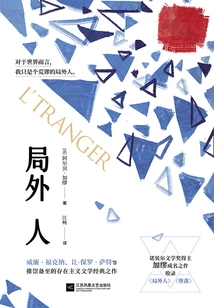
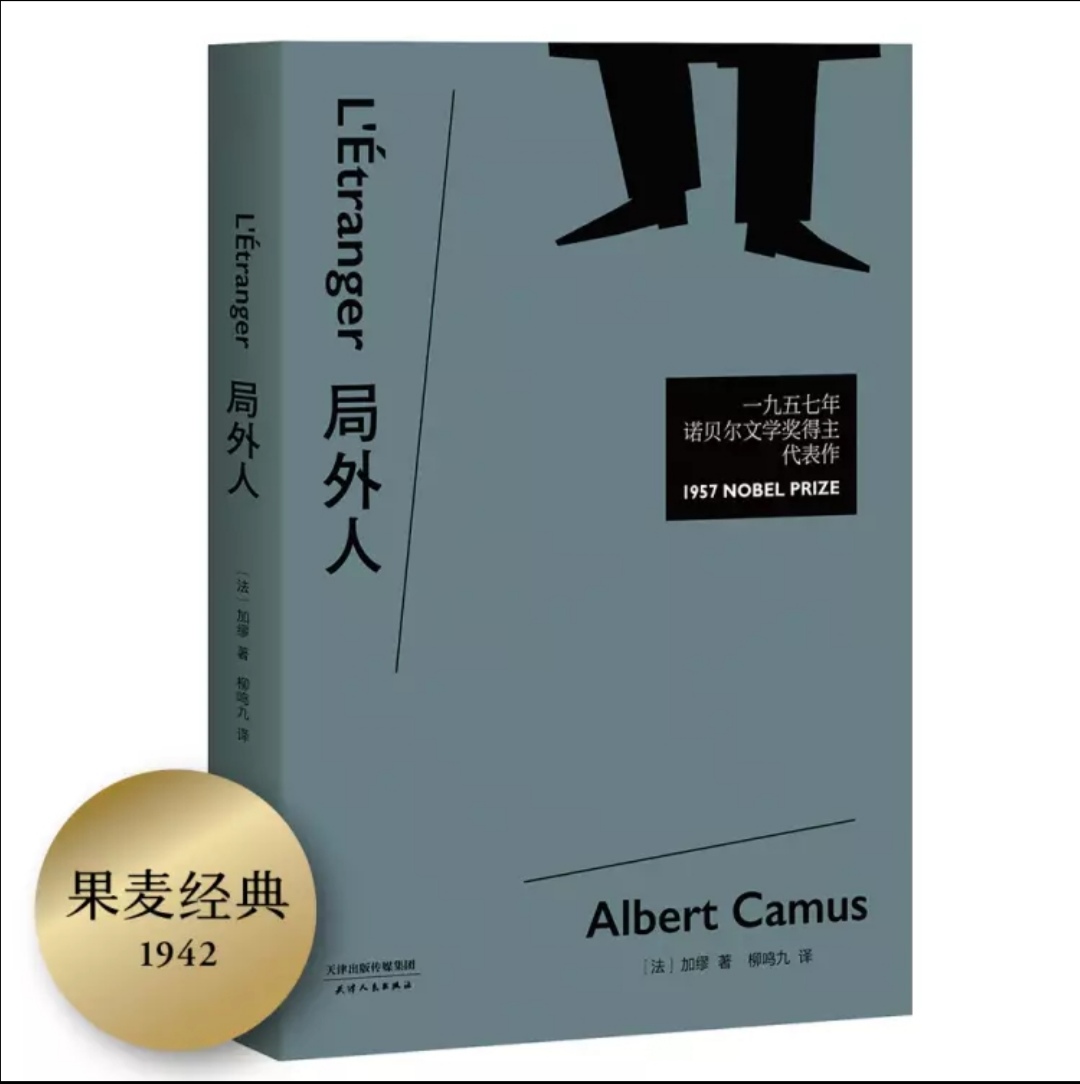
This book is one of the masterpieces of Nobel Prize winner Albert Camus. The book tells the story of a young man who is indifferent to the outside world and has no pursuit of life. He accidentally got involved in a conflict while on vacation at the beach, committed murder, and had to go to court. He was eventually sentenced to death for not shedding tears at his mother's funeral. The whole book uses a first-person narrative technique to strongly contrast the protagonist's inner activities with the absurd surrounding environment, satirizing the hypocrisy and absurd nature of the society at that time.
What Readers Think
Rating
Community(0)
Official(4)Scraped 11d ago
The Outsider: From Absurdity to Light
Long article warning! ! It takes about 5 minutes to read "Confirming the sense of absurdity in life is never an end, but rather a beginning." --Camus The author divides the book into three parts - the first - his life up to this point; the second: games; and the third: the sublation of compromise and truth in nature. From a simple point of view, as an outsider who is based on Western postmodernist literature and expresses the negativity of literature in the form of novels (this word sometimes specifically refers to absurdity), he has created a shocking image of the absurd man. The protagonist Meursault is a company clerk. He is obsessed with everything. He ignored everything indifferently, even the death of his mother did not cause much pain, and blindly dealt with the topic of marriage with his lover Mary. He was at a loss for life, so much so that he blindly shot Arabs on the beach, and was finally sentenced to death (Part 1: His life before execution) However, Meursault is a diverse character. From the perspective of most readers and in a one-way sense, Meursault is an outsider in this society, wandering on the edge of society, lonely and full of carnal desires. As Maurice Blanchot said in "The Misstep": "His (Meursault's) inner way of feeling is actually a rejection of feeling. His way of feeling is outside any expressible way of feeling, and prompts him to refuse to accept impure, false, forms that are consistent with social habits and daily life. Just like Charles Strickland ("The Moon and Sixpence"), Meursault has an absolute pursuit of real life and a deep need for spiritual life (the gap between non-ideal and life)." This kind of arrangement based on daily life is a universal situation that envelopes our lives like "sneaking into the night with the wind". Camus is showing us the true nature of this "absurd life", such as mechanical life, trivial life, and seemingly exciting but empty judgments. Meursault. Discovering the abnormalities in these seemingly normal daily behaviors, he voluntarily broke away from the group, thereby breaking through their shackles ("they" corresponds to the second part, referring to the rules of the game in society). Therefore, Meursault's "outsider" living state is a mixture of insight and nothingness. However, let me ask, does Meursault hold a completely negative and indifferent attitude towards marriage, love or the like? In both directions, let us focus on the sixth section of the first part, when Meursault. When I saw Masson and his wife talking and laughing in the wooden house on the beach, he said that he might really want to get married. How to understand this detail? Is it contrary to what I said before? Not really. It is because Meursault saw the beauty of married life at that moment, so marriage is no longer a social game, but contains a symbolic meaning of human nature. If Meursault's indifference and resistance are the one-way direction of the novel, then this two-way direction also includes its closeness and tolerance, such as his resting on the beach and his emotion about the world on the eve of his execution. The Wedding, published by Camus in 1938, allows us to explain and explain the dual meanings of outsiders - returning to nature and returning to the mother body. Let us once again focus on the lyrical text at the end of the novel. Under the starry sky, in the breath of the earth and ocean, Meursault feels a secret connection with the world. Therefore, in a two-way sense, he is not a complete "outsider" (however, I do not quite understand this resonance), and let us correspond to the third part of the article "The sublation of compromise and the truth in nature." Sobriety, nothingness, as well as the affirmation and persistence of the current value, all these seemingly contradictory hybrid forms. The common appearance in Meursault just reflects the diversity and complexity of human nature. More importantly, when we read The Outsider today, we must always remember Camus's words, which are the first sentence of this book review: "Confirming the absurdity in life cannot be an end, but rather a beginning." This sentence makes us realize the absurdity of life, and we must not give up and sink because of it. So what we need to do is to move from negation to affirmation, and replace writing with words in life. From Maugham's perspective on writing, what we embrace is by no means the purpose of life, but the amazingly bright vitality exuded on the journey, thus becoming Sisyphus in this absurd world. The above is my humble opinion. Please correct me if there are any deficiencies. Welcome to communicate. 2021.8.7 District Cultural Center Naihe Source of material: 1. The Art of Fiction in Morse Blanchot's "The Outsider", collected in Les Missteps, Paris, Gallimard Press, 1971. Page 257 2. Zhang Bo - Introduction: The Outsider as the Starting Point, Jiangsu Phoenix Literature and Art Publishing House, The Outsider 3. Camus's Wedding, Yilin Publishing House 4. Sogou Encyclopedia - Absurd Literature



This is the first book by Jamu that I have read. I was surprised, and I am still exploring and adapting.
The content of the first eleven chapters seems to have no connection with Chapter 12. The first half of the story tells the story of the first protagonist from the perspective of an "outsider". It is an "out-of-body" perspective and a weird and surprising description of the realization that everything has nothing to do with oneself. It is really magical; except for a few who are connected to the erotic feelings between the heroine. The self-narrative content in Chapter 12 is much larger than the first half. The details and depth of self-reflection and awareness are so complex and precise that it is incredible. Almost all the aspects of being a "human" have been analyzed, and emotions such as a bit explicit, horror, fear, shame, etc. Are pouring out. Grateful.
Is it Meursault who is absurd, or us?
When reading this book, I was not surprised at all by the seemingly "deviant" bizarre thoughts and actions of the protagonist Meursault. On the contrary, I felt that he was more real and magnanimous. To be honest, what he did was more in line with nature. However, such a person was deemed a morally corrupt criminal and sentenced to death because of his insensitive behavior at his mother's funeral. During this process, there were many discussions and arguments that had nothing to do with the case itself. In particular, the judge and the priest were angry that Meursault did not believe in God, and the director of the nursing home was dissatisfied with Meursault's indifference to his mother. Looking at it from another perspective, are these necessary? Is it Meursault who is absurd? Or is this world just absurd?
Meursault is a rational person who is almost indifferent. He doesn't talk nonsense and always states the facts. His handling of interpersonal relationships is also strange. This strangeness makes me feel uncomfortable. Meursault is more like a machine pursuing the optimal solution than a human being. For example, after calculating the future, Mary found that he could get happiness from Mary, so he fell in love with Mary. After calculation, he felt that he would be happier after marrying Mary, so he wanted to marry Mary. After Meursault was executed, after calculation, he found that he could not get happiness from Mary, so Mary's existence was irrelevant. In my opinion, Meursault seems to be detached from this society, knowing clearly what he should do and being the master of his own thoughts. Therefore, I think he lived a fulfilling life, and even his death became a part of this fulfillment and personal opinion. In addition, I can't understand the Fall Chapter and I'm too lazy to read it. It seems to be a kind of irony, but the main point of view is not Meursault, so it's not interesting anymore, because the book is cheated by Yue Ji. 😘
Rating
Community(0)
Official(4)Scraped 11d ago
The Outsider: From Absurdity to Light
Long article warning! ! It takes about 5 minutes to read "Confirming the sense of absurdity in life is never an end, but rather a beginning." --Camus The author divides the book into three parts - the first - his life up to this point; the second: games; and the third: the sublation of compromise and truth in nature. From a simple point of view, as an outsider who is based on Western postmodernist literature and expresses the negativity of literature in the form of novels (this word sometimes specifically refers to absurdity), he has created a shocking image of the absurd man. The protagonist Meursault is a company clerk. He is obsessed with everything. He ignored everything indifferently, even the death of his mother did not cause much pain, and blindly dealt with the topic of marriage with his lover Mary. He was at a loss for life, so much so that he blindly shot Arabs on the beach, and was finally sentenced to death (Part 1: His life before execution) However, Meursault is a diverse character. From the perspective of most readers and in a one-way sense, Meursault is an outsider in this society, wandering on the edge of society, lonely and full of carnal desires. As Maurice Blanchot said in "The Misstep": "His (Meursault's) inner way of feeling is actually a rejection of feeling. His way of feeling is outside any expressible way of feeling, and prompts him to refuse to accept impure, false, forms that are consistent with social habits and daily life. Just like Charles Strickland ("The Moon and Sixpence"), Meursault has an absolute pursuit of real life and a deep need for spiritual life (the gap between non-ideal and life)." This kind of arrangement based on daily life is a universal situation that envelopes our lives like "sneaking into the night with the wind". Camus is showing us the true nature of this "absurd life", such as mechanical life, trivial life, and seemingly exciting but empty judgments. Meursault. Discovering the abnormalities in these seemingly normal daily behaviors, he voluntarily broke away from the group, thereby breaking through their shackles ("they" corresponds to the second part, referring to the rules of the game in society). Therefore, Meursault's "outsider" living state is a mixture of insight and nothingness. However, let me ask, does Meursault hold a completely negative and indifferent attitude towards marriage, love or the like? In both directions, let us focus on the sixth section of the first part, when Meursault. When I saw Masson and his wife talking and laughing in the wooden house on the beach, he said that he might really want to get married. How to understand this detail? Is it contrary to what I said before? Not really. It is because Meursault saw the beauty of married life at that moment, so marriage is no longer a social game, but contains a symbolic meaning of human nature. If Meursault's indifference and resistance are the one-way direction of the novel, then this two-way direction also includes its closeness and tolerance, such as his resting on the beach and his emotion about the world on the eve of his execution. The Wedding, published by Camus in 1938, allows us to explain and explain the dual meanings of outsiders - returning to nature and returning to the mother body. Let us once again focus on the lyrical text at the end of the novel. Under the starry sky, in the breath of the earth and ocean, Meursault feels a secret connection with the world. Therefore, in a two-way sense, he is not a complete "outsider" (however, I do not quite understand this resonance), and let us correspond to the third part of the article "The sublation of compromise and the truth in nature." Sobriety, nothingness, as well as the affirmation and persistence of the current value, all these seemingly contradictory hybrid forms. The common appearance in Meursault just reflects the diversity and complexity of human nature. More importantly, when we read The Outsider today, we must always remember Camus's words, which are the first sentence of this book review: "Confirming the absurdity in life cannot be an end, but rather a beginning." This sentence makes us realize the absurdity of life, and we must not give up and sink because of it. So what we need to do is to move from negation to affirmation, and replace writing with words in life. From Maugham's perspective on writing, what we embrace is by no means the purpose of life, but the amazingly bright vitality exuded on the journey, thus becoming Sisyphus in this absurd world. The above is my humble opinion. Please correct me if there are any deficiencies. Welcome to communicate. 2021.8.7 District Cultural Center Naihe Source of material: 1. The Art of Fiction in Morse Blanchot's "The Outsider", collected in Les Missteps, Paris, Gallimard Press, 1971. Page 257 2. Zhang Bo - Introduction: The Outsider as the Starting Point, Jiangsu Phoenix Literature and Art Publishing House, The Outsider 3. Camus's Wedding, Yilin Publishing House 4. Sogou Encyclopedia - Absurd Literature
This is the first book by Jamu that I have read. I was surprised, and I am still exploring and adapting.
The content of the first eleven chapters seems to have no connection with Chapter 12. The first half of the story tells the story of the first protagonist from the perspective of an "outsider". It is an "out-of-body" perspective and a weird and surprising description of the realization that everything has nothing to do with oneself. It is really magical; except for a few who are connected to the erotic feelings between the heroine. The self-narrative content in Chapter 12 is much larger than the first half. The details and depth of self-reflection and awareness are so complex and precise that it is incredible. Almost all the aspects of being a "human" have been analyzed, and emotions such as a bit explicit, horror, fear, shame, etc. Are pouring out. Grateful.
Is it Meursault who is absurd, or us?
When reading this book, I was not surprised at all by the seemingly "deviant" bizarre thoughts and actions of the protagonist Meursault. On the contrary, I felt that he was more real and magnanimous. To be honest, what he did was more in line with nature. However, such a person was deemed a morally corrupt criminal and sentenced to death because of his insensitive behavior at his mother's funeral. During this process, there were many discussions and arguments that had nothing to do with the case itself. In particular, the judge and the priest were angry that Meursault did not believe in God, and the director of the nursing home was dissatisfied with Meursault's indifference to his mother. Looking at it from another perspective, are these necessary? Is it Meursault who is absurd? Or is this world just absurd?
Meursault is a rational person who is almost indifferent. He doesn't talk nonsense and always states the facts. His handling of interpersonal relationships is also strange. This strangeness makes me feel uncomfortable. Meursault is more like a machine pursuing the optimal solution than a human being. For example, after calculating the future, Mary found that he could get happiness from Mary, so he fell in love with Mary. After calculation, he felt that he would be happier after marrying Mary, so he wanted to marry Mary. After Meursault was executed, after calculation, he found that he could not get happiness from Mary, so Mary's existence was irrelevant. In my opinion, Meursault seems to be detached from this society, knowing clearly what he should do and being the master of his own thoughts. Therefore, I think he lived a fulfilling life, and even his death became a part of this fulfillment and personal opinion. In addition, I can't understand the Fall Chapter and I'm too lazy to read it. It seems to be a kind of irony, but the main point of view is not Meursault, so it's not interesting anymore, because the book is cheated by Yue Ji. 😘