Gen Ye Chen Meng
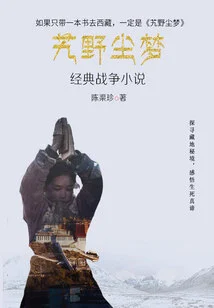
by Chen Quzhen
About This Novel
"Chen Ye Meng" is a notebook-style travel novel written by Chen Quzhen, the "King of Western Hunan" during the Republic of China. It is also a military legend. The work records the real situation in Sichuan and Tibet before and after the Revolution of 1911. This book is worth reading for readers interested in such topics. "Chen Ye Chen Meng" records Chen Quzhen's entry into Tibet with the army at the end of the Qing Dynasty (1909), to pacify the chaotic Tibetan affairs caused by the British invasion, to participate in several wars from Chengdu, and to the arduous battles and life experiences of arriving in Xi'an via Qinghai and Lanzhou after the Revolution of 1911. The work uses a lot of pen and ink to introduce the local customs, mountains and rivers, and their history. It also records his adventures in Tibet and his epic life and death love with the Tibetan girl Nishihara. The mountains and landforms, funeral customs, eating habits, clothing characteristics, etc. Of Tibetan areas are all recorded in detail in the book. This book is of high historical value for studying Tibetan history, Tibetan social development, urban construction and economic history, the history of figures in the late Qing Dynasty and the early Republic of China, the history of the Revolution of 1911, and the military history of the late Qing Dynasty and the early Republic of China. Each chapter of "Chen Ye Chen Meng" is titled with a place name and an event, showing the magical and magnificent Tibetan scenery in the dangerous and turbulent era of chaos, the arduous counter-insurgency campaign, the complex and subtle military politics, the brutal survival of the enemy, and the firm friendship that follows thousands of miles. "Chen Ye Chen Meng" depicts the mountain scenery, human customs and social life seen along the way, and makes detailed records of the local geographical conditions, ethnic customs and special products, providing strong evidence for later generations to study the folk customs of Tibet and Qinghai.
Official Sources
What Readers Think
Rating
Community(0)
Rating
Community(0)