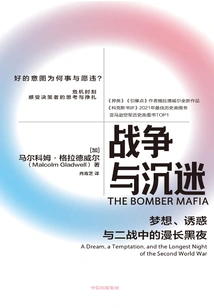
War and Addiction
About This Novel
During World War II, a small group of utopian air force strategists known as the "Bomber Mafia" attempted to win the war through precision bombing. After fully studying a new technological device, the Norden bombsight, they determined that daylight bombing targeting only specific critical enemy infrastructure would work. However, things went against expectations. After several failed operations, the war situation got out of control. Subsequently, the top military officials ordered a replacement of commanders. The new commander, Le Mei, implemented a regional bombing strategy that was completely opposite to that of the previous commander Hansel. With the help of napalm bombs, Le Mei bombed a total of 67 cities in Japan. However, due to the heavy casualties caused by the bombing, Le Mei's behavior caused great controversy. This is a story about idealism, pragmatism, technological innovation and the immeasurable cost of war. In the book, Gladwell affirmed LeMay's contribution. Although the method was crude, it shortened the duration of the war. To a certain extent, it could be said to have avoided greater costs and allowed everyone to regain peace and prosperity more quickly. Although the "Bomber Mafia" represented by Hansel was not successful, Gladwell spent a lot of space describing and praising its persistence in dreams, innovation and technology, treating it as a moral model. Without persistence, principles are meaningless. Hansel is a typical Quixotic character. His actions vividly show readers how good intentions can backfire. What Gladwell raises is a philosophical issue of moral judgment and factual judgment, which tests morality and human nature.
Official Sources
What Readers Think
Rating
Community(0)
Rating
Community(0)