Augustus

Augustus

by K

Length:
188Kwords19chapters
Latest:
Ch. 19注释
Activity:
Updated 6y agoScraped 3d ago
150Favorites
0QD Score

About This Novel

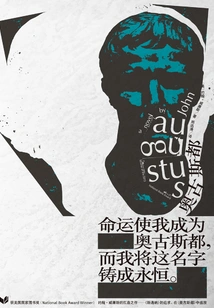
"Augustus" is written in the form of an epistolary letter, which also contains diaries, memoirs, meeting minutes, military leaflets, etc., And depicts the life of the Roman Emperor Augustus through the pens of everyone in Rome. Augustus, whose real name was Octavian, was Caesar's nephew. In 44 BC, Caesar was assassinated and his will designated Octavian as his adopted son and heir. The boy's slender figure walked slowly in the empty playground, in an uncertain direction, as if trying to find a way out - he aided the murderer, made enemies of old friends, formed alliances with rivals, and restored freedom to Rome where factions were rife. At the age of 36, Octavian received the title "Augustus". Augustus devoted himself to maintaining order and peace in Rome, and even called his only daughter "my little Rome." With his love for these two, he moved forward without hesitation in the machinations of the Roman world...

What Readers Think

Rating

Good0%Neutral0%Bad0%

Community(0)

Featured in 9 Booklists

Official(9)

Alternative History Textbook
1,2033638

A masterpiece of foreign history, the author writes very well about the establishment of the Roman Empire and the style of Caesar's era.

Yinxiong in Late Sui Dynasty
Silver Fox
Beixiong
Personal Book List, Personal Taste
152493

A good book in the history category, about ancient Rome. I personally feel that Sulla is written close to historical facts. The plot is clear, the thinking is clear, and the logic is reasonable. It is a novel that can be read again and again.

Becoming a Richest Man from Losing Money Starts from the Game - the Original Work of the Tv Series "young and Promising
Overthrow the Han Dynasty
Shao Song
Reincarnation Paradise
A List of Books for Dawdling (Including History, Fan Fiction, and Fairy Tales)
1104920

I came across an old book... This book has the best taste among the three Sula books. Some people may think that the flavor is different from the general historical works, but in fact this is the interest of Western historical novels before modern times. Moreover, to be honest, Chinese historical novels usually beautify the historical environment too much, and they stand very "highly", and their positions are those of big bureaucrats and nobles. Even in "Imperial Examinations" or other novels in which the protagonist climbs up from the bottom, the protagonist is more like an undeveloped big bureaucrat than someone who actually climbed up from the bottom. Maybe these beautifications will make readers feel relaxed and interesting, but they will lose some... How should I say... "Flavor". In this work, even the big bureaucrats, big aristocrats, and "divine heirs" have a strong sense of mud and rotten leaves, although this characteristic may have been deliberately strengthened. To me, this is more interesting than those "ordinary" historical novels that are almost entirely narrow imaginary works such as "palace battles" and "power plots" among the upper class. The connection and interaction between the "upper class" and the "lower class" (in this work and another of Sulla's works, it is the 'old soldiers' and the 'merchants of all nationalities') is much stronger than some works that treat the "lower class" (and sometimes even the upper class) as numbers and puppets, and another part that makes the lower class life funny and stupid (sorry, sorry for coining the word here). (Of course, this does not mean that there are no interesting works.) Therefore, sometimes when you see a work of historical fiction in which you cannot see the bias (especially foreign history, there are too many people who believe that the "dark" Middle Ages did not take baths and everywhere was underdeveloped. But if this is true, the Renaissance has no material foundation at all. Therefore, we cannot ideally believe that there is no change and development in the Middle Ages. Just like other historical periods, the Middle Ages have been developing, and the speed is getting faster and faster), and I patiently read a few more chapters before deciding whether to continue reading. I have to read many books several times before I have the patience to read them and realize that they are good works. I've said a lot, so let's stop here.

Nanchen Diye
Reborn Spain
The Wind Rises at the End of Ming Dynasty
Sun and Lion
Only Good Books That Are Good Enough to Appear on This List
8101

"The Road to Augustus" The best and only Roman historical novel available. The description of plot objects and the style of writing all have a very Roman feel to it. It could also be due to lack of contrast. But to criticize, once the characters talk, it is a bit brought back to reality, and it still feels like there is not enough Roman accent. There is also a story plot. Although human life was like this in the Roman era, it was neither valuable nor important, but readers do not know this. Readers think that there is no difference between Italy and Rome in the 18th century, or there is no difference between the Qing Dynasty and the Han Dynasty. The author needs more foreshadowing and thorough explanation. The book is relatively niche, the plot is average, and I like both the subject matter and the writing style. This book is rated 69

Rebirth of a Small Landowner
Arcane Throne
Augustus

You Might Also Like