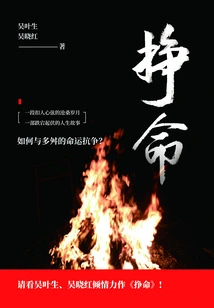
Earn a Life
About This Novel
"Earning Life" is a novel written by Wu Yesheng and Wu Xiaohong and has the characteristics of Huizhou dialect. It objectively reflects the process of an ordinary family in Dashan struggling with their fate before and after the founding of New China, struggling to live, and gradually taking the initiative in their destiny. Earning one's life has two meanings in Huizhou dialect: one is a derogatory meaning, indicating that people at the bottom of society have been tossing and struggling, but in the end they have not made a name for themselves; the other is a positive meaning, which means struggling against fate in order to realize their good wishes. A series of small characters in the book, including the male and female protagonists, are all "earning their lives" in more or less different ways. Some started from nothing, "earned their lives" and finally achieved great success; some "earned their lives" came and "earned their lives" but still had nothing; some "earned their lives" vigorously, and finally gave up their lives; some earned their lives for the country and the collective, and some earned their lives for themselves and their families... The time span of the book is from 1939 to 1979. The protagonist Chen Songshou grew up in an ordinary family in Mingxi Village. Family changes occurred when his eldest brother borrowed a loan shark to get married. After the land was sold, the family fell apart. He and his third sister depended on each other. They grew up fighting various social injustices, developing an unyielding character and supporting the family early on. He was trained by his "cousin" (New Fourth Army) since he was a child, became one of the first members of the Communist Party of China after the founding of New China, and devoted himself wholeheartedly to the construction of the new society. He was seriously injured while burning a lime kiln. During his years as a village cadre, he dealt with various difficult incidents such as injuries and deaths. He built lime kilns, water tillers, oil pressing plants and hydropower stations for the village. He cleverly weathered three years of natural disasters by opening up wasteland and cultivating the land according to the time. In order to increase collective income, he led a team to make kilns and burn kilns, etc. Liu Hongyan, a girl from the same village, took a fancy to him, but he was introduced to Hu Qiongxiang from a neighboring village, attended a collective wedding, and gave birth to seven children. During this period, his children and his wife fell ill, and the family became poor due to illness, making it difficult to tide over the difficulties. When the college entrance examination was resumed in 1977, Chen Songshou seized the opportunity to guide his children to study and enter college, and successfully sent them to colleges and universities. They became top scorers in five subjects and became a legend. Chen Songshou's ability to balance family education with collective construction still has practical significance for modern family management and rural revitalization.
Official Sources
What Readers Think
Rating
Community(0)
Rating
Community(0)
