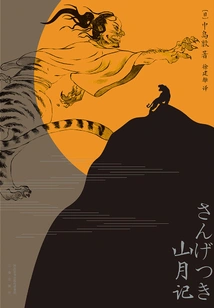
Shanyueji
About This Novel
This book is a collection of short stories and short stories by Atsushi Nakajima. It exclusively contains ten masterpieces and is illustrated by the genius cartoonist Satan-kun. This book is specially designed to treat the "tangled emptiness" syndrome among literary and artistic young people. It soothes the liver and regulates qi, and the medicine can cure the disease.
What Readers Think
Rating
Community(0)
Official(11)Scraped 2d ago
I
"I am afraid that I am not a pearl, so I dare not study hard, and because I partially believe that I am a pearl, I cannot live with the rubble. In vain, I show off the aphorism that 'life is too long if you don't do anything, and too short if you want to do one thing.' But the fact is, the cowardice for fear of exposing the lack of talent, and the laziness that hates studying hard. That's all I have."
Gradually losing human nature
Recognize oneself through doubt and reflection--About "Mountain and Moon"
The story of Li Ling has ended long ago, and the legend of Su Wu has passed thousands of years, but we are still deeply moved by their shadows in history or novels. Perhaps it is because, although the trajectory of history is moving forward firmly, the characters in the author's works are coming to us with flesh and blood. We will see the sorrow and thoughts of those little people when the giant wheel of history passes by, feel their pain and struggle, and understand the changes in their bodies and hearts... In this book, we can see more deeply through the stories of those historical figures how others came to know themselves, the ups and downs they went through, the love and hatred they experienced, and from them, we can understand ourselves. Li Zheng got to know himself through the struggle between human nature and animal nature, Wu Jing got to know himself through doubting himself and searching for himself, and Li Ling also got to know himself through comparing himself with others and inquiring into his heart. The ancient Greek temple of Delphi inscribed "Know thyself," which Socrates later made central to his philosophical explorations. And these chapters of Atsushi Nakajima also intentionally or unintentionally explore people themselves and their inner world, and they also seem to tell us that "everything in life is only about our hearts." Constantly recognizing oneself amid doubts and reflections, following one's heart, and living without regrets or guilt. Perhaps this is the life pursued by Atsushi Nakajima and the characters in his works.
It is unimaginable that a Japanese writer could write Chinese history so deeply, and endow the characters recorded in minimalist texts with such deep thoughts, uneasy doubts, and the courage to deny authority and self. Mixed with the author's personal speculation, subjective emotions and experiences, psychological analysis, meticulous reasoning, and empathy, these tortures on the soul are like coming from my mouth, leaving no room for the "smallness" of one's self. "No matter what you are angry about, it is ultimately just anger against yourself." "It's just anger" and "Li Ling" is my favorite. The three famous historical figures are intertwined in a wonderful way, forming the rich and colorful spiritual world of Atsushi Nakajima, which also demonstrates his Sinology foundation behind him. The exquisite interpretation is amazing; "Sanzuki" "The Story" uses the form of "alienation" to appeal to the depression and frustration of intellectuals, which is comparable to another "Metamorphosis"; the polyphonic form of the dual perspective of "The Dream of Light and Wind" makes Stevenson's image more three-dimensional and full; the translation of the entire book is elegant, moving and extremely thoughtful.
nice
It is not easy for a Japanese writer to bring celebrities in Chinese history to life with vivid images.
The prose in the middle is not interesting
The first few stories are quite good, but...
think
I half-believe that I am a piece of beautiful jade, so I don't want to be mediocre and live among the rubble. Self-esteem is important, but you don't need to go to extremes. Don't always think about becoming a genius.
a blurry dream
This is my first time reading this type of book. I used to prefer humorous diaries and various types of literary novels and biographies. I thought I couldn't read it, but I was very addicted to it. I was addicted, not smooth, because there are many passages in it that make you read slowly and carefully involuntarily. I read slowly. Reality is not designed to serve reading. Reading it makes me escape from reality. The lingering fragrance of romance still lingers in my nose at this moment. Maybe this article has left a lot of dregs in my heart, of course the dregs of elegant incense. Biu, get a reading stamp.
Today's people's level of aesthetics and reading is really low
Sangetsuki was written by Atsushi Nakajima. The meaning of this book is profound and thought-provoking.
Don't buy
The first two articles are good, but the following ones are not good.
Rating
Community(0)
Official(11)Scraped 2d ago
I
"I am afraid that I am not a pearl, so I dare not study hard, and because I partially believe that I am a pearl, I cannot live with the rubble. In vain, I show off the aphorism that 'life is too long if you don't do anything, and too short if you want to do one thing.' But the fact is, the cowardice for fear of exposing the lack of talent, and the laziness that hates studying hard. That's all I have."
Gradually losing human nature
Recognize oneself through doubt and reflection--About "Mountain and Moon"
The story of Li Ling has ended long ago, and the legend of Su Wu has passed thousands of years, but we are still deeply moved by their shadows in history or novels. Perhaps it is because, although the trajectory of history is moving forward firmly, the characters in the author's works are coming to us with flesh and blood. We will see the sorrow and thoughts of those little people when the giant wheel of history passes by, feel their pain and struggle, and understand the changes in their bodies and hearts... In this book, we can see more deeply through the stories of those historical figures how others came to know themselves, the ups and downs they went through, the love and hatred they experienced, and from them, we can understand ourselves. Li Zheng got to know himself through the struggle between human nature and animal nature, Wu Jing got to know himself through doubting himself and searching for himself, and Li Ling also got to know himself through comparing himself with others and inquiring into his heart. The ancient Greek temple of Delphi inscribed "Know thyself," which Socrates later made central to his philosophical explorations. And these chapters of Atsushi Nakajima also intentionally or unintentionally explore people themselves and their inner world, and they also seem to tell us that "everything in life is only about our hearts." Constantly recognizing oneself amid doubts and reflections, following one's heart, and living without regrets or guilt. Perhaps this is the life pursued by Atsushi Nakajima and the characters in his works.
It is unimaginable that a Japanese writer could write Chinese history so deeply, and endow the characters recorded in minimalist texts with such deep thoughts, uneasy doubts, and the courage to deny authority and self. Mixed with the author's personal speculation, subjective emotions and experiences, psychological analysis, meticulous reasoning, and empathy, these tortures on the soul are like coming from my mouth, leaving no room for the "smallness" of one's self. "No matter what you are angry about, it is ultimately just anger against yourself." "It's just anger" and "Li Ling" is my favorite. The three famous historical figures are intertwined in a wonderful way, forming the rich and colorful spiritual world of Atsushi Nakajima, which also demonstrates his Sinology foundation behind him. The exquisite interpretation is amazing; "Sanzuki" "The Story" uses the form of "alienation" to appeal to the depression and frustration of intellectuals, which is comparable to another "Metamorphosis"; the polyphonic form of the dual perspective of "The Dream of Light and Wind" makes Stevenson's image more three-dimensional and full; the translation of the entire book is elegant, moving and extremely thoughtful.
nice
It is not easy for a Japanese writer to bring celebrities in Chinese history to life with vivid images.
The prose in the middle is not interesting
The first few stories are quite good, but...
think
I half-believe that I am a piece of beautiful jade, so I don't want to be mediocre and live among the rubble. Self-esteem is important, but you don't need to go to extremes. Don't always think about becoming a genius.
a blurry dream
This is my first time reading this type of book. I used to prefer humorous diaries and various types of literary novels and biographies. I thought I couldn't read it, but I was very addicted to it. I was addicted, not smooth, because there are many passages in it that make you read slowly and carefully involuntarily. I read slowly. Reality is not designed to serve reading. Reading it makes me escape from reality. The lingering fragrance of romance still lingers in my nose at this moment. Maybe this article has left a lot of dregs in my heart, of course the dregs of elegant incense. Biu, get a reading stamp.
Today's people's level of aesthetics and reading is really low
Sangetsuki was written by Atsushi Nakajima. The meaning of this book is profound and thought-provoking.
Don't buy
The first two articles are good, but the following ones are not good.