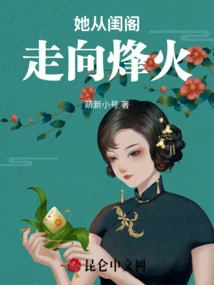
She Walked from the Boudoir to the Beacon Fire
About This Novel
1919, Peking. When Shen Zhiyu pawned off the family's last Jiajing plum vase, what she got in exchange was not only a life-saving money of 60 yuan, but also an ultimatum given to women in an era - either wither in the boudoir or be reborn in the flames of war. She was the granddaughter of the former Qing Dynasty Hanlin, and she was supposed to spend her whole life doing embroidery in the courtyard of a deep house. But when the family building was about to collapse, with a pair of keen eyes for identifying cultural relics and a wealth of lost palace patterns, and under the witness of Gu Shijun, the young owner of the pawnshop, he took the first step to change his destiny. Starting from a small "Langhua Pavilion" embroidery shop in Dashilan, she transformed the aesthetics from the broken pile of old papers into stunning cheongsam patterns on the beach; she turned the lost skills of the Ministry of Internal Affairs into an industry that supports the livelihood of hundreds of female workers. When the gunfire of September 18th pierced the night sky, she resolutely turned the silk factory into a gauze workshop and the fashion salon into an information transmission station. At the crossroads of love and ideals, she and industrialist Gu Shijun went from acquaintance to staying together, from side by side in the shopping mall to walking together in war. One chooses to save the country with capital, and the other chooses to serve the country with industry. At the time of national survival, their fate is closely linked to that of millions of Chinese people. This is not a Cinderella story, but how a woman, in the fission of the times, tempered broken porcelain into steel, turned the embroidery needles in the boudoir into sharp swords, and "embroidered" a new dawn of China with her own hands in the sea of commerce, battlefields, and the torrent of revolution.
Official Sources
What Readers Think
Rating
Community(0)
Rating
Community(0)
You Might Also Like

Rebirth of Space: the Fierce Wife of the 1980s
Nian Xiaohua
Rare Exclusive Love Marriage
Matcha

Rebirth of a Beautiful Life in the 70s
Xi Zhen
The National Goddess: Rebirth of the Ace Daughter
Never Forget The Sound Of Virtue

I Just Want to Be Sweet with You
Yi Momo

Reborn in the 1980s, Young Master Le is Jealous Again
Greedy Little Lazy Cat
Reborn Female General
Qianshan Tea Guest

The Almighty Thousand Gold Burns to the Sky
Never Forget The Sound Of Virtue
She is a True Daughter, She is an All-round Boss
Qing Qian
Mr. Xi Wants to Make an Official Announcement Every Day
Mr. An