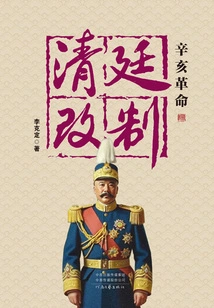
Revolution of 1911: Reorganization of the Qing Court
by Li Keding
About This Novel
The Revolution of 1911 that broke out in 1911 ended China's imperial system that had lasted for more than two thousand years and started the journey towards modern civilization. The novel focuses on the magnificent history from 1900 to 1911, recreating the vicissitudes of life from the Gengzi Incident to the Wuchang Uprising. The series is divided into three parts, and this book is the second. The Qing government sent five ministers abroad to inspect the constitutional government, but they were bombed by the revolutionary Wu Yue at the train station. Revolutionary Xu Xilin assassinated Anhui governor Enming, and Jianhu heroine Qiu Jin launched an uprising. On September 1, 1906, the Qing government issued a copycat constitutional edict. At the same time, the political system was reformed, and the previously planned province of Northeast China was implemented. Unexpectedly, this was the direct cause that triggered the "Ding Wei Political Tide" within the supreme ruling group. Sun Yat-sen launched the Great Uprising in Guangdong, Guangxi and Yunnan, and fired the first successful shot of the armed uprising. Yuan Shikai's power became stronger and stronger. During the climax of the political struggle, Guangxu and Cixi passed away at the same time, and the Qing Dynasty became increasingly precarious.
Official Sources
What Readers Think
Rating
Community(0)
Rating
Community(0)