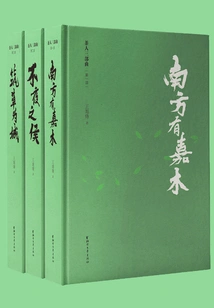
Tea Man Trilogy (complete Collection)
by Wang Xufeng
About This Novel
"The Tea Man Trilogy" is China's first full-length novel that reflects tea culture. It has won the Mao Dun Literature Award and the "Five One Project" Award of the Central Propaganda Department. It includes three novels: "There Are Beautiful Trees in the South", "The Nightless Marquis" and "Building Grass into a City". "There is Jiamu in the South" is the first part of the "Tea Man Trilogy". Hangzhou, the capital of green tea, the owner of Wangyou Tea House, Hang Jiuzhai, was a tea merchant in the south of the Yangtze River in the late Qing Dynasty. He was elegant and elegant, but had trouble managing money and business. He eventually died on the smoke couch of a woman with fireworks. Hang Tianzui, the next generation of tea master, grew up in the era when the feudal dynasty completely collapsed and the Republic of China was born. He was always intertwined with the contradiction between decadence and hard work. He was knowledgeable, talented, passionate, and ambitious, but he was indecisive. Amidst all kinds of love entanglements, he had no choice but to escape to Buddhism. The third generation of the Hang family, represented by Hang Jiahe, has experienced a broader era. They have participated in the rise and fall of Hua Tea in various capacities and in different ways. The fate of the nation, family and individuals is complicated and ups and downs. The novel therefore outlines a long scroll of the fate of Chinese tea people in modern history. "The Nightless Lord" is the second part of the "Tea Man Trilogy". The novel takes the Anti-Japanese War as the background and reflects the fate of various characters of the Hang family, a tea family rooted in Hangzhou in the south of the Yangtze River, in this turbulent era: Shen Luai, Hang Jiacao and other Hang family women died tragically under the iron heel of the Japanese invaders; Ji Cao, Hang Yi, Hang Han and Wangyou, as the new generation of Hang family children, participated in the great Anti-Japanese War. Some died in the war, while others insisted on building the Chinese tea industry for the future after victory. As a descendant of a tea family, Hang Jiahe endured huge and unimaginable disasters during the long war years, showing the immortal character of a Chinese tea man. The novel focuses on depicting the cultural form in the context of the war, showing the profound power of Chinese tea culture as an integral part of the Chinese national spirit in the historical context of that time. While narrating the story, the novel also describes the bumpy development history of my country's tea industry during this period. The magnificent historical narrative and delicate description of the characters and plots bring readers a pleasant reading experience. "Building Grass into a City" is the second part of the "Tea Man Trilogy". The story was written from the 1950s and 1960s to the end of the century, describing how the Hang family experienced the bloody war of resistance against Japan and then ushered in the turbulent historical period of the Cultural Revolution, reflecting the social reality at that time. The Hang family has gone through various tests, showing unprecedented tenacity and independent personality in pursuit of freedom. The novel exudes a rich flavor of tea culture. The story takes place in Hangzhou, the capital of green tea. Hang Jiuzhai, the descendant of Wangyou Tea House, was a tea merchant in the south of the Yangtze River in the late Qing Dynasty. He was elegant and elegant, but had trouble managing money and business. He eventually died on the smoke couch of a woman with fireworks. The next generation of tea master is called Hang Tianzui. He grew up in the era when the feudal dynasty completely collapsed and the Republic of China was born. He is always intertwined with the contradiction between decadence and hard work. He is knowledgeable, talented, passionate, and ambitious, but he is indecisive. He loves his boyfriend, his wife, his concubines, and his children... In the end, he is so "loved" that he feels lost and has no choice but to escape to Buddhism. The three sons and two daughters born to Hang Tianzui experienced a broader era. They participated in the whole process of the rise and fall of Hua Cha in various capacities and in different ways. During this period, the fate of the nation, family and individuals were complicated and ups and downs. The rise and fall of tea houses were closely linked to the rise and fall of Chinese tea over the past century. The novel therefore outlines a long scroll of the fate of Chinese tea people in recent and modern history.
Official Sources
What Readers Think
Rating
Community(0)
Official(3)Scraped 1mo ago
The history of Britain's direct import of Chinese tea began from this moment:
The British East India Company, established in 1600 AD, presented a two-pound, two-ounce cylinder of tea imported from China to the King of England in 1664 as a valuable gift!
Worth recommending to all Chinese people
The young man dug into his robe and carefully took out the "Examination" made of poplar boards and the "Zhuan" made of willow strips. Seeing that the words on them were not wet by the rain, he breathed a sigh of relief, handed his hands to Toneri, and introduced himself at the same time.
Rating
Community(0)
Official(3)Scraped 1mo ago
The history of Britain's direct import of Chinese tea began from this moment:
The British East India Company, established in 1600 AD, presented a two-pound, two-ounce cylinder of tea imported from China to the King of England in 1664 as a valuable gift!
Worth recommending to all Chinese people
The young man dug into his robe and carefully took out the "Examination" made of poplar boards and the "Zhuan" made of willow strips. Seeing that the words on them were not wet by the rain, he breathed a sigh of relief, handed his hands to Toneri, and introduced himself at the same time.