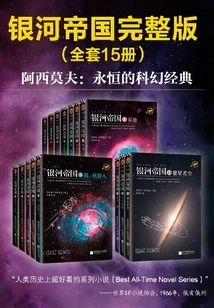
Verne's Science Fiction Classics (9 Volumes in Total)
by H
About This Novel
Liu Cixin, the representative writer of Chinese science fiction novels, wrote a handwritten message and highly recommended it! In each book, expressive original illustrations are selected and described in detail! The excellent Chinese Taiwan translation and the new translation by outstanding young translators jointly present the Verne science fiction classic! In the history of human literature, Verne has been synonymous with science fiction from beginning to end! In the history of human literature, Verne became an adventurous scientific prophet because of his extraordinary insight! He is the irreplaceable father of science fiction and a pioneer of surrealism! Verne is one of the undisputed founders of the science fiction literary genre! "Journey to the Center of the Earth" is a science fiction enlightenment book by Liu Cixin, a representative Chinese science fiction writer!
Official Sources
What Readers Think
Rating
Community(0)
Rating
Community(0)
Featured in 2 Booklists
Official(2)
Rating: 85 Attribute: science fiction Comment: Verne's novel should be considered a milestone in the science fiction world. Among the novels in this series, the first one seems not to be very sci-fi, while the second one is too theoretical. The constant stream of biological terms in it made me dizzy. The last one, starting from the basic common sense of natural science, tells the story of a group of people surviving on a desert island and slowly building their own new home... In the end, the life experience of Captain Nemo was revealed, which made me think it is better to keep it mysterious...




✒✒One of the world's science fiction recommendations: Founder Verne✒✒ 🍻[Jules Verne]: The founder of world science fiction, his representative works include "Twenty Thousand Leagues Under the Sea", "Journey to the Center of the Earth", "Around the World in 80 Days", etc. Marshal Léaudet of France once said: "Modern science is just the process of putting Verne's predictions into practice." 🕵🕵🕵 "Twenty Thousand Leagues Under the Sea": A century and a half ago, before the generator was invented, Verne had already used his imagination to create a magical submarine. Follow it to complete the underwater adventure, and you will definitely be moved by human beings' irrepressible imagination and desire for exploration. A few years later, when human beings continue to move towards the sky and the universe, we must not forget that the continent and the sea are the starting point for human beings to start their adventures. "Journey to the Center of the Earth": a completely imaginary science fiction novel, in which it is believed that one can enter the interior of the earth through volcanic craters, and that there are extinct prehistoric creatures living deep in the earth. There is no scientific basis, but the author brings us into a magical world with rich knowledge of stratigraphy and geology. "Around the World in Eighty Days" & "Five Weeks in a Balloon": The rich geographical knowledge of various regions on the earth forms the main clue for the development of the story. Reading such a novel is like going on an adventure with the protagonist: from the wild and strange African desert to the cold and dangerous polar ice fields, from the deep and mysterious underground labyrinth to the desolate and terrifying isolated islands in the sea, everything is as if it were in front of you. "The Adventures of Captain Hatteras": "A Most Excellent Logbook". Five Weeks in a Balloon: The precise description of the source of the Nile has puzzled some scholars because when the novel was published, European scholars had just completed their exploration of the region. "From the Earth to the Moon": Many data in the work, including the launch location (Cape Canaveral, Florida), flight time, and the number of people who landed on the moon, are exactly the same as those of the later American Apollo program. "The Diary of an American Journalist in the Year 2890": The most prophetic science fiction novel. The New York in the book is called Global City. There are thousand-foot-high skyscrapers on both sides of the highway. The climate is artificially controlled, crops can grow in the Arctic, and advertisements are projected on the clouds. The Earth Herald edited by the protagonist has 80 million readers. Reporters relay news back from Jupiter, Mars, and Venus. People can see major events happening everywhere while sitting in their own homes.