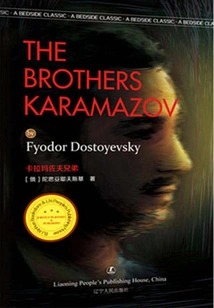
Brothers Karamazov
by G
About This Novel
"The Brothers Karamazov" is Dostoevsky's masterpiece. The story comes from a real patricide case and describes the contradictions and conflicts between two generations. The protagonist Karamazov has four sons: Dmitry, Ivan, Alyosha and the illegitimate son Smerdyakov. The old Karamazov, who has reached his twilight years, does not change his greedy and lustful nature. He not only seizes the inheritance left by his wife to the children, but also becomes jealous of a romantic woman with his eldest son Dmitri, which leads to disharmony between father and son. Dmitri hated his father and threatened to kill him. One night, he suspected that his father was having a tryst with his lover. In a rage, he beat his father seriously and fled in a hurry. That night, old Karamazov died and Dmitri was arrested. However, the real murderer was the illegitimate son Smerdyakov. In order to vent his long-standing grudges, he secretly brutally killed his seriously injured father. This confusing murder triggered a series of thrilling stories. The ending of the novel is very tragic: Dmitry is innocently imprisoned, Smerdyakov commits suicide in fear of crime, Ivan becomes insane, and Alyosha leaves for a foreign country. The novel is a faithful record of the social era. On the surface, "The Brothers Karamazov" is about a patricide case, about the entangled grievances between a father and his sons. In fact, this family tragedy is also a metaphor for the disintegration of the Tsarist autocratic society. The theme of the novel is the human spirit and the moral battle between faith, suspicion, reason and free will. Since the 10th century AD, Christianity has become the spiritual pillar of Russians, carrying many connotations such as society, morality, and humanity. However, after the serfdom reform in the 19th century, the materialistic desires and moral decay brought about by the development of capitalism increasingly fragmented Russian society. The democratic revolutionary movement against the tsarist autocratic rule was in full swing. Various social trends impacted the traditional Russian value system, and atheists began to question the existence of God. These social, political, economic, religious and philosophical trends of thought profoundly influenced Dostoevsky's thoughts and creations. Similarly, the writer's own life experience also has an important impact on novel creation. During his exile in Siberia, Dostoevsky came into contact with the prototype of the patricide case - a young man who was wrongly convicted of killing his father for financial gain. About 10 years later, the real murderer was brought to justice and the young man was acquitted. In 1878, Dostoevsky began writing "The Brothers Karamazov", and this story became the main plot of the novel. In May of the same year, Dostoevsky's three-year-old son Alyosha unfortunately died of epilepsy inherited from his family. His spirit suffered a heavy blow and his creation was temporarily suspended. Picking up the pen again, the writer incorporated the pain of losing his son into the novel and created Alyosha, who has the same name as his son, making him the embodiment of faith and virtue. At the end of the novel, Alyosha encourages the children to be friendly, kind, and honest. "We will definitely be resurrected" and our spirits will be immortal. Obviously, Alyosha placed his thoughts on the writer's thoughts on his son, as well as his deeper universal feelings. "The Brothers Karamazov", which was born in the 19th century, has a strong color of critical realism and also contains many modern elements. The epic work contains profound philosophy, various writing techniques, an omniscient narrator who is closely connected with the characters in the novel, a distinctive language style, and a meticulous psychological portrayal. All these constitute a bizarre, profound and profound world, which has influenced countless readers and many literary schools and writers in later generations. Freud praised the book as "the greatest novel in history"; Kafka believed that he had a "blood relationship" with Dostoevsky; Joyce said in no uncertain terms that Dostoevsky "had a profound influence" on him. "The Brothers Karamazov" is like an accurate miniature of human nature. This statement is true. Although he was not the pioneer of psychological narrative, he was a master who carried forward the description of psychological consciousness. Dostoevsky did not give a standard answer to the profound and difficult problems of human nature, which requires the insight and understanding of every reader. In the writer's words, there will always be rainy days and sunny days in life, but there will always be sunny days after rain.
Official Sources
What Readers Think
Rating
Community(0)
Rating
Community(0)