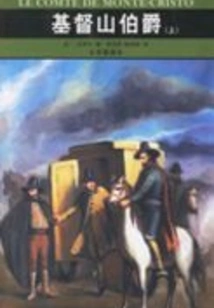
About This Novel
"Les Misérables" is a novel published by French writer Victor Hugo in 1862. Is one of the most famous novels of the nineteenth century. The novel covers the Napoleonic Wars and the dozen years that followed. The main line of the story revolves around the protagonist Jean Valjean's attempt to atone for his sins, and integrates French history, architecture, politics, moral philosophy, law, justice, and religious beliefs.
What Readers Think
Rating
Community(0)
Official(335)Scraped 26d ago
An epic literary work! Very touching! Worth recommending!
This is the first book that I have read in five years that made me deeply moved. It is also the first book that made me cry. When I read the plot of Cosette meeting Jean Valjean, I was happy for it and felt that there is still love in the world. And when I read that Jean Valjean was about to die, I was also sad for it, because people who have worked hard all their lives are willing to sacrifice themselves for the happiness of others. It can be said that if someone does not shed tears after reading this book, it only means that this person has no emotions. This book also contains a truth. If a person is magnanimous and considers others, then he will be thanked and helped by others. Even if he is misunderstood by others, don't be afraid, because the truth will come sooner or later. At the same time, you must love your loved ones around you, and don't think that there is still time, because people are very fragile, and a car accident or disease can take people away. Therefore, you should love your loved ones now instead of waiting until later. Just like in the book, care for Jean Valjean when he is about to die, but that is already too late. Moreover, we must learn from the bishop at the beginning of the book and learn from the bishop's magnanimity. It can be said that without the bishop, perhaps there would be no Jean Valjean today. Therefore, a small help that seems inconspicuous to oneself may be a streetlight in life in the eyes of others, bringing bad people back on track and changing their minds to become good people. So only with love for others can the miserable world disappear!
In this book, Hugo used his outstanding artistic charm to show the cruel reality of capitalist society enslaving working people and forcing girls into prostitution. Hugo's masterpiece has created a long history that reflects France's modern social and political life. The book spans nearly half a century. The combination of personal destiny and historical themes is majestic and colorful, which fully reflects Hugo's extraordinary talent in narrative. In terms of richness, breadth and complexity in content, it undoubtedly ranks first among Hugo's numerous works.
Why does it feel like it's a pirated version? Many names and punctuation marks are incorrect? ? ? ! ! !
nice
Fang Ting's fate was quite miserable. She was deceived by those two people and left her child behind. She sent living expenses to the child every month, thinking that her child was living a good life. In the end, she still failed to save her daughter and died with hatred. It was Jean Valjean who saved Cosette. He was once a murderer. After being released from prison, he only does good deeds and sublimates the kindness of human nature again.
The sorrow of a good old man
The sorrow of a good old man. What is sad is not the world, but the people's hearts, just like the current China
In a miserable world, everything is miserable. If you strive for disaster in the abyss, everyone will fail you, and God will not save you. Will you still maintain a lesson of innocence? Repay grievance with kindness and tell Luo Men to smile and avoid grievances.
Les Misérables is the best book I have ever read. I admire Jean Valjean in the book. He has experienced too much suffering, is devoted to kindness, is deep and warm, dedicated and responsible. He will go to Paris wherever he graduates, taking this classic with him.
Bishop Bien Fru, Jean Aran, Fantine, Cosette, Marius;
Doesn't Les Misérables refer to the current world where humanity is lost?
Angels are always on epitaphs
I admire a good person, but I don't want to be a good person. The angel who fell into the world made a mistake because of love, and spent his whole life to atone for it. There is no sin, and society does not lack punishment, but forgiveness.
Rating
Community(0)
Official(335)Scraped 26d ago
An epic literary work! Very touching! Worth recommending!
This is the first book that I have read in five years that made me deeply moved. It is also the first book that made me cry. When I read the plot of Cosette meeting Jean Valjean, I was happy for it and felt that there is still love in the world. And when I read that Jean Valjean was about to die, I was also sad for it, because people who have worked hard all their lives are willing to sacrifice themselves for the happiness of others. It can be said that if someone does not shed tears after reading this book, it only means that this person has no emotions. This book also contains a truth. If a person is magnanimous and considers others, then he will be thanked and helped by others. Even if he is misunderstood by others, don't be afraid, because the truth will come sooner or later. At the same time, you must love your loved ones around you, and don't think that there is still time, because people are very fragile, and a car accident or disease can take people away. Therefore, you should love your loved ones now instead of waiting until later. Just like in the book, care for Jean Valjean when he is about to die, but that is already too late. Moreover, we must learn from the bishop at the beginning of the book and learn from the bishop's magnanimity. It can be said that without the bishop, perhaps there would be no Jean Valjean today. Therefore, a small help that seems inconspicuous to oneself may be a streetlight in life in the eyes of others, bringing bad people back on track and changing their minds to become good people. So only with love for others can the miserable world disappear!
In this book, Hugo used his outstanding artistic charm to show the cruel reality of capitalist society enslaving working people and forcing girls into prostitution. Hugo's masterpiece has created a long history that reflects France's modern social and political life. The book spans nearly half a century. The combination of personal destiny and historical themes is majestic and colorful, which fully reflects Hugo's extraordinary talent in narrative. In terms of richness, breadth and complexity in content, it undoubtedly ranks first among Hugo's numerous works.
Why does it feel like it's a pirated version? Many names and punctuation marks are incorrect? ? ? ! ! !
nice
Fang Ting's fate was quite miserable. She was deceived by those two people and left her child behind. She sent living expenses to the child every month, thinking that her child was living a good life. In the end, she still failed to save her daughter and died with hatred. It was Jean Valjean who saved Cosette. He was once a murderer. After being released from prison, he only does good deeds and sublimates the kindness of human nature again.
The sorrow of a good old man
The sorrow of a good old man. What is sad is not the world, but the people's hearts, just like the current China
In a miserable world, everything is miserable. If you strive for disaster in the abyss, everyone will fail you, and God will not save you. Will you still maintain a lesson of innocence? Repay grievance with kindness and tell Luo Men to smile and avoid grievances.
Les Misérables is the best book I have ever read. I admire Jean Valjean in the book. He has experienced too much suffering, is devoted to kindness, is deep and warm, dedicated and responsible. He will go to Paris wherever he graduates, taking this classic with him.
Bishop Bien Fru, Jean Aran, Fantine, Cosette, Marius;
Doesn't Les Misérables refer to the current world where humanity is lost?
Angels are always on epitaphs
I admire a good person, but I don't want to be a good person. The angel who fell into the world made a mistake because of love, and spent his whole life to atone for it. There is no sin, and society does not lack punishment, but forgiveness.