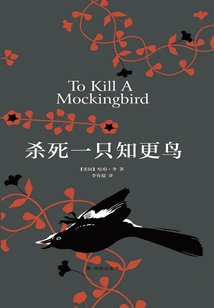
To Kill a Mockingbird (original Movie of the Same Name)
by J
About This Novel
The story takes place in a quiet town in the south of the United States during the Great Depression. Several bizarre mysteries completely broke the peaceful lives of several children: the real culprit of the incident, the mystery of the weirdo, the truth behind the rumors... Under the guidance of their father, they searched for true knowledge in the fog, experienced grace in hardships, accumulated righteousness in unfairness, experienced stormy growth, and felt the warmth and true love of the world.
Official Sources
What Readers Think
Rating
Community(0)
Official(175)Scraped 1mo ago
Atticus was a sharpshooter as a young man, and his practice of showing off his marksmanship was the mockingbird. Later he closed the gun. Because he realized that he could not bring harm to the world with the perfect marksmanship given to him by God. He didn't really mean to kill the robin, but he brought death to the robin. After Atticus accepted the fact that Ewell was accidentally killed by his own kitchen knife, Scout felt that her father needed someone to comfort him, so she responded to Atticus by saying: It's like killing a mockingbird, right? Jem's real purpose in facing the hunt was to protect himself and his sister, but he accidentally caused Ewell's death. Therefore, to kill a mockingbird refers to an unexpected result, not the original intention of the person who killed it, but an unintentional act, or the biggest purpose is not to kill the bird. When it comes to Atticus practicing his marksmanship, it should be something like this: 'I just want to practice marksmanship and don't want to kill the robin' or 'There are so many birds, it doesn't matter how many I kill. ' When Jem and his sister are in danger, it should be like this: 'I just wanted to protect myself, but I didn't expect that he would die. ' So, in the growth of Jem and Scout, the robin is the child's pure and innocent nature, which should also include some talents. If Atticus chooses to cover up Scout and Jem when they do something wrong, then it is equivalent to killing the kind and just robin in a child's heart; if Atticus does not come forward in the black lawsuit, Jem and Scout will definitely have prejudice and discrimination against black people in their hearts, then it is equivalent to killing the democratic and just robin in the child's heart. . . That's why Atticus pursued the truth in the face of Ewell's death. He didn't want Jem to grow up with the image of his father shielding and favoritism, and he didn't want to kill the just robin in the eyes of his children. Therefore, this book is a warning to adults, parents, and educators that unintentional actions in life will affect the formation of children's worldview. Human beings are inherently good by nature, and 'goodness' is the mockingbird in a child's nature. The most obvious one is the litigious child of the Ewell family, the child who was killed in To Kill the Mockingbird. Because her father protected her, it was tantamount to telling her that discriminating against black people did not violate democracy, and she should not admit it if she made a mistake. Fairness and leading by example are the best examples for raising children. They should not be arrogant, doting, old-fashioned, or beating or scolding for no reason.
Education is growth
As a father, Atticus was perfect. He had almost all the good qualities a father could have. These excellent qualities not only affect his way of life, but also have a profound impact on his children. This book shows the growth of her thoughts from a girl's perspective, and the description is delicate enough and realistic enough. His father played an important role in growing up from a fighting and crying tomboy to a lady, and Jem's growth as a gentleman is also his father's pride. Education is not indoctrination, nor is it preaching of great principles. Education comes from life, from the understanding of life, and from the spiritual growth promoted by every understanding. The philosophical proposition about education that education is growth is explained in Atticus's life with the children. His father has excellent qualities, he is upright, kind, just, and brave, and these qualities are seen by his children through practical actions. Atticus is a father figure that can make all children proud. Children in childhood are extremely easily influenced by their surrounding environment, confused by rumors, and blinded by social illusions. Therefore, Scout and Jem are deeply prejudiced and fearful of the weirdo Radley. Others' accusations about their father's defense of black Tom also made Scout and the others troubled, including the fight between Scout and his cousin, and the conflict between Jem and the old lady, which led to the task of reading to her for more than a month. There are naturally troubles on the road to life and growth, but fortunately, I have a reasonable father to accompany me along the way. He uses his words and deeds to infect and inspire children, allowing them to understand the world in their own way of thinking, and understand different people in the world and their lives. Atticus thinks, says and does without any pretense, so his words and deeds are extremely powerful. In defending black Tom, he strived to be fair and impartial, strive to be objective and truthful, and used practical actions to tell the children what "all men are created equal" and what legal fairness and justice are. Of course, he naturally knew that it would be difficult to win this lawsuit, because the deeply rooted racial discrimination concept destined it to be an almost impossible task, but he was still persistent and gave the beauty to the process. He said that a small step forward is a gain, and the victory of the struggle requires countless such small steps to pave the way. He made the children understand that bravery is not about holding a gun, but like the old lady who knows that some things are already destined, but you still maintain the belief that you will win. You need to fight for what you are determined to do. The most lamentable thing is that Atticus did not directly tell the children what is good and evil, what is good and bad. But let them understand that some things are multi-faceted. Even those who hold stubborn racial discrimination beliefs are only blind spots in their cognition and are the consequences of a society, not the sins of a single person. But at the same time, he also emphasized that the deception and abuse of black people by white people was a greater evil. He told Jem that even if the old lady said something bad about him for defending black people, it should not be a reason for him to offend the old lady. On the contrary, he should respect the old lady because she has admirable true bravery. As for the weirdo Radley, Atticus told the children that if you want to truly understand a person, you must walk in his shoes. Before this, Scout had been influenced by social rumors that the weirdo Radley was a dangerous figure. She has never really understood weirdos. She labels people as "bad" just because of their unsociable behavior such as never going out, instead of judging a person based on other essential facts that have a sufficient impact on society. Until the weirdo Radley saved Jem and himself. There is an interesting contrast in this book. Ewell and Atticus, who are both fathers, are obviously not the same kind of people: one is a drunkard, irresponsible, beats and scolds his children, framed and framed; the other is upright, has a sense of justice, pursues the truth, is responsible, full of love and concern for his children, and is kind. So their children seem to be very different because of this. Ewell's daughter Mayella lacks self-awareness and self-esteem, while Scout and Jem both became independent people under the influence of their father. The differences brought about by the education methods are self-evident. Education is growth, and life is education.
It is a pity that I have not read this book, which is a must-read for primary and secondary school students in the United States, until now. I'm a little lucky, because if I had read this book as a teenager, I would have probably gotten bored in the first half of the book and given up. It is really a great book. I hope that if I have a child, I will let him read this book. I hope that I can be like Atticus and be an enlightened, upright, courageous and gentle parent like him. Giving children a sense of equality, courage, freedom and compassion is the greatest upbringing and the best education. And although this world is not perfect, "when you finally get to know them, you will find that most people are good people." "In the face of all this imperfection, "Courage is: when you know you will lose before you even start, you still have to do it and stick to it no matter what. You rarely win, but sometimes you do. " "Miss Jean Louise, stand up, your father is coming through here. "Stand up and applaud our great father.
simple book review
The reader's own evaluation of this book closely represents his personal understanding of the book. If I can gain something from reading a book, it is necessary to leave a book review. The development of the story revolves around various events involving black and white people, and the entire story is interpreted from the perspectives and thoughts of several children. This was the motivation behind my decision to finish reading this book. It can be said that this is the first novel I have read that is written from this perspective. From the plot, we can see that the author respects black people very much and advocates equality for everyone. It was indeed not easy in that society, and it was perverted in an era when human rights were determined by the separation of black and white and skin color. The article did not hesitate to expose the ugly faces of some white people. It wasn't until about 80% of the story reached the court that I felt that the plot of the story was fully unfolded. When the person died at the end, my heart really became clear. My favorite character portrayal is Atticus. I have always found this character very mysterious, so I won't spoil it here. This book is also instructive in many places. There are a thousand Atticus in the eyes of a thousand people.
Why are so few people watching romance movies?
We will never be able to understand human nature. For example, obvious mistakes are regarded as evidence of guilt, and the lack of fairness and justice is preached and then denigrated to black people. We always accept this dark nature of human nature when we grow up, but fortunately there are honest people like Atticus and Weird people, and we can still become people with sincerity.
Kind ideals and current reality. Atticus is the person I admire most. I think lawyers were once children too. Throughout all these years of his life, he has always maintained a child-like kind and righteous heart. He understands the ways of the world, but he is not tactful. This kind of clarity and heartfelt open-minded understanding of the current situation of society is the state that each of us should pursue. The path of pursuing justice never goes out of style. This book talks about discrimination, true intentions, children, truth, etc., And has profound educational significance.
It was written in great detail and reminded me of some things that happened when I was a child. In fact, children also have their own other perspectives.
Atticus's example as a father is worth learning from
The details of the article are vivid and interesting, and the peaceful coexistence of the family is very warm. The two children's love and trust in their father is because Atticus never had the airs of his father and they get along as equals as friends. Atticus's words and deeds deeply affected the two children. The foreshadowing of the weird Radley family has been laid from the beginning. From the initial fear of not approaching, to the slow temptation to attract the weirdos, and finally as they grow up, they look back on the past and feel grateful to the weirdos.
Reading this book suddenly reminded me of my mother. No matter when I was a child or now, whenever I meet someone who doesn't treat me kindly, I will complain endlessly to my mother, but my mother always smiles and says that the person may just be in a bad mood or too tired that day. We have not walked other people's paths, and have not experienced other people's joys, sorrows, and joys, so we should not speculate on others, and we are not qualified to judge others. I think what this book taught me is to learn to respect, respect other people's behavior, respect other people's clothes, and respect other people's lifestyles. I am a person who believes that human nature is inherently evil. Atticus did not convince me to believe that human nature is inherently good, but he made me see the importance of education to a person. It is education that allows us who are inherently evil to learn to treat everyone in our lives with kindness. It was also Atticus who made me see the charm of insisting on ourselves. We should stride forward in the direction we think is right, even if we are surrounded by other people's strange eyes. As I read it, it reminded me of my childhood and my hometown. It was so good at that time. Almost everyone in the town is an acquaintance, and they are all kind-hearted people who may sometimes do things against their will in order to fit in with the so-called group. We should not lose the kindness in our hearts. You should not have ill intentions toward others.
Rating
Community(0)
Official(175)Scraped 1mo ago
Atticus was a sharpshooter as a young man, and his practice of showing off his marksmanship was the mockingbird. Later he closed the gun. Because he realized that he could not bring harm to the world with the perfect marksmanship given to him by God. He didn't really mean to kill the robin, but he brought death to the robin. After Atticus accepted the fact that Ewell was accidentally killed by his own kitchen knife, Scout felt that her father needed someone to comfort him, so she responded to Atticus by saying: It's like killing a mockingbird, right? Jem's real purpose in facing the hunt was to protect himself and his sister, but he accidentally caused Ewell's death. Therefore, to kill a mockingbird refers to an unexpected result, not the original intention of the person who killed it, but an unintentional act, or the biggest purpose is not to kill the bird. When it comes to Atticus practicing his marksmanship, it should be something like this: 'I just want to practice marksmanship and don't want to kill the robin' or 'There are so many birds, it doesn't matter how many I kill. ' When Jem and his sister are in danger, it should be like this: 'I just wanted to protect myself, but I didn't expect that he would die. ' So, in the growth of Jem and Scout, the robin is the child's pure and innocent nature, which should also include some talents. If Atticus chooses to cover up Scout and Jem when they do something wrong, then it is equivalent to killing the kind and just robin in a child's heart; if Atticus does not come forward in the black lawsuit, Jem and Scout will definitely have prejudice and discrimination against black people in their hearts, then it is equivalent to killing the democratic and just robin in the child's heart. . . That's why Atticus pursued the truth in the face of Ewell's death. He didn't want Jem to grow up with the image of his father shielding and favoritism, and he didn't want to kill the just robin in the eyes of his children. Therefore, this book is a warning to adults, parents, and educators that unintentional actions in life will affect the formation of children's worldview. Human beings are inherently good by nature, and 'goodness' is the mockingbird in a child's nature. The most obvious one is the litigious child of the Ewell family, the child who was killed in To Kill the Mockingbird. Because her father protected her, it was tantamount to telling her that discriminating against black people did not violate democracy, and she should not admit it if she made a mistake. Fairness and leading by example are the best examples for raising children. They should not be arrogant, doting, old-fashioned, or beating or scolding for no reason.
Education is growth
As a father, Atticus was perfect. He had almost all the good qualities a father could have. These excellent qualities not only affect his way of life, but also have a profound impact on his children. This book shows the growth of her thoughts from a girl's perspective, and the description is delicate enough and realistic enough. His father played an important role in growing up from a fighting and crying tomboy to a lady, and Jem's growth as a gentleman is also his father's pride. Education is not indoctrination, nor is it preaching of great principles. Education comes from life, from the understanding of life, and from the spiritual growth promoted by every understanding. The philosophical proposition about education that education is growth is explained in Atticus's life with the children. His father has excellent qualities, he is upright, kind, just, and brave, and these qualities are seen by his children through practical actions. Atticus is a father figure that can make all children proud. Children in childhood are extremely easily influenced by their surrounding environment, confused by rumors, and blinded by social illusions. Therefore, Scout and Jem are deeply prejudiced and fearful of the weirdo Radley. Others' accusations about their father's defense of black Tom also made Scout and the others troubled, including the fight between Scout and his cousin, and the conflict between Jem and the old lady, which led to the task of reading to her for more than a month. There are naturally troubles on the road to life and growth, but fortunately, I have a reasonable father to accompany me along the way. He uses his words and deeds to infect and inspire children, allowing them to understand the world in their own way of thinking, and understand different people in the world and their lives. Atticus thinks, says and does without any pretense, so his words and deeds are extremely powerful. In defending black Tom, he strived to be fair and impartial, strive to be objective and truthful, and used practical actions to tell the children what "all men are created equal" and what legal fairness and justice are. Of course, he naturally knew that it would be difficult to win this lawsuit, because the deeply rooted racial discrimination concept destined it to be an almost impossible task, but he was still persistent and gave the beauty to the process. He said that a small step forward is a gain, and the victory of the struggle requires countless such small steps to pave the way. He made the children understand that bravery is not about holding a gun, but like the old lady who knows that some things are already destined, but you still maintain the belief that you will win. You need to fight for what you are determined to do. The most lamentable thing is that Atticus did not directly tell the children what is good and evil, what is good and bad. But let them understand that some things are multi-faceted. Even those who hold stubborn racial discrimination beliefs are only blind spots in their cognition and are the consequences of a society, not the sins of a single person. But at the same time, he also emphasized that the deception and abuse of black people by white people was a greater evil. He told Jem that even if the old lady said something bad about him for defending black people, it should not be a reason for him to offend the old lady. On the contrary, he should respect the old lady because she has admirable true bravery. As for the weirdo Radley, Atticus told the children that if you want to truly understand a person, you must walk in his shoes. Before this, Scout had been influenced by social rumors that the weirdo Radley was a dangerous figure. She has never really understood weirdos. She labels people as "bad" just because of their unsociable behavior such as never going out, instead of judging a person based on other essential facts that have a sufficient impact on society. Until the weirdo Radley saved Jem and himself. There is an interesting contrast in this book. Ewell and Atticus, who are both fathers, are obviously not the same kind of people: one is a drunkard, irresponsible, beats and scolds his children, framed and framed; the other is upright, has a sense of justice, pursues the truth, is responsible, full of love and concern for his children, and is kind. So their children seem to be very different because of this. Ewell's daughter Mayella lacks self-awareness and self-esteem, while Scout and Jem both became independent people under the influence of their father. The differences brought about by the education methods are self-evident. Education is growth, and life is education.
It is a pity that I have not read this book, which is a must-read for primary and secondary school students in the United States, until now. I'm a little lucky, because if I had read this book as a teenager, I would have probably gotten bored in the first half of the book and given up. It is really a great book. I hope that if I have a child, I will let him read this book. I hope that I can be like Atticus and be an enlightened, upright, courageous and gentle parent like him. Giving children a sense of equality, courage, freedom and compassion is the greatest upbringing and the best education. And although this world is not perfect, "when you finally get to know them, you will find that most people are good people." "In the face of all this imperfection, "Courage is: when you know you will lose before you even start, you still have to do it and stick to it no matter what. You rarely win, but sometimes you do. " "Miss Jean Louise, stand up, your father is coming through here. "Stand up and applaud our great father.
simple book review
The reader's own evaluation of this book closely represents his personal understanding of the book. If I can gain something from reading a book, it is necessary to leave a book review. The development of the story revolves around various events involving black and white people, and the entire story is interpreted from the perspectives and thoughts of several children. This was the motivation behind my decision to finish reading this book. It can be said that this is the first novel I have read that is written from this perspective. From the plot, we can see that the author respects black people very much and advocates equality for everyone. It was indeed not easy in that society, and it was perverted in an era when human rights were determined by the separation of black and white and skin color. The article did not hesitate to expose the ugly faces of some white people. It wasn't until about 80% of the story reached the court that I felt that the plot of the story was fully unfolded. When the person died at the end, my heart really became clear. My favorite character portrayal is Atticus. I have always found this character very mysterious, so I won't spoil it here. This book is also instructive in many places. There are a thousand Atticus in the eyes of a thousand people.
Why are so few people watching romance movies?
We will never be able to understand human nature. For example, obvious mistakes are regarded as evidence of guilt, and the lack of fairness and justice is preached and then denigrated to black people. We always accept this dark nature of human nature when we grow up, but fortunately there are honest people like Atticus and Weird people, and we can still become people with sincerity.
Kind ideals and current reality. Atticus is the person I admire most. I think lawyers were once children too. Throughout all these years of his life, he has always maintained a child-like kind and righteous heart. He understands the ways of the world, but he is not tactful. This kind of clarity and heartfelt open-minded understanding of the current situation of society is the state that each of us should pursue. The path of pursuing justice never goes out of style. This book talks about discrimination, true intentions, children, truth, etc., And has profound educational significance.
It was written in great detail and reminded me of some things that happened when I was a child. In fact, children also have their own other perspectives.
Atticus's example as a father is worth learning from
The details of the article are vivid and interesting, and the peaceful coexistence of the family is very warm. The two children's love and trust in their father is because Atticus never had the airs of his father and they get along as equals as friends. Atticus's words and deeds deeply affected the two children. The foreshadowing of the weird Radley family has been laid from the beginning. From the initial fear of not approaching, to the slow temptation to attract the weirdos, and finally as they grow up, they look back on the past and feel grateful to the weirdos.
Reading this book suddenly reminded me of my mother. No matter when I was a child or now, whenever I meet someone who doesn't treat me kindly, I will complain endlessly to my mother, but my mother always smiles and says that the person may just be in a bad mood or too tired that day. We have not walked other people's paths, and have not experienced other people's joys, sorrows, and joys, so we should not speculate on others, and we are not qualified to judge others. I think what this book taught me is to learn to respect, respect other people's behavior, respect other people's clothes, and respect other people's lifestyles. I am a person who believes that human nature is inherently evil. Atticus did not convince me to believe that human nature is inherently good, but he made me see the importance of education to a person. It is education that allows us who are inherently evil to learn to treat everyone in our lives with kindness. It was also Atticus who made me see the charm of insisting on ourselves. We should stride forward in the direction we think is right, even if we are surrounded by other people's strange eyes. As I read it, it reminded me of my childhood and my hometown. It was so good at that time. Almost everyone in the town is an acquaintance, and they are all kind-hearted people who may sometimes do things against their will in order to fit in with the so-called group. We should not lose the kindness in our hearts. You should not have ill intentions toward others.