Strange House Mystery
by I
About This Novel
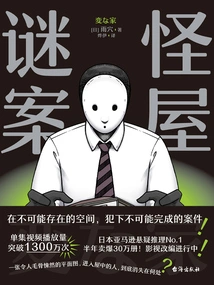
At first glance, a second-hand house listed for sale in Tokyo looks like a very ordinary single-family house. There's just something strange about the floor plan of the house. There is a "mysterious space" between the kitchen and the living room on the first floor. Carefully look at every corner of the house plan, and you'll find puzzling designs everywhere. Double doors, a windowless children's room, a dressing room with an unobstructed view... The various inconsistencies hidden behind the bright open room are intertwined, ultimately pointing to a truth... A truth that sends chills down the back and that no one wants to believe.
Official Sources
What Readers Think
Rating
Community(0)
Official(9)Scraped 1mo ago
[With transparent bottom] No merit, no fault, quite satisfactory
Because it is free for members to watch, I can't help but give it a positive review. If it were purchased with money, it would probably be about the same as Samsung. I read the author's "The Mystery of Strange Paintings" first and then read this one. This book was written before "Strange Paintings" but is not as good-looking as "Strange Paintings". At the beginning, I spent a lot of space writing about three strange houses. In the end, the truth has nothing to do with the strange houses. The best written story is about the grandparents. It's a pity that the fate of my sister in orthopedics was not mentioned. Another: In many places, it can be seen that the case is Kitakyushu, but the core and essential parts have been abandoned and left as a shell (twin sisters in a big landowner's family, the elder sister was brainwashed and left home, the son-in-law got married, the child died, the child was used to kill people, etc.).
A decent book
Awara and the author's reasoning about the Katabuchi family's use of children to kill people and dispose of the bodies through secret passages instantly pushed the story to a climax. A dark, unknown story unfolded before me, giving me a chilling feeling down my spine. This also makes people think, who are the residents here? What are their identities? Are they really using children to commit crimes? What's up with the room without windows? Just thinking about this makes me feel nervous and shuddering all the time. When Kie Katabuchi placed Keita Katabuchi's letter in front of the author, we finally saw the truth of the mysterious house in the fog, but it was this oral description that made the story that should have been more exciting a lot darker.
It's pretty good. I recommend everyone to watch 2
Read 2 first and then look at 1. Both 1 and 2 use the form of dialogue. I really like this conversational method. Every time I drink a cup of black tea or order a takeaway in the middle of analyzing a case, it stops the rhythm temporarily and gives me a sense of fear of being involved. 1 I think the story is more attractive than the technique. 2, 11 Seemingly independent cases are finally connected in series, which is really exciting to watch.
Difficult to comment
The house is interesting, but its story is boring. The family part seems to be working seriously, but it's still ridiculous.
(Spoilers!!!) It's a bit anticlimactic, and the reasoning about the various house plans is quite interesting, but the story in Keita's letter that reveals all the truth in the end is a bit too exaggerated, and there are some logical problems. It says that the design of Keita and his wife's new house should be led by the Katabuchi family, so the space next to the dressing room in Saitama's house should have been built with a secret passage for murder (although it was not used), just like the main house. However, the secret passage in the house in Tokyo was said to be for the purpose of deceiving the Katabuchi family and for Momoya's access. In other words, the Katabuchi family, who valued this ritual so much, did not ask for the secret passage to be built this time, nor did they find out that Keita had built the secret passage. This logic is a bit unreasonable. I feel that in order to complete a motive, or change the original story, in order to make the truth more healing, the author changed the second murder secret passage into an act of love between Qingtai and his wife, which makes the logic a bit confusing.
I feel that the design concept and story background of the secret room are okay, but the logic in some places is a bit too far-fetched, and I personally feel that the author's narrative skills can be improved. After reading it, there is a lack of suspense and a boring feeling. . .
Little Japanese minds are so strange. He has successfully tricked people into going home, which is the first step to murder. It has been achieved. Still want to use such a tortuous way to kill? Poison, hammer with hammer, knife pouch, so many ways. Let a child sneak into someone's bathroom and kill someone. Is it easy to clean the bathroom? Children are still required to sneak in. I am speechless. Are people so easy to kill? With a child's height and arm strength, he could scratch anything to death. Do adults use d-Buff when taking a bath? One more person died. The first way to solve the case is not to track his whereabouts. Instead find a house built for murder. I can only say that the police in Japan are amazing.
I don't quite understand it. The ending feels unfinished.
At first glance, I thought it was a secret room...
Just by looking at the title, I thought it was a secret room. When I opened the pages, I persuaded my heart to accept the complicated description of the secret room case. I was quite surprised to find that the author got to the subject so directly. As the content unfolded, I couldn't help but want to know what's next. I really like this work😶
Rating
Community(0)
Official(9)Scraped 1mo ago
[With transparent bottom] No merit, no fault, quite satisfactory
Because it is free for members to watch, I can't help but give it a positive review. If it were purchased with money, it would probably be about the same as Samsung. I read the author's "The Mystery of Strange Paintings" first and then read this one. This book was written before "Strange Paintings" but is not as good-looking as "Strange Paintings". At the beginning, I spent a lot of space writing about three strange houses. In the end, the truth has nothing to do with the strange houses. The best written story is about the grandparents. It's a pity that the fate of my sister in orthopedics was not mentioned. Another: In many places, it can be seen that the case is Kitakyushu, but the core and essential parts have been abandoned and left as a shell (twin sisters in a big landowner's family, the elder sister was brainwashed and left home, the son-in-law got married, the child died, the child was used to kill people, etc.).
A decent book
Awara and the author's reasoning about the Katabuchi family's use of children to kill people and dispose of the bodies through secret passages instantly pushed the story to a climax. A dark, unknown story unfolded before me, giving me a chilling feeling down my spine. This also makes people think, who are the residents here? What are their identities? Are they really using children to commit crimes? What's up with the room without windows? Just thinking about this makes me feel nervous and shuddering all the time. When Kie Katabuchi placed Keita Katabuchi's letter in front of the author, we finally saw the truth of the mysterious house in the fog, but it was this oral description that made the story that should have been more exciting a lot darker.
It's pretty good. I recommend everyone to watch 2
Read 2 first and then look at 1. Both 1 and 2 use the form of dialogue. I really like this conversational method. Every time I drink a cup of black tea or order a takeaway in the middle of analyzing a case, it stops the rhythm temporarily and gives me a sense of fear of being involved. 1 I think the story is more attractive than the technique. 2, 11 Seemingly independent cases are finally connected in series, which is really exciting to watch.
Difficult to comment
The house is interesting, but its story is boring. The family part seems to be working seriously, but it's still ridiculous.
(Spoilers!!!) It's a bit anticlimactic, and the reasoning about the various house plans is quite interesting, but the story in Keita's letter that reveals all the truth in the end is a bit too exaggerated, and there are some logical problems. It says that the design of Keita and his wife's new house should be led by the Katabuchi family, so the space next to the dressing room in Saitama's house should have been built with a secret passage for murder (although it was not used), just like the main house. However, the secret passage in the house in Tokyo was said to be for the purpose of deceiving the Katabuchi family and for Momoya's access. In other words, the Katabuchi family, who valued this ritual so much, did not ask for the secret passage to be built this time, nor did they find out that Keita had built the secret passage. This logic is a bit unreasonable. I feel that in order to complete a motive, or change the original story, in order to make the truth more healing, the author changed the second murder secret passage into an act of love between Qingtai and his wife, which makes the logic a bit confusing.
I feel that the design concept and story background of the secret room are okay, but the logic in some places is a bit too far-fetched, and I personally feel that the author's narrative skills can be improved. After reading it, there is a lack of suspense and a boring feeling. . .
Little Japanese minds are so strange. He has successfully tricked people into going home, which is the first step to murder. It has been achieved. Still want to use such a tortuous way to kill? Poison, hammer with hammer, knife pouch, so many ways. Let a child sneak into someone's bathroom and kill someone. Is it easy to clean the bathroom? Children are still required to sneak in. I am speechless. Are people so easy to kill? With a child's height and arm strength, he could scratch anything to death. Do adults use d-Buff when taking a bath? One more person died. The first way to solve the case is not to track his whereabouts. Instead find a house built for murder. I can only say that the police in Japan are amazing.
I don't quite understand it. The ending feels unfinished.
At first glance, I thought it was a secret room...
Just by looking at the title, I thought it was a secret room. When I opened the pages, I persuaded my heart to accept the complicated description of the secret room case. I was quite surprised to find that the author got to the subject so directly. As the content unfolded, I couldn't help but want to know what's next. I really like this work😶