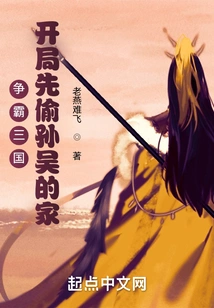
In the Fight for Hegemony of the Three Kingdoms, Start by Stealing Sun Wu's Home
by It Is Difficult For An Old Swallow To Fly
About This Novel
Ding Kuan, the owner of a modern farm, travels back to 172 AD. Taking advantage of the last peace in the late Han Dynasty, he worshiped famous teachers, made connections, and mixed into the scholar class. He concentrated on managing the land in the east corner of the Yangtze River, writing agricultural books, opening farms, connecting with the township party, conquering Shanyue, and accumulating money and grain. After eight years of running away, Ding Kuan finally crossed the Yangtze River north and began the final preparations before hegemony among the Three Kingdoms. Welcome to join the book club group: group number 540851128
Official Sources
What Readers Think
Rating
Community(0)
Official(13)Scraped 2mo ago
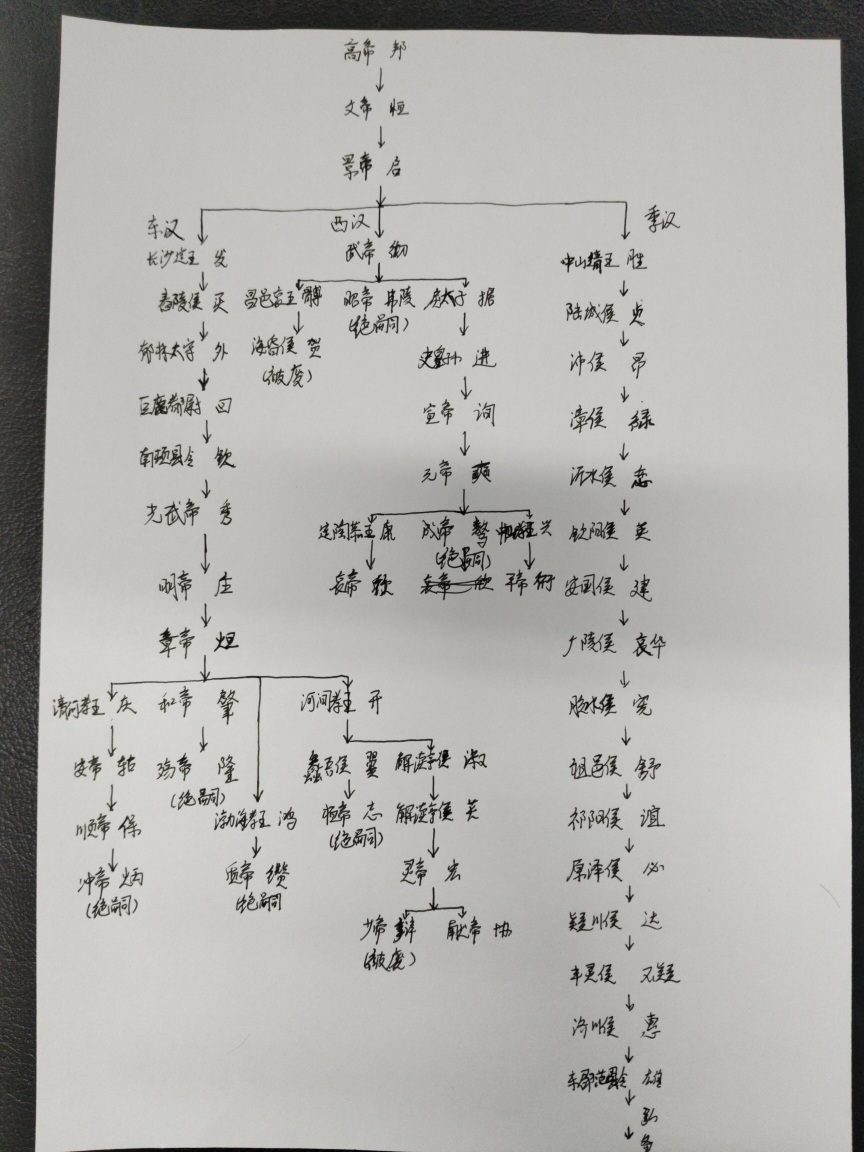
This is the lineage inheritance of Ji Han in the Western Han Dynasty and Eastern Han Dynasty that I compiled after checking a lot of information. Emperor Hui is not mentioned because Emperor Wen was the one who laid the foundation for the next few hundred years or even the two thousand years of China. It can be seen from this that the Eastern Han Dynasty, on the basis of the high seniority of the founding emperor Liu Xiu, gave full play to the fine tradition of late childbearing and even infertility, which often resulted in the interruption of lineage inheritance. It can be said that the practical actions of "unfilial piety has three major consequences and no descendants" have swollen the face of the Han Dynasty's legal principles and traditions of governing the country with filial piety. Emperors often had no sons, or their sons died early after inheriting the throne. In fact, the lineage changed only five times (there was also Liu Yi, which I did not write down, so it is not important), and it was not serious. All five sons of Emperor Zhang Liu Jing had descendants who became emperors. Emperor Huan's lineage was actually the ancestor of the emperor, which gave me the The seniority that should be passed down has been moved up two levels, so the final effect is that the emperors of the Eastern Han Dynasty should generally be two generations or more higher than other Han clan members. For example, Liu Bei is the 21st grandson of Gao Emperor Liu Bang, while Han Xiandi is only the 16th generation grandson. He is directly the ancestor of the great ancestor, and there is an age difference of nearly 20 years. If you really want to check the seniority, almost all the clan members of the Han Dynasty in the late Han Dynasty are called emperor ancestors. To give a simple reason, the eldest son of the same great-great-grandfather was born when he was 20 years old, and the youngest son was born when he was 40 years old. So brothers of the same generation, but 20 years apart, have eldest grandsons born, and the eldest grandson needs to be called uncle of the same age. Uncle; if the eldest grandson is a great-grandson at the age of 20, the eldest great-grandson is a great-great-grandson at the age of 20, and the youngest son is a young grandson at the age of 40, then the two people born at the same time, one is the grandfather and the other is the grandchild; the eldest grandson and the young grandson are the same generation, with a 40-year age difference In just 60 years, the children born to the same great-great-grandfather are two generations apart, so it is normal to see Han clan clan members who are not much different in age but very different in generation. After more than 300 years in the Han Dynasty, I think most of the Han clan clan members in the Western Han Dynasty will be more than four generations younger than Emperor Xian of the Han Dynasty. Liu Dai and Liu Yao are estimated to be even lower, because King Hui of Qi Liu Fei is twenty or thirty years older than Emperor Wen Liu Heng. The line of Qi kings and the line of Han emperors have been different in generation since the early Han Dynasty. As for the Han clan clansmen who are descendants of Emperor Guangwu of the Eastern Han Dynasty, because Emperor Huan is two generations older than Chongzhi, Emperor Xian of the Han Dynasty will generally be two generations older than the other Han clan clans. It is normal for there to be fluctuations, but what I am talking about here is the general situation. Therefore, when discussing seniority, you must be clear. It is best not to discuss seniority, because the protagonist of this book is not a member of the Han family, and does not need to recognize the emperor as his ancestor. For example, after Liu Xiu established the Eastern Han Dynasty, he also recognized Emperor Han Yuan as his father or Emperor Xuan of Han as his grandfather, or recognized Emperor Han Yuan as his grandfather. Anyway, the orthodox inheritance of the royal family must be straightened out, and there must be no confusion, otherwise it would not be called ZTE but the founding of the country. Liu Xiu's Eastern Han Dynasty was the successor of the Western Han Dynasty, and the temple name was Zu because of merit, but this is a dynasty divided into two periods, not two dynasties.
Some explanations about the setting of "Farming Book"
In the book reviews, many book friends have great doubts about the setting of "Nongshu". I didn't want to say more because it would be a spoiler, but I really don't want book friends to struggle with this issue, so I would like to explain it here. I also hope that book friends can understand that everyone can have different views on things, but they must ask the author to change the setting. It is really not necessary. First: The setting of "Agricultural Book" is given at the beginning. This is the basic setting of the book. This book will not promote the so-called industry and commerce on a large scale, because under the traffic conditions of the Han Dynasty, transportation costs were extremely high, and only luxury goods and daily necessities (such as salt) could be circulated on a large scale. Ordinary people using general commodities could only conduct production and exchange within a hundred or two hundred miles. This book will definitely introduce many technologies from later generations, but it will mainly focus on agricultural technology, agricultural and sideline processing and handicrafts and other aspects of small farmer economy. These technologies are basically within the scope of "agricultural books". Second: If the protagonist does not follow the industrial and commercial route, where will the money and food come from? The answer is farming. The fact that so many people starved to death in the troubled times of the late Han Dynasty was a typical result of the misallocation of resources. In troubled times, there was no shortage of landless people and landless refugees, but what was lacking was effective production organization. However, organizing such large-scale production activities requires a large number of grassroots managers. The "agricultural book" and the primary school are used to cultivate these grassroots talents. Third: Who is the agricultural book for? First of all, it is definitely not for illiterate farmers, but for people with a basic education. These people include powerful aristocratic families and landlords, as well as poor families, concubines, and family branches who are squeezed and discriminated against. The main team of the protagonist in the future is to use these poor families, concubines, and family branches as the core of cadres to organize social production, and use this to accumulate money and food to support the army for war. Third: the protagonist's relationship with aristocratic families and powerful landowners. In troubled times, in the early stages of the protagonist's struggle for hegemony, the protagonist can only have a superficial cooperative relationship with these aristocratic families and powerful landowners by mutual use. The protagonist uses the army to help them provide security guarantees, and the aristocratic families and powerful landowners provide limited money, food, and personnel support in return. There will be no social reform at this stage, and the conflict between the two parties is very small. The conflict between the two parties will only intensify when the protagonist's power develops to a certain level and some system reforms must be carried out, but by this time the protagonist already has the capital to compete with them. To use an inappropriate analogy, we can think of these aristocratic families and powerful landowners as the foreign capital introduced in the early stages of reform. Fourth, why was the "Agricultural Book" launched so early and still distributed nationwide? Because technology dissemination takes a lot of time to spread, and agricultural technology is not a standardized technology like industrial production, it must be localized and adjusted according to the climate, soil, geography, and water resources of each place. The purpose of publishing agricultural books all over the world is to increase the potential talent pool, so that the newly occupied territory of the protagonist can resume orderly production more quickly. Fifth, regarding "capitalizing the enemy". Although this book is about fighting for hegemony, it does not follow the trend of becoming a black hero, but the way of farming and crushing. The protagonist was a farm owner in his previous life, and when he traveled to the late Han Dynasty, he was absolutely unrivaled in terms of production and organization capabilities. Therefore, the focus of the protagonist's layout must be to develop more smoothly, without having to worry about others imitating others. The core of social production is organization, and technology is just one element. Finally, having said so much, I just hope that book friends can understand that "Agricultural Books" is the core setting, and it is not just written casually. I hope I can have fun writing and my book friends can have fun reading.
Damn you idiot, you spread all the really important things in the early stage. Why are you fighting for hegemony? Cao Cao and Yuan Shao want power, power, money, wealth, and reputation. You can survive four generations and three masters. You are still developing. Everyone is blowing up. You are destroying you. What else can you do if you have an advantage in spreading? Sooner or later, you won't be able to compete and your head will be chopped off. If you are the state pastor in charge of a state and spread some to enhance your strength, everything is under your control. But you are just a small businessman and I don't know what to think.
The writing is quite good, but the battle situation and layout of the Yellow Turban Uprising are too small.
The writing is quite good, even though the battle situation described in the Yellow Turban Uprising is small. The scale of the original work is larger and the number of people is larger. There are only a dozen or so commanders in one place, holding tens of thousands or hundreds of thousands of people. The Han army also has tens of thousands of troops, not counting the militias organized in various places. You, a land with a large canal and a continent, only have 40,000 to 50,000 troops, and your structure is so small that it's like playing house. And the Yellow Turban Uprising swept across the country and you just beat me two feet and it's almost over?
Change the first chapter
Putting the protagonist at his grave gives the impression that the protagonist has no overall perspective and is too sentimental. Such people cannot do big things and are easily controlled.
Um?
The protagonist prints out the technology that is the foundation of his family from the beginning. This is because the princes are not developing fast enough, their foundation is not strong enough, and not enough people have died, right? If you control two or three states, you will be sure to unify the world, and the promotion is still about the same.
Daily check-in will bring you a wave of experience.
Is there anyone taller than me? Send it out and see.

If a modern person plays with the ancients as a noble class, doesn't this mean that the battlefield is on their home court? You're already half-defeated and you still play nonsense. What kind of brains can you think of such a plot?
The book is okay
I've only read ten chapters, and it's generally OK. I just feel a little uncomfortable calling my father an "adult." An "adult" refers to people who are higher in status, seniority, and age than you. You, father and son, both address each other as "adults." It's the opposite of being unconventional and mainstream. There's also a lot of space to introduce historical events. I've seen a lot of these, but the plot is too bland, and the entire narrative is a narrative.
Rating
Community(0)
Official(13)Scraped 2mo ago
This is the lineage inheritance of Ji Han in the Western Han Dynasty and Eastern Han Dynasty that I compiled after checking a lot of information. Emperor Hui is not mentioned because Emperor Wen was the one who laid the foundation for the next few hundred years or even the two thousand years of China. It can be seen from this that the Eastern Han Dynasty, on the basis of the high seniority of the founding emperor Liu Xiu, gave full play to the fine tradition of late childbearing and even infertility, which often resulted in the interruption of lineage inheritance. It can be said that the practical actions of "unfilial piety has three major consequences and no descendants" have swollen the face of the Han Dynasty's legal principles and traditions of governing the country with filial piety. Emperors often had no sons, or their sons died early after inheriting the throne. In fact, the lineage changed only five times (there was also Liu Yi, which I did not write down, so it is not important), and it was not serious. All five sons of Emperor Zhang Liu Jing had descendants who became emperors. Emperor Huan's lineage was actually the ancestor of the emperor, which gave me the The seniority that should be passed down has been moved up two levels, so the final effect is that the emperors of the Eastern Han Dynasty should generally be two generations or more higher than other Han clan members. For example, Liu Bei is the 21st grandson of Gao Emperor Liu Bang, while Han Xiandi is only the 16th generation grandson. He is directly the ancestor of the great ancestor, and there is an age difference of nearly 20 years. If you really want to check the seniority, almost all the clan members of the Han Dynasty in the late Han Dynasty are called emperor ancestors. To give a simple reason, the eldest son of the same great-great-grandfather was born when he was 20 years old, and the youngest son was born when he was 40 years old. So brothers of the same generation, but 20 years apart, have eldest grandsons born, and the eldest grandson needs to be called uncle of the same age. Uncle; if the eldest grandson is a great-grandson at the age of 20, the eldest great-grandson is a great-great-grandson at the age of 20, and the youngest son is a young grandson at the age of 40, then the two people born at the same time, one is the grandfather and the other is the grandchild; the eldest grandson and the young grandson are the same generation, with a 40-year age difference In just 60 years, the children born to the same great-great-grandfather are two generations apart, so it is normal to see Han clan clan members who are not much different in age but very different in generation. After more than 300 years in the Han Dynasty, I think most of the Han clan clan members in the Western Han Dynasty will be more than four generations younger than Emperor Xian of the Han Dynasty. Liu Dai and Liu Yao are estimated to be even lower, because King Hui of Qi Liu Fei is twenty or thirty years older than Emperor Wen Liu Heng. The line of Qi kings and the line of Han emperors have been different in generation since the early Han Dynasty. As for the Han clan clansmen who are descendants of Emperor Guangwu of the Eastern Han Dynasty, because Emperor Huan is two generations older than Chongzhi, Emperor Xian of the Han Dynasty will generally be two generations older than the other Han clan clans. It is normal for there to be fluctuations, but what I am talking about here is the general situation. Therefore, when discussing seniority, you must be clear. It is best not to discuss seniority, because the protagonist of this book is not a member of the Han family, and does not need to recognize the emperor as his ancestor. For example, after Liu Xiu established the Eastern Han Dynasty, he also recognized Emperor Han Yuan as his father or Emperor Xuan of Han as his grandfather, or recognized Emperor Han Yuan as his grandfather. Anyway, the orthodox inheritance of the royal family must be straightened out, and there must be no confusion, otherwise it would not be called ZTE but the founding of the country. Liu Xiu's Eastern Han Dynasty was the successor of the Western Han Dynasty, and the temple name was Zu because of merit, but this is a dynasty divided into two periods, not two dynasties.
Some explanations about the setting of "Farming Book"
In the book reviews, many book friends have great doubts about the setting of "Nongshu". I didn't want to say more because it would be a spoiler, but I really don't want book friends to struggle with this issue, so I would like to explain it here. I also hope that book friends can understand that everyone can have different views on things, but they must ask the author to change the setting. It is really not necessary. First: The setting of "Agricultural Book" is given at the beginning. This is the basic setting of the book. This book will not promote the so-called industry and commerce on a large scale, because under the traffic conditions of the Han Dynasty, transportation costs were extremely high, and only luxury goods and daily necessities (such as salt) could be circulated on a large scale. Ordinary people using general commodities could only conduct production and exchange within a hundred or two hundred miles. This book will definitely introduce many technologies from later generations, but it will mainly focus on agricultural technology, agricultural and sideline processing and handicrafts and other aspects of small farmer economy. These technologies are basically within the scope of "agricultural books". Second: If the protagonist does not follow the industrial and commercial route, where will the money and food come from? The answer is farming. The fact that so many people starved to death in the troubled times of the late Han Dynasty was a typical result of the misallocation of resources. In troubled times, there was no shortage of landless people and landless refugees, but what was lacking was effective production organization. However, organizing such large-scale production activities requires a large number of grassroots managers. The "agricultural book" and the primary school are used to cultivate these grassroots talents. Third: Who is the agricultural book for? First of all, it is definitely not for illiterate farmers, but for people with a basic education. These people include powerful aristocratic families and landlords, as well as poor families, concubines, and family branches who are squeezed and discriminated against. The main team of the protagonist in the future is to use these poor families, concubines, and family branches as the core of cadres to organize social production, and use this to accumulate money and food to support the army for war. Third: the protagonist's relationship with aristocratic families and powerful landowners. In troubled times, in the early stages of the protagonist's struggle for hegemony, the protagonist can only have a superficial cooperative relationship with these aristocratic families and powerful landowners by mutual use. The protagonist uses the army to help them provide security guarantees, and the aristocratic families and powerful landowners provide limited money, food, and personnel support in return. There will be no social reform at this stage, and the conflict between the two parties is very small. The conflict between the two parties will only intensify when the protagonist's power develops to a certain level and some system reforms must be carried out, but by this time the protagonist already has the capital to compete with them. To use an inappropriate analogy, we can think of these aristocratic families and powerful landowners as the foreign capital introduced in the early stages of reform. Fourth, why was the "Agricultural Book" launched so early and still distributed nationwide? Because technology dissemination takes a lot of time to spread, and agricultural technology is not a standardized technology like industrial production, it must be localized and adjusted according to the climate, soil, geography, and water resources of each place. The purpose of publishing agricultural books all over the world is to increase the potential talent pool, so that the newly occupied territory of the protagonist can resume orderly production more quickly. Fifth, regarding "capitalizing the enemy". Although this book is about fighting for hegemony, it does not follow the trend of becoming a black hero, but the way of farming and crushing. The protagonist was a farm owner in his previous life, and when he traveled to the late Han Dynasty, he was absolutely unrivaled in terms of production and organization capabilities. Therefore, the focus of the protagonist's layout must be to develop more smoothly, without having to worry about others imitating others. The core of social production is organization, and technology is just one element. Finally, having said so much, I just hope that book friends can understand that "Agricultural Books" is the core setting, and it is not just written casually. I hope I can have fun writing and my book friends can have fun reading.
Damn you idiot, you spread all the really important things in the early stage. Why are you fighting for hegemony? Cao Cao and Yuan Shao want power, power, money, wealth, and reputation. You can survive four generations and three masters. You are still developing. Everyone is blowing up. You are destroying you. What else can you do if you have an advantage in spreading? Sooner or later, you won't be able to compete and your head will be chopped off. If you are the state pastor in charge of a state and spread some to enhance your strength, everything is under your control. But you are just a small businessman and I don't know what to think.
The writing is quite good, but the battle situation and layout of the Yellow Turban Uprising are too small.
The writing is quite good, even though the battle situation described in the Yellow Turban Uprising is small. The scale of the original work is larger and the number of people is larger. There are only a dozen or so commanders in one place, holding tens of thousands or hundreds of thousands of people. The Han army also has tens of thousands of troops, not counting the militias organized in various places. You, a land with a large canal and a continent, only have 40,000 to 50,000 troops, and your structure is so small that it's like playing house. And the Yellow Turban Uprising swept across the country and you just beat me two feet and it's almost over?
Change the first chapter
Putting the protagonist at his grave gives the impression that the protagonist has no overall perspective and is too sentimental. Such people cannot do big things and are easily controlled.
Um?
The protagonist prints out the technology that is the foundation of his family from the beginning. This is because the princes are not developing fast enough, their foundation is not strong enough, and not enough people have died, right? If you control two or three states, you will be sure to unify the world, and the promotion is still about the same.
Daily check-in will bring you a wave of experience.
Is there anyone taller than me? Send it out and see.
If a modern person plays with the ancients as a noble class, doesn't this mean that the battlefield is on their home court? You're already half-defeated and you still play nonsense. What kind of brains can you think of such a plot?
The book is okay
I've only read ten chapters, and it's generally OK. I just feel a little uncomfortable calling my father an "adult." An "adult" refers to people who are higher in status, seniority, and age than you. You, father and son, both address each other as "adults." It's the opposite of being unconventional and mainstream. There's also a lot of space to introduce historical events. I've seen a lot of these, but the plot is too bland, and the entire narrative is a narrative.
You Might Also Like
Possessed by Lu Bu
The King Is No More Than A Hegemon
Emperor of Han Dynasty
The King Is No More Than A Hegemon
Daihan
The King Is No More Than A Hegemon
Reborn Female General
Qianshan Tea Guest
The Story of Yuan Yao in the Three Kingdoms
Jack Love
The Three Kingdoms Began with Riding into Jingzhou Alone
Angry Eyebrows And Droopy Eyes
I Will Be the Lord of Xuande
Angry Eyebrows And Droopy Eyes
Three Kingdoms: the Blind Box Draws Da Qiao at the Beginning
I Am A Cat Uncle
People in the Three Kingdoms: Starting from Preaching
I Don't Want To Be A Leader
Overthrow Qin
Dongjun Taking Off