Codename Taoyuan 2
About This Novel
In 2600 AD, the biological extinction event began again on the earth, and the frogmen who evolved independently of humans repelled many attacks from alien civilizations. However, as the environment deteriorated, humans evolved naturally at the same time. Naturally evolved humans are called Mibas. In the previous game, it took humans 1,200 years to reach cosmic civilization level 1.1. This entire drama tells the story of mankind's journey towards Level 2 interstellar civilization over a period of 3,000 years. And the separation and reunification between the autonomously evolving frogmen and the naturally evolving Miba people. The story of this game begins in AD 4527, 1,000 years after the end of the previous game. Even if you haven't read the first part, it won't affect your reading of this book.
Official Sources
What Readers Think
Rating
Community(0)
Official(12)Scraped 1mo ago
coincide
I just found out that today is the 666th day of my accumulated creations. The cumulative total number of words published as of today is 2.22 Million words. Haha, what a coincidence.
vacuum zero point energy
Quantum theory predicts that there is huge background energy in the vacuum, which still exists under absolute zero conditions and is called vacuum zero-point energy. Precise measurements of the Casimir force, a force due to electromagnetic fluctuations at the zero point of the vacuum, confirmed this physical phenomenon. A vacuum does not mean nothing. A vacuum is a system composed of rotating wave packets of positrons and negative electrons. The energy associated with this phenomenon is called zero-point energy, which means that this vacuum activity is still maintained even at absolute zero. Dirac described the vacuum state from the perspective of quantum field theory, comparing the vacuum to an undulating sea of energy. J. Wheeler estimated that the energy density of vacuum can be as high as 1013J/cm3. If zero-point energy can be extracted, it will undoubtedly be the best energy source that humans can utilize. It is clean, cheap energy and a "free lunch" given to mankind by nature. All matter in the universe originates from zero-point electromagnetic fluctuation energy. Every material particle in our body constantly exchanges energy with the zero-point energy of the vacuum. That is, no physical system can be called an isolated system. According to the properties of physical vacuum, we can extract zero point energy from any point in space and convert it into the energy form we need. The electrons in atoms revolve around the nucleus; in the solar system, the planets revolve around the sun, never stopping for billions of years; the phenomena of superconductivity and superfluidity are all revelations about energy given to us by nature. Vacuum energy is a chaotic manifestation of an open nonlinear system, derived from the three-dimensional manifestation of electromagnetic flow in four-dimensional space. It can distort our three-dimensional space, thereby changing the space-time metric. Wheeler calculated the density of zero-point energy to be 1095g/cm3, which means it is an extremely huge energy source. The physical result brought about by the zero point energy of vacuum that can be directly observed from experiments is the Casimir effect.
Wandering Solar System-Solar Engine
The most common thing in science fiction works is to get some cool-looking alloy eggs to put in them for people to eat, drink, and then jump in space. These are actually the most impossible to achieve. Space is not impenetrable, but there must be a transition state when traveling through it. The important thing about this transition state is that the static mass is 0. Easy to get in but not easy to get out. The Wandering Earth is a good work, but relatively speaking, it is not economical enough. Even if the earth is burned, it will not be able to travel 1 light year. Astrophysicist Matthew Caplan came up with a bigger idea. We not only want to wander with the earth, but we also want to wander with the sun and the entire solar system without leaving anyone behind. In this way, we can always face the sea and the spring flowers are blooming, without having to move underground to live. It's a stellar engine named after Kaplan himself, a massive twin-engine electromagnetic fusion drive. First, a huge Dyson ring structure needs to be built around the sun to reflect sunlight to a certain point on the sun, heat the sun, and remove hydrogen and helium from the sun's surface. Then, the hydrogen and helium are collected and sent to the huge Kaplan star engine at a certain distance from the sun. The separated helium is pumped into the fusion furnace and turned into nearly one million degrees of oxygen and ejected out as the main driving force for the movement of the solar system. But this engine will inevitably fall towards the sun, so the collected hydrogen can show its power. Kaplan's other engine is an electromagnetic engine, which is responsible for accelerating hydrogen and shooting it towards the surface of the sun to maintain the distance from the sun. According to Kaplan's calculations, this engine needs to burn millions of tons of helium per second and can move the entire solar system 50 light-years in 1 million years. Current technology allows us to issue early warnings hundreds of thousands to millions of years before a supernova explodes. This speed can basically allow the earth to escape the "killing" activity of a supernova. Of course, hypervelocity stars are mentioned in the book. In addition to Ross 248, which is rapidly approaching the solar system mentioned in the book, humans have discovered 17 hypervelocity stars. Maybe we have discovered an alien civilization. And they are already driving their own sun, along with the entire galaxy. I don't know how to do the picture part. If you are interested in seeing the pictures, you still have to go to QQ to read them for the time being.
Destruction of the subhuman race
I just learned yesterday that I can also search for this book on Qidian, but there are a lot less reviews. Because I used a small account to accompany pictures and post them on QQ for reading, I didn't know where to start and could still see them. Reprinted with some illustrative book reviews. But I don't know how to make pictures. The so-called "biological invasion" is the process in which organisms invade from their original habitat into a new environment, causing serious ecological disasters to the organisms in the invaded area. To this day, we are still suffering from the consequences of biological invasions. But 70,000 years ago, our world suffered the largest "biological invasion" in history, which changed the face of the world to a great extent. This biological invasion was called the "migration of Homo sapiens." Just as orangutans are divided into three major subspecies: chimpanzees, gorillas, and orangutans, we humans have also been divided into multiple species. According to information from archaeological excavations, we have at least several cousins such as Homo Rudolphus, Neanderthals, Denisovans, and Homo erectus. Among them, Homo erectus includes the well-known Peking Man, Lantian Man, and Yuanmou Man. About 150,000 years ago, our ancestors were born somewhere in East Africa. They looked almost exactly like us. Compared with our cousins who were also born in Africa, there seems to be nothing special about our ancestors. It's just that compared with other "human beings", our ancestors had a larger brain capacity, reaching 1200~1400 grams. In comparison, the brain capacity of Peking Man is only about 1040g. Such a huge brain capacity also brought extraordinary wisdom to our ancestors. Therefore, their descendants "shamelessly" gave them a resounding name - Homo sapiens, that is, wise people. Although Homo sapiens have superior intelligence, they are not physically superior. Compared with the strong Neanderthals, the thin Homo sapiens are like rag dolls that can be torn to pieces. While Homo sapiens settled in East Africa, Neanderthals, Denisovans, and Homo erectus occupied most of Eurasia. About 100,000 years ago, Homo sapiens tried to retread the path of their cousins and migrated to Eurasia to make a living. However, the strange thing is that as soon as these Homo sapiens arrived in the Mediterranean, they disappeared without a trace. Experts speculate that they may have encountered Neanderthals. Under the attack of these strong cavemen, Homo sapiens was no match at all, and could only flee back to his hometown in Africa in despair. But 70,000 years ago, Homo sapiens came out of Africa again, and this time they would not suffer defeat again. Homo sapiens will set off a whirlwind of "biological invasion" and kill all creatures in the way. Compared with 30,000 years ago, the physique of Homo sapiens has not increased. But Homo sapiens added a whole new weapon - complex language. According to expert research, a certain genetic mutation changed the way the brains of Homo sapiens are connected, allowing them to think in an unprecedented way and communicate in complex languages. Homo sapiens is like Adam and Eve who ate the fruit of wisdom and suddenly became enlightened. Compared with Homo sapiens, Neanderthals and Homo erectus also had their own language, but due to problems with brain circuits and throat vocal cords, they could only communicate in simple languages. For example, when seeing a lion, Neanderthals would only say: "Be careful, there is a lion ahead!" But Homo sapiens would say: "There is a group of lions chasing bison near the river bend in front. You can go around it through the valley to the north." With this information, the Homo sapiens tribe could discuss together how to approach the river, drive the lions away, and steal the bison meat they had worked so hard to capture. Thanks to their complex language, Homo sapiens can organize groups of more than 150 people. In contrast, it is difficult for Neanderthals and Homo erectus to have such an organization. Although Neanderthals could defeat Homo sapiens one on one. But if they fight in groups, they are definitely no match for Homo sapiens. Not only are they incomparable in terms of numbers, but they are also incomparable in terms of organization and strategy. In this way, Homo sapiens swept across the entire Eurasian continent in just 10,000 years, from Africa to East Asia. According to archaeological research, Homo sapiens "burned, killed and looted" along the way, and many large animals, such as mammoths, suffered tragic extinctions. Why were Homo sapiens so efficient at exterminating large animals compared to Neanderthals and Homo erectus? This is because Homo sapiens has mastered powerful hunting skills with the support of complex language. Homo erectus prefers to hunt alone or in a small group of people when hunting, but Homo sapiens can gather dozens of people, or even unite different tribes, to capture large groups of prey. Archaeologists have discovered many sites, in which they found some fences, barriers and a large number of animal bones. It can be inferred that Homo sapiens drove large groups of prey such as wild horses, bison and even mammoths into a narrow valley and then surrounded them. In just one day, the prey can be killed and tons of fresh meat, fat and fur can be obtained. With Homo sapiens' hunting method of annihilating all descendants, the backward Neanderthals naturally had no choice but to go hungry. According to archaeological excavations, almost all of Homo sapiens' cousins became extinct 30,000 years ago. Experts have two completely different views on the disappearance of these "human beings". Some people believe that due to the large number of Homo sapiens, Neanderthals and other "subhumans" were absorbed and assimilated. But another group of experts gave a cruel answer. These cousins of ours may have been wiped out by Homo sapiens. Even judging from the nature of modern people, Homo sapiens is by no means a "good kind". In an era when materials are so abundant, human beings will still fight because of differences in religion and even ideas. Even Homo sapiens can do this when facing the same race, let alone "subhumans" who are different species, look different, and speak different languages. In my opinion, the latter is more likely. How could Homo sapiens be so merciless in the face of these competitors for food and even mates? Therefore, both Neanderthals and Homo erectus were massacred by Homo sapiens. According to archaeological discoveries, the phenomenon of Homo sapiens eating Neanderthals has indeed been discovered. However, according to DNA testing in 2010, modern humans from Europe to East Asia have approximately 1% to 4% Neanderthal DNA, while Australians have 6% Denisovan DNA. As for whether we Chinese possess the DNA of Homo erectus, further research is needed. Perhaps, after Homo sapiens killed all the "sub-human" men, they left their women as reproductive tools and allowed their genes to remain in our blood.
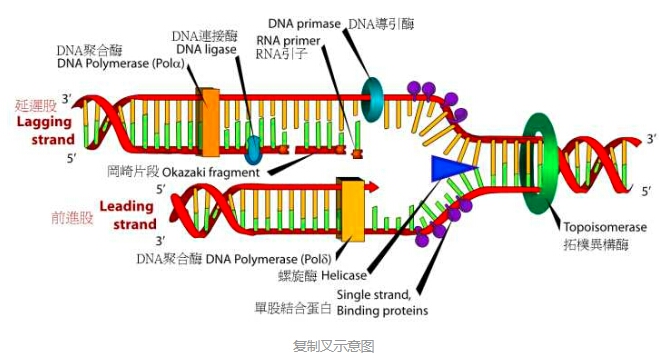
Lateral gene transfer map
The figure shows the unwinding process of DNA molecules, which guides the necessary protein synthesis. This process involves a variety of enzymes. In related professions, it is called topology. Perhaps the easiest thing for us ordinary people to understand is antibodies. Absorb viral genes and preserve them, and produce corresponding antibodies to eliminate corresponding bacteria. Genes are not static and may adapt to changes in the food we consume and the environment. If the environment deteriorates rapidly, there will be corresponding adjustments to adapt to the new environment.
lateral gene transfer
The phylogenetic tree established based on the 16SrRNA gene sequence divides the biological evolution process into three domain systems, including bacteria, archaea and eukaryotes. The first person to propose this classification was Carl Woese. Due to the existence of horizontal gene transfer, the parentage relationship of organisms may be much more complicated. Horizontal gene transfer (HGT) is a process in which an individual passes genetic material to other individuals who are not his or her own descendants. This mechanism allows the flow of genetic material between unrelated individuals. Horizontal gene transfer can also be observed through phenomena such as antigenic shift, reassortment and hybridisation. Viruses can transfer genes between species through transduction. Bacteria can fuse with dead bacteria, undergo transformation, and conjugate with living bacteria to obtain new genes. The new genes can be added to the genome of the host bacteria in the form of plastids. The phenomenon of hybridization is most obvious in plants, and more than 10 bird species are known to be able to hybridize. In addition, there are also examples of hybridization among mammals and insects, but usually the offspring of hybridization are not capable of reproduction. HGT is also one of the ways bacteria transmit drug resistance, and some findings indicate that HGT is an important mechanism in the evolution of prokaryotes and eukaryotes.
The ancient battle between anaerobic and aerobic bacteria
Why are the leaves green? The biology teacher may answer you that this is because chlorophyll performs photosynthesis or something. But today we have a different story to tell. Green leaves actually have a huge BUG: the reason why green leaves are green is that they reflect the green light in the sun. In other words, they do not absorb green light, but the energy of green light in the sun is the most abundant. So why has this most abundant resource been collectively abandoned by hundreds of millions of photosynthesizers who rely on sunlight for their survival? In 2007, Das Sarma, a microbial geneticist at the University of Maryland, put forward an interesting hypothesis about this. If it is true, I can only say that nature is not so natural, and everything is a trace left by billions of years of evolution of life. The story also begins with the two cells that escaped from the mouth of a deep-sea hydrothermal spring that year. These two cells quickly multiplied into the two major families of the original biological world - Eubacteria and Archaea. But before the Battle of Xiao Qiang that later completely changed the face of the earth. They both still have survival problems that need to be solved urgently, and freedom is not free. Being separated from the hot springs in the crater means being separated from the continuous supply of energy and material in the hot springs. It's okay to say that substances, such as carbon dioxide, hydrogen sulfide and methane required for the synthesis of life, are still in stock in the oceans of the prehistoric earth. However, it is impossible to pack away the energy of volcanoes, so the hand of evolution pushed another more inexhaustible energy source to ancient creatures - the sun! During the long evolution, a group of cells accidentally synthesized a special molecule - retinal. With the help of this kind of molecules, archaea can use the sun's light energy to maintain the alkalinity in their cells. In this way, a certain pH difference is always maintained inside and outside the cell membrane, thereby imitating the delicate acid-base neutralization reaction in the mouth of deep sea hot springs to provide energy for cell activities. In fact, our eyes today rely on a similar principle to retinal to convert light into visual nerve signals. In that prehistoric world, if you had the sunshine first, you would have everything. As a result, this branch of life quickly expanded to the whole world. It's just that this pioneer embracing the light has nothing to do with plants as we know them. The earth at that time was not blue but purple. These archaea, which mainly absorbed green light, formed a thick carpet on the surface of the earth. Evidence of this is found in rock layers. The other group of bacteria can only live humblely at the bottom of this layer of bacteria, because the energy-rich green light has long been absorbed, so their energy source is highly penetrating purple light and ultraviolet light, and the waste product of their metabolism is oxygen. For the thick blanket of archaea that covers them, it's poisonous, so to speak. Over a billion years, the oxygen released by these bottom bacteria oxidized the iron throughout the lithosphere and changed the composition of the atmosphere. The oxygen content of the ocean also increased, and a large number of archaea were killed by oxygen. The newly emerging fungi appear green because they absorb purple light and reject green light. They are the ancestors of our plants today. This article draws on a video from Station B, titled: The Double-Edged Sword of Oxygen Life.
The ship mentioned in Chapter 8
The ground-effect wing craft in Chapter 8 of the article. It was used as a ride when Aguta led the soldiers to retreat.

support
Write with great care. As long as you work hard, someone will appreciate you. Come on.
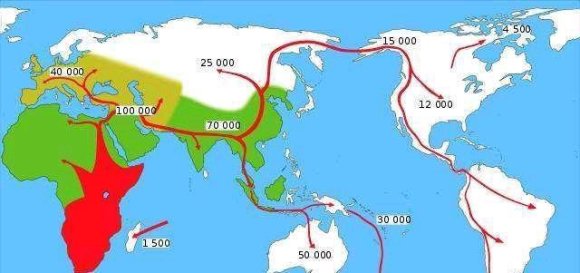
human subspecies mentioned in the book
The attached picture shows the migration route and corresponding time of the ancestors of Homo sapiens.
Rating
Community(0)
Official(12)Scraped 1mo ago
coincide
I just found out that today is the 666th day of my accumulated creations. The cumulative total number of words published as of today is 2.22 Million words. Haha, what a coincidence.
vacuum zero point energy
Quantum theory predicts that there is huge background energy in the vacuum, which still exists under absolute zero conditions and is called vacuum zero-point energy. Precise measurements of the Casimir force, a force due to electromagnetic fluctuations at the zero point of the vacuum, confirmed this physical phenomenon. A vacuum does not mean nothing. A vacuum is a system composed of rotating wave packets of positrons and negative electrons. The energy associated with this phenomenon is called zero-point energy, which means that this vacuum activity is still maintained even at absolute zero. Dirac described the vacuum state from the perspective of quantum field theory, comparing the vacuum to an undulating sea of energy. J. Wheeler estimated that the energy density of vacuum can be as high as 1013J/cm3. If zero-point energy can be extracted, it will undoubtedly be the best energy source that humans can utilize. It is clean, cheap energy and a "free lunch" given to mankind by nature. All matter in the universe originates from zero-point electromagnetic fluctuation energy. Every material particle in our body constantly exchanges energy with the zero-point energy of the vacuum. That is, no physical system can be called an isolated system. According to the properties of physical vacuum, we can extract zero point energy from any point in space and convert it into the energy form we need. The electrons in atoms revolve around the nucleus; in the solar system, the planets revolve around the sun, never stopping for billions of years; the phenomena of superconductivity and superfluidity are all revelations about energy given to us by nature. Vacuum energy is a chaotic manifestation of an open nonlinear system, derived from the three-dimensional manifestation of electromagnetic flow in four-dimensional space. It can distort our three-dimensional space, thereby changing the space-time metric. Wheeler calculated the density of zero-point energy to be 1095g/cm3, which means it is an extremely huge energy source. The physical result brought about by the zero point energy of vacuum that can be directly observed from experiments is the Casimir effect.
Wandering Solar System-Solar Engine
The most common thing in science fiction works is to get some cool-looking alloy eggs to put in them for people to eat, drink, and then jump in space. These are actually the most impossible to achieve. Space is not impenetrable, but there must be a transition state when traveling through it. The important thing about this transition state is that the static mass is 0. Easy to get in but not easy to get out. The Wandering Earth is a good work, but relatively speaking, it is not economical enough. Even if the earth is burned, it will not be able to travel 1 light year. Astrophysicist Matthew Caplan came up with a bigger idea. We not only want to wander with the earth, but we also want to wander with the sun and the entire solar system without leaving anyone behind. In this way, we can always face the sea and the spring flowers are blooming, without having to move underground to live. It's a stellar engine named after Kaplan himself, a massive twin-engine electromagnetic fusion drive. First, a huge Dyson ring structure needs to be built around the sun to reflect sunlight to a certain point on the sun, heat the sun, and remove hydrogen and helium from the sun's surface. Then, the hydrogen and helium are collected and sent to the huge Kaplan star engine at a certain distance from the sun. The separated helium is pumped into the fusion furnace and turned into nearly one million degrees of oxygen and ejected out as the main driving force for the movement of the solar system. But this engine will inevitably fall towards the sun, so the collected hydrogen can show its power. Kaplan's other engine is an electromagnetic engine, which is responsible for accelerating hydrogen and shooting it towards the surface of the sun to maintain the distance from the sun. According to Kaplan's calculations, this engine needs to burn millions of tons of helium per second and can move the entire solar system 50 light-years in 1 million years. Current technology allows us to issue early warnings hundreds of thousands to millions of years before a supernova explodes. This speed can basically allow the earth to escape the "killing" activity of a supernova. Of course, hypervelocity stars are mentioned in the book. In addition to Ross 248, which is rapidly approaching the solar system mentioned in the book, humans have discovered 17 hypervelocity stars. Maybe we have discovered an alien civilization. And they are already driving their own sun, along with the entire galaxy. I don't know how to do the picture part. If you are interested in seeing the pictures, you still have to go to QQ to read them for the time being.
Destruction of the subhuman race
I just learned yesterday that I can also search for this book on Qidian, but there are a lot less reviews. Because I used a small account to accompany pictures and post them on QQ for reading, I didn't know where to start and could still see them. Reprinted with some illustrative book reviews. But I don't know how to make pictures. The so-called "biological invasion" is the process in which organisms invade from their original habitat into a new environment, causing serious ecological disasters to the organisms in the invaded area. To this day, we are still suffering from the consequences of biological invasions. But 70,000 years ago, our world suffered the largest "biological invasion" in history, which changed the face of the world to a great extent. This biological invasion was called the "migration of Homo sapiens." Just as orangutans are divided into three major subspecies: chimpanzees, gorillas, and orangutans, we humans have also been divided into multiple species. According to information from archaeological excavations, we have at least several cousins such as Homo Rudolphus, Neanderthals, Denisovans, and Homo erectus. Among them, Homo erectus includes the well-known Peking Man, Lantian Man, and Yuanmou Man. About 150,000 years ago, our ancestors were born somewhere in East Africa. They looked almost exactly like us. Compared with our cousins who were also born in Africa, there seems to be nothing special about our ancestors. It's just that compared with other "human beings", our ancestors had a larger brain capacity, reaching 1200~1400 grams. In comparison, the brain capacity of Peking Man is only about 1040g. Such a huge brain capacity also brought extraordinary wisdom to our ancestors. Therefore, their descendants "shamelessly" gave them a resounding name - Homo sapiens, that is, wise people. Although Homo sapiens have superior intelligence, they are not physically superior. Compared with the strong Neanderthals, the thin Homo sapiens are like rag dolls that can be torn to pieces. While Homo sapiens settled in East Africa, Neanderthals, Denisovans, and Homo erectus occupied most of Eurasia. About 100,000 years ago, Homo sapiens tried to retread the path of their cousins and migrated to Eurasia to make a living. However, the strange thing is that as soon as these Homo sapiens arrived in the Mediterranean, they disappeared without a trace. Experts speculate that they may have encountered Neanderthals. Under the attack of these strong cavemen, Homo sapiens was no match at all, and could only flee back to his hometown in Africa in despair. But 70,000 years ago, Homo sapiens came out of Africa again, and this time they would not suffer defeat again. Homo sapiens will set off a whirlwind of "biological invasion" and kill all creatures in the way. Compared with 30,000 years ago, the physique of Homo sapiens has not increased. But Homo sapiens added a whole new weapon - complex language. According to expert research, a certain genetic mutation changed the way the brains of Homo sapiens are connected, allowing them to think in an unprecedented way and communicate in complex languages. Homo sapiens is like Adam and Eve who ate the fruit of wisdom and suddenly became enlightened. Compared with Homo sapiens, Neanderthals and Homo erectus also had their own language, but due to problems with brain circuits and throat vocal cords, they could only communicate in simple languages. For example, when seeing a lion, Neanderthals would only say: "Be careful, there is a lion ahead!" But Homo sapiens would say: "There is a group of lions chasing bison near the river bend in front. You can go around it through the valley to the north." With this information, the Homo sapiens tribe could discuss together how to approach the river, drive the lions away, and steal the bison meat they had worked so hard to capture. Thanks to their complex language, Homo sapiens can organize groups of more than 150 people. In contrast, it is difficult for Neanderthals and Homo erectus to have such an organization. Although Neanderthals could defeat Homo sapiens one on one. But if they fight in groups, they are definitely no match for Homo sapiens. Not only are they incomparable in terms of numbers, but they are also incomparable in terms of organization and strategy. In this way, Homo sapiens swept across the entire Eurasian continent in just 10,000 years, from Africa to East Asia. According to archaeological research, Homo sapiens "burned, killed and looted" along the way, and many large animals, such as mammoths, suffered tragic extinctions. Why were Homo sapiens so efficient at exterminating large animals compared to Neanderthals and Homo erectus? This is because Homo sapiens has mastered powerful hunting skills with the support of complex language. Homo erectus prefers to hunt alone or in a small group of people when hunting, but Homo sapiens can gather dozens of people, or even unite different tribes, to capture large groups of prey. Archaeologists have discovered many sites, in which they found some fences, barriers and a large number of animal bones. It can be inferred that Homo sapiens drove large groups of prey such as wild horses, bison and even mammoths into a narrow valley and then surrounded them. In just one day, the prey can be killed and tons of fresh meat, fat and fur can be obtained. With Homo sapiens' hunting method of annihilating all descendants, the backward Neanderthals naturally had no choice but to go hungry. According to archaeological excavations, almost all of Homo sapiens' cousins became extinct 30,000 years ago. Experts have two completely different views on the disappearance of these "human beings". Some people believe that due to the large number of Homo sapiens, Neanderthals and other "subhumans" were absorbed and assimilated. But another group of experts gave a cruel answer. These cousins of ours may have been wiped out by Homo sapiens. Even judging from the nature of modern people, Homo sapiens is by no means a "good kind". In an era when materials are so abundant, human beings will still fight because of differences in religion and even ideas. Even Homo sapiens can do this when facing the same race, let alone "subhumans" who are different species, look different, and speak different languages. In my opinion, the latter is more likely. How could Homo sapiens be so merciless in the face of these competitors for food and even mates? Therefore, both Neanderthals and Homo erectus were massacred by Homo sapiens. According to archaeological discoveries, the phenomenon of Homo sapiens eating Neanderthals has indeed been discovered. However, according to DNA testing in 2010, modern humans from Europe to East Asia have approximately 1% to 4% Neanderthal DNA, while Australians have 6% Denisovan DNA. As for whether we Chinese possess the DNA of Homo erectus, further research is needed. Perhaps, after Homo sapiens killed all the "sub-human" men, they left their women as reproductive tools and allowed their genes to remain in our blood.
Lateral gene transfer map
The figure shows the unwinding process of DNA molecules, which guides the necessary protein synthesis. This process involves a variety of enzymes. In related professions, it is called topology. Perhaps the easiest thing for us ordinary people to understand is antibodies. Absorb viral genes and preserve them, and produce corresponding antibodies to eliminate corresponding bacteria. Genes are not static and may adapt to changes in the food we consume and the environment. If the environment deteriorates rapidly, there will be corresponding adjustments to adapt to the new environment.
lateral gene transfer
The phylogenetic tree established based on the 16SrRNA gene sequence divides the biological evolution process into three domain systems, including bacteria, archaea and eukaryotes. The first person to propose this classification was Carl Woese. Due to the existence of horizontal gene transfer, the parentage relationship of organisms may be much more complicated. Horizontal gene transfer (HGT) is a process in which an individual passes genetic material to other individuals who are not his or her own descendants. This mechanism allows the flow of genetic material between unrelated individuals. Horizontal gene transfer can also be observed through phenomena such as antigenic shift, reassortment and hybridisation. Viruses can transfer genes between species through transduction. Bacteria can fuse with dead bacteria, undergo transformation, and conjugate with living bacteria to obtain new genes. The new genes can be added to the genome of the host bacteria in the form of plastids. The phenomenon of hybridization is most obvious in plants, and more than 10 bird species are known to be able to hybridize. In addition, there are also examples of hybridization among mammals and insects, but usually the offspring of hybridization are not capable of reproduction. HGT is also one of the ways bacteria transmit drug resistance, and some findings indicate that HGT is an important mechanism in the evolution of prokaryotes and eukaryotes.
The ancient battle between anaerobic and aerobic bacteria
Why are the leaves green? The biology teacher may answer you that this is because chlorophyll performs photosynthesis or something. But today we have a different story to tell. Green leaves actually have a huge BUG: the reason why green leaves are green is that they reflect the green light in the sun. In other words, they do not absorb green light, but the energy of green light in the sun is the most abundant. So why has this most abundant resource been collectively abandoned by hundreds of millions of photosynthesizers who rely on sunlight for their survival? In 2007, Das Sarma, a microbial geneticist at the University of Maryland, put forward an interesting hypothesis about this. If it is true, I can only say that nature is not so natural, and everything is a trace left by billions of years of evolution of life. The story also begins with the two cells that escaped from the mouth of a deep-sea hydrothermal spring that year. These two cells quickly multiplied into the two major families of the original biological world - Eubacteria and Archaea. But before the Battle of Xiao Qiang that later completely changed the face of the earth. They both still have survival problems that need to be solved urgently, and freedom is not free. Being separated from the hot springs in the crater means being separated from the continuous supply of energy and material in the hot springs. It's okay to say that substances, such as carbon dioxide, hydrogen sulfide and methane required for the synthesis of life, are still in stock in the oceans of the prehistoric earth. However, it is impossible to pack away the energy of volcanoes, so the hand of evolution pushed another more inexhaustible energy source to ancient creatures - the sun! During the long evolution, a group of cells accidentally synthesized a special molecule - retinal. With the help of this kind of molecules, archaea can use the sun's light energy to maintain the alkalinity in their cells. In this way, a certain pH difference is always maintained inside and outside the cell membrane, thereby imitating the delicate acid-base neutralization reaction in the mouth of deep sea hot springs to provide energy for cell activities. In fact, our eyes today rely on a similar principle to retinal to convert light into visual nerve signals. In that prehistoric world, if you had the sunshine first, you would have everything. As a result, this branch of life quickly expanded to the whole world. It's just that this pioneer embracing the light has nothing to do with plants as we know them. The earth at that time was not blue but purple. These archaea, which mainly absorbed green light, formed a thick carpet on the surface of the earth. Evidence of this is found in rock layers. The other group of bacteria can only live humblely at the bottom of this layer of bacteria, because the energy-rich green light has long been absorbed, so their energy source is highly penetrating purple light and ultraviolet light, and the waste product of their metabolism is oxygen. For the thick blanket of archaea that covers them, it's poisonous, so to speak. Over a billion years, the oxygen released by these bottom bacteria oxidized the iron throughout the lithosphere and changed the composition of the atmosphere. The oxygen content of the ocean also increased, and a large number of archaea were killed by oxygen. The newly emerging fungi appear green because they absorb purple light and reject green light. They are the ancestors of our plants today. This article draws on a video from Station B, titled: The Double-Edged Sword of Oxygen Life.
The ship mentioned in Chapter 8
The ground-effect wing craft in Chapter 8 of the article. It was used as a ride when Aguta led the soldiers to retreat.
support
Write with great care. As long as you work hard, someone will appreciate you. Come on.
human subspecies mentioned in the book
The attached picture shows the migration route and corresponding time of the ancestors of Homo sapiens.
You Might Also Like
The Strongest Monkey King
Wandering Black Cat

Reborn Female General
Qianshan Tea Guest
Everyone is Turning to Motorcycles, I Will Buy a Heavy Truck in Advance
A Foolish Thought

Starting from the Red Moon
Montenegro Old Ghost

Space Professional Player
I Eat Tomatoes
The Autobiography I Wrote Cannot Be a Tragedy
Evergreen In The Sky

Spiritual Realm Walker
Newspaper Boy

Base 7
Clean And Traceless
Deep Sea Embers
Far Pupil
Devouring the Starry Sky
I Eat Tomatoes