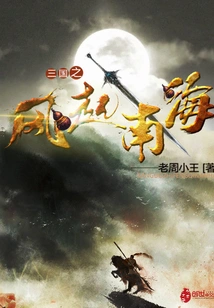
The Wind of the Three Kingdoms Rises in the South China Sea
About This Novel
University lecturer Zhou Ye traveled to the end of the Han Dynasty and found himself possessing a fifteen-year-old boy. He was captured by the county because he insulted his mother and killed the county officials in anger. At a critical moment, he gained the attention of a famous general with his talents, and he followed the famous general to suppress bandits in the South China Sea, starting his own rise. He advocated culture and education, passed on technology, ran agricultural affairs, established industry and commerce, attracted people, trained elite soldiers, conquered mountains and rivers, and focused on navigation. Starting from the South China Sea, with Jiaozhou as the base, he gradually embarked on the chessboard where heroes competed for hegemony in the late Han Dynasty, and became one of the princes qualified to aspire to the world. Can he calm the world, revitalize China, sweep away the weakness of the two Jin Dynasties, change the tragedy of the Five Husbands' chaos in China, and end the vicious cycle of chaos in China's history? Shi Xie: Wensheng is truly the hero of our county! The great governance of Jiaozhou depends on the ability of Mingde. Cao Cao: My husband, Zhou Ye, is an outstanding man, with outstanding majesty, and the strategy of a king. If we don't attack him now, we will be troubled in the future! Zhuge Liang: Taizu Long was born in a remote area of the South China Sea. He heard the news from all over the world and made the world clear. He was a man of extraordinary talents, benevolent and caring for the people, and was admired by all the people, like water returning to the sea. Chen Shou: Taizu made plans and maneuvers, whipped Yu Nei, adopted the methods of Shen and Shang, inherited the techniques of Mo and Ban, adopted the strategies of Han and Bai, and received materials from the government. Each had his own tools, acted as he wished, and did not care about old evils. In the end, he was able to control the emperor's machine and defeat the prosperous industry, but his clear strategy was the best. He can be said to be an extraordinary person, a transcendent hero.
Official Sources
What Readers Think
Rating
Community(0)
Official(31)Scraped 1mo ago
Note that this is official history, not romance, but you can also refer to it, so I filled in a few more characters.
There are Yue people in the south, barbarians such as Meng Huo in the southwest, Qiang people (Ma Teng and Ma Chao are from the Qiang people) and Wuheng people in the northwest, Xiongnu (annihilated in the middle of the Eastern Han Dynasty), Xianbei, Jie, Di and other ethnic groups in the north, and across the sea in the east are the Dongyi people of Bimihu (now Japan). The detailed description is as follows: [Wuheng]-the alien race that Cao Cao personally pacified One of the northern herders. A foreign ethnic group belonging to northern China (now Hebei and Liaoning), with cavalry as the main force. During the Eastern Han Dynasty, they often rebelled and invaded, but were later pacified by Cao Cao and incorporated into his own army. At the end of the Eastern Han Dynasty, the Wuwan tribe in the three counties of Youzhou, Liaoxi, Liaodong, and Youbeiping was the most powerful, and they even once each claimed the title of king. In 187 AD, Qiu Liju and Zhang Chun, the leaders of Wuwan in western Liaoning, rebelled. After Qiu Liju's death, his nephew Tadun led the Wuwan tribe in the three counties, and then formed an alliance with Yuan Shao and obtained the title of Chanyu. By 250, brothers Yuan Shang and Yuan Xi fled to Tadun's territory to seek refuge. In order to eliminate the remnants of the Yuan family, Cao Cao took Zhang Liao as the vanguard to go to Wuwan to launch a conquest, and defeated Wuwan in Bailang Mountain and killed Tadun. After that, Cao Cao moved the surrendered Karasuma to settle inland and used it as an elite cavalry unit in Cao's army. [South Vietnam]-a mountain nation with powerful Shanyue soldiers Aliens from the mountainous areas of Yangzhou. A foreign ethnic group that mainly lives in the mountainous areas of southern China (now Hunan, Jiangxi, Zhejiang, and Fujian). They farmed in the valleys and knew how to make weapons and agricultural tools from copper and iron. In particular, most of them are distributed in Danyang, Kuaiji, Yuzhang, Poyang and other counties. The Shanyue were very brave and good at fighting in the mountains. They would also use the copper and iron produced in the mountains where they lived to forge to be self-sufficient, and they had repeatedly attacked settlements inhabited by Han people. Therefore, Lu Xun told Sun Quan that if Shanyue was not pacified, it would be difficult for Soochow to manage the north, so he personally led his army to pacify Shanyue. He also used the strong as soldiers and the old and weak as farmers, thus gaining a total of tens of thousands of elite soldiers. After that, Wu State continued to conquer Shanyue from time to time in order to continuously develop Jiangnan. [Xiongnu]-one of the nomadic peoples in the north A foreign ethnic group in northern China (now Inner Mongolia, Shanxi, and Shaanxi). Its powerful power once surpassed the Han Empire, but it became weak after splitting into the northern and southern branches. In the second century BC, the Xiongnu once prided themselves on their military force that overwhelmed the national power of the Western Han Dynasty, but later they declined due to internal disputes. In AD 48, the Xiongnu once divided into two branches, the north and the south. The southern Xiongnu later surrendered to the Eastern Han Dynasty and moved to Bingzhou, Liangzhou and other places, responsible for the defense of the north. In 1888, taking advantage of the wars at the end of the Eastern Han Dynasty, bandits such as Nannu Yu Fulo Shanyu and Baibo bandits harassed Hedong and Hanoi, and settled in Pingyang in Hedong County, Silibu. It was his descendants who would later wipe out the Western Jin Dynasty. However, during the Wei period, the southern Xiongnu were deprived of their autonomy and fell under the jurisdiction of the Han people. [Qiang] - one of the nomadic ethnic groups belonging to the Tibetan family The foreign ethnic groups mainly distributed in western China (now Gansu, Qinghai, and Sichuan), or the mainly nomadic Tibetan ethnic groups, had many rebellions in the late Eastern Han Dynasty. After the Eastern Han Dynasty, the Qiang people took advantage of the chaos to invade Liangzhou and settled there, and began to live together with the Han people. At that time, the Qiang people joined forces with local wealthy families, or raised their own troops to launch rebellions, which caused a headache for the Eastern Han Dynasty. In 184 AD, a foreigner named Beigong Boyu joined forces with Han Bian Zhang and Han Sui to launch a rebellion with the Xianling Qiang. The leadership of the rebellion continued to change, and was finally led by Ma Teng and his son. After that, the Qiang people often joined forces with them to rebel together. 氐-A foreign ethnic group belonging to the Tibetan people who oppressed the Shu Kingdom Chengdu They are mainly distributed in western China (now Gansu, Qinghai, and Sichuan). They belong to the Tibetan tribe and are famous for their bravery and good fighting skills. The Di people, a foreign ethnic group in the Eastern Han Dynasty, lived in Liangzhou and Yizhou. Although their customs were similar to those of the Qiang people, they were better at farming. In 221 AD, when Ma Chao raised his troops to rebel against Cao Cao, the Xingguo Di and Baiqing Di tribes among the Di tribe also joined Ma Chao's ranks. After the Three Kingdoms era, because the Di people lived on the border between Wei and Shu, they were often involved in the wars between the two countries. In AD 304, Li Xiong, the chief of the Di tribe, took advantage of the civil strife in the Western Jin Dynasty to send troops to attack Chengdu and proclaimed himself emperor, establishing the so-called Chenghan. Li Xiong also named Liu Xuan, Liu Chan's great-grandson, as Duke An Le and succeeded Liu Chan's title. [Southern Barbarians]-the Yunnan ethnic group that Wu Hou personally pacified The collective name for the foreign ethnic groups distributed in southwest China (now Yunnan and Guizhou), also called Southwest Yi. After Liu Bei's death, he launched a rebellion against Shu, which was later put down by Zhuge Liang. The so-called Southern Barbarians refer to the foreign peoples living in the south. During the Eastern Han Dynasty, they specifically referred to the foreign peoples living in the south of Jingzhou. Among them, the largest group is called Wuling Man, and there are also other foreign tribes such as Changsha Man and Lingling Man. The Southern Barbarians mentioned in the Three Kingdoms were located in Yizhou, which was also known as the Southwest Barbarians in history. After Liu Bei's death in 223 AD, the counties in southern Yizhou raised troops to rebel one after another. At that time, Gaoding, the Yi king of Yuejun, also participated in the rebellion. However, after Zhuge Liang's expedition to Yunnan, the rebellion of the southwestern barbarians did not stop. In 233 AD, the leader of the southwestern barbarians, Liu Jun, rebelled again. Dong Zhuo from the northwest is also counted, as is the Cheliji tribe of the later northwest tribe, and King Zuo Xian who reconciled with Yuan Shao , where the Xiongnu is, it is not actually called the Xiongnu. The Sun Queen of Japan, Himiko, (I only know that Cao Cao attacked Japan, but I don't know if Japan ever fought back) King Jumong of Goguryeo, in Korea, in Vietnam, some barbarians were conquered by Sun Quan, in Liaodong, the Gongsun family, Gongsun Zan's son Gongsun Ce proclaimed himself emperor, but was conquered by Sima Yi There were some minor harassments on Hainan Island. Later, Sun Quan simply destroyed Hainan Island with his army. Because the protagonist was in the Three Kingdoms period, I only talked about the Three Kingdoms period. It was almost the same. Except for these, the Central Plains were all Han people, because the Manchu and Qing Dynasties and the Jin Dynasty were still living there in the Stone Age.
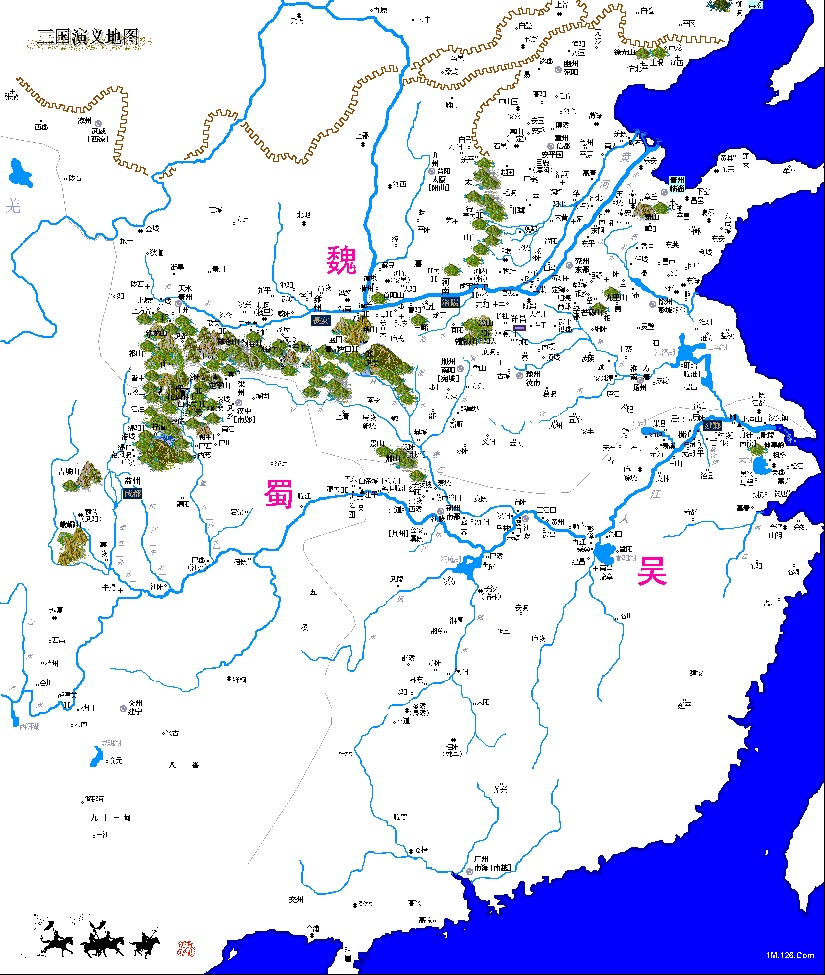
Jiaozhou
At that time, Jiaozhou had a population of less than one million, and there were a large number of Jiaozhou aristocratic families and Baiyue aliens. The geographical environment is harsh and arable land is insufficient. If we use this as the foundation, we should not try to lay a solid foundation for ten or eight years. Moreover, fighting for world hegemony requires a large number of troops. Assuming that Jiaozhou had a population of one million at that time, if one of the ten households was selected, it would only be 100,000 people. This would lead to military warfare, and there would be fewer people to cultivate the land, and how much food and grass would be needed for a 100,000 army. One trades off the other, well, the whole logistics will be brought down. Not to mention competing for world hegemony.
good
Jiaozhou has a large population, most of which are from Baiyue. During the Qin Dynasty, counties were established, and the Han people were all Qin soldiers. During the more than 400 years of the Han Dynasty, the number of Han people never exceeded one million. Do you want to dominate the South just because you count on this? You are not from an aristocratic family. You only offer advice to high-level officials and gradually make some minor achievements. I won't say that you have become a county-level official. But have you even forgotten what Delong Wangshu said? You rule Jiaozhou, the land of Baiyue, with millions of Han people, and the local natives and barbarians will not resist? It took Zhuge Liang hundreds of thousands of troops to quell the barbarian king in southern China. He also captured the barbarian king seven times and captured him seven times to win his loyalty. Are you just here to fight in a small way and if you win, everything will go smoothly? There is nothing wrong with developing overseas. But that is feasible when the Han population base is huge and the development within the territory is stable. How dare you do this when you can't even increase the number of Han people? Have you forgotten that those who are not from my race must have different hearts?


At first glance, it seems that this author does not know how to write novels, at least not in the historical hegemony genre. For example, this book, to a discerning eye, is a hegemony type, and it is still fighting for hegemony in my territory of the Eastern Han Dynasty. It turns out that this author actually wants to immigrate to Australia... What the hell is this? You plan to develop from Australia to compete for the territory of the Eastern Han Dynasty... Are you sure you are serious? Author, your book is about fighting for hegemony, and it is about fighting for hegemony in the Eastern Han Dynasty. When writing novels, you need to be realistic and in line with the actual situation at the time.
Am I the only one like this?
Awesome😄Awesome😄Awesome😄Awesome😄Awesome😄

If you want to develop there, you need to solve malaria and schistosomiasis first.
Emm, that Mr. Qin is so unreasonable and shameless. He obviously wants to keep those gifts for himself, but he refuses to admit it. He just wants to find a reason to cover up his dirty behavior. Social bugs are talking about people like you.
There are many people in Britain
There are many people in the UK who are still called daddy in the Celestial Dynasty. Many people in Manqing are still called daddy in the Ming Dynasty. Tens of thousands of people have learned modern education, but they are still no match for the big families of the Han Dynasty. What can the literati of the Han Dynasty do that are better than the talents you educate?
good book
I have been reading the most, great book! At least he knows what he wants to do when he travels back in time! Unlike some novels where time travelers go back and play with knives with a group of natives! At least the IQ is online! What is the first thing a normal person feels when they go back to the past? It's a deep sense of superiority! Even the emperor looks down upon it! When time-travelers go back, they will speed up the historical process, change the world, and change society. At the very least, they will advance human history by one or two thousand years.
Qin Jun deserved to be killed. After all, he had done countless bad things during his lifetime, but killing was wrong. In addition, Qin Jun was Zhao He's subordinate. Needless to say, Zhou Ye would definitely be killed.
Rating
Community(0)
Official(31)Scraped 1mo ago
Note that this is official history, not romance, but you can also refer to it, so I filled in a few more characters.
There are Yue people in the south, barbarians such as Meng Huo in the southwest, Qiang people (Ma Teng and Ma Chao are from the Qiang people) and Wuheng people in the northwest, Xiongnu (annihilated in the middle of the Eastern Han Dynasty), Xianbei, Jie, Di and other ethnic groups in the north, and across the sea in the east are the Dongyi people of Bimihu (now Japan). The detailed description is as follows: [Wuheng]-the alien race that Cao Cao personally pacified One of the northern herders. A foreign ethnic group belonging to northern China (now Hebei and Liaoning), with cavalry as the main force. During the Eastern Han Dynasty, they often rebelled and invaded, but were later pacified by Cao Cao and incorporated into his own army. At the end of the Eastern Han Dynasty, the Wuwan tribe in the three counties of Youzhou, Liaoxi, Liaodong, and Youbeiping was the most powerful, and they even once each claimed the title of king. In 187 AD, Qiu Liju and Zhang Chun, the leaders of Wuwan in western Liaoning, rebelled. After Qiu Liju's death, his nephew Tadun led the Wuwan tribe in the three counties, and then formed an alliance with Yuan Shao and obtained the title of Chanyu. By 250, brothers Yuan Shang and Yuan Xi fled to Tadun's territory to seek refuge. In order to eliminate the remnants of the Yuan family, Cao Cao took Zhang Liao as the vanguard to go to Wuwan to launch a conquest, and defeated Wuwan in Bailang Mountain and killed Tadun. After that, Cao Cao moved the surrendered Karasuma to settle inland and used it as an elite cavalry unit in Cao's army. [South Vietnam]-a mountain nation with powerful Shanyue soldiers Aliens from the mountainous areas of Yangzhou. A foreign ethnic group that mainly lives in the mountainous areas of southern China (now Hunan, Jiangxi, Zhejiang, and Fujian). They farmed in the valleys and knew how to make weapons and agricultural tools from copper and iron. In particular, most of them are distributed in Danyang, Kuaiji, Yuzhang, Poyang and other counties. The Shanyue were very brave and good at fighting in the mountains. They would also use the copper and iron produced in the mountains where they lived to forge to be self-sufficient, and they had repeatedly attacked settlements inhabited by Han people. Therefore, Lu Xun told Sun Quan that if Shanyue was not pacified, it would be difficult for Soochow to manage the north, so he personally led his army to pacify Shanyue. He also used the strong as soldiers and the old and weak as farmers, thus gaining a total of tens of thousands of elite soldiers. After that, Wu State continued to conquer Shanyue from time to time in order to continuously develop Jiangnan. [Xiongnu]-one of the nomadic peoples in the north A foreign ethnic group in northern China (now Inner Mongolia, Shanxi, and Shaanxi). Its powerful power once surpassed the Han Empire, but it became weak after splitting into the northern and southern branches. In the second century BC, the Xiongnu once prided themselves on their military force that overwhelmed the national power of the Western Han Dynasty, but later they declined due to internal disputes. In AD 48, the Xiongnu once divided into two branches, the north and the south. The southern Xiongnu later surrendered to the Eastern Han Dynasty and moved to Bingzhou, Liangzhou and other places, responsible for the defense of the north. In 1888, taking advantage of the wars at the end of the Eastern Han Dynasty, bandits such as Nannu Yu Fulo Shanyu and Baibo bandits harassed Hedong and Hanoi, and settled in Pingyang in Hedong County, Silibu. It was his descendants who would later wipe out the Western Jin Dynasty. However, during the Wei period, the southern Xiongnu were deprived of their autonomy and fell under the jurisdiction of the Han people. [Qiang] - one of the nomadic ethnic groups belonging to the Tibetan family The foreign ethnic groups mainly distributed in western China (now Gansu, Qinghai, and Sichuan), or the mainly nomadic Tibetan ethnic groups, had many rebellions in the late Eastern Han Dynasty. After the Eastern Han Dynasty, the Qiang people took advantage of the chaos to invade Liangzhou and settled there, and began to live together with the Han people. At that time, the Qiang people joined forces with local wealthy families, or raised their own troops to launch rebellions, which caused a headache for the Eastern Han Dynasty. In 184 AD, a foreigner named Beigong Boyu joined forces with Han Bian Zhang and Han Sui to launch a rebellion with the Xianling Qiang. The leadership of the rebellion continued to change, and was finally led by Ma Teng and his son. After that, the Qiang people often joined forces with them to rebel together. 氐-A foreign ethnic group belonging to the Tibetan people who oppressed the Shu Kingdom Chengdu They are mainly distributed in western China (now Gansu, Qinghai, and Sichuan). They belong to the Tibetan tribe and are famous for their bravery and good fighting skills. The Di people, a foreign ethnic group in the Eastern Han Dynasty, lived in Liangzhou and Yizhou. Although their customs were similar to those of the Qiang people, they were better at farming. In 221 AD, when Ma Chao raised his troops to rebel against Cao Cao, the Xingguo Di and Baiqing Di tribes among the Di tribe also joined Ma Chao's ranks. After the Three Kingdoms era, because the Di people lived on the border between Wei and Shu, they were often involved in the wars between the two countries. In AD 304, Li Xiong, the chief of the Di tribe, took advantage of the civil strife in the Western Jin Dynasty to send troops to attack Chengdu and proclaimed himself emperor, establishing the so-called Chenghan. Li Xiong also named Liu Xuan, Liu Chan's great-grandson, as Duke An Le and succeeded Liu Chan's title. [Southern Barbarians]-the Yunnan ethnic group that Wu Hou personally pacified The collective name for the foreign ethnic groups distributed in southwest China (now Yunnan and Guizhou), also called Southwest Yi. After Liu Bei's death, he launched a rebellion against Shu, which was later put down by Zhuge Liang. The so-called Southern Barbarians refer to the foreign peoples living in the south. During the Eastern Han Dynasty, they specifically referred to the foreign peoples living in the south of Jingzhou. Among them, the largest group is called Wuling Man, and there are also other foreign tribes such as Changsha Man and Lingling Man. The Southern Barbarians mentioned in the Three Kingdoms were located in Yizhou, which was also known as the Southwest Barbarians in history. After Liu Bei's death in 223 AD, the counties in southern Yizhou raised troops to rebel one after another. At that time, Gaoding, the Yi king of Yuejun, also participated in the rebellion. However, after Zhuge Liang's expedition to Yunnan, the rebellion of the southwestern barbarians did not stop. In 233 AD, the leader of the southwestern barbarians, Liu Jun, rebelled again. Dong Zhuo from the northwest is also counted, as is the Cheliji tribe of the later northwest tribe, and King Zuo Xian who reconciled with Yuan Shao , where the Xiongnu is, it is not actually called the Xiongnu. The Sun Queen of Japan, Himiko, (I only know that Cao Cao attacked Japan, but I don't know if Japan ever fought back) King Jumong of Goguryeo, in Korea, in Vietnam, some barbarians were conquered by Sun Quan, in Liaodong, the Gongsun family, Gongsun Zan's son Gongsun Ce proclaimed himself emperor, but was conquered by Sima Yi There were some minor harassments on Hainan Island. Later, Sun Quan simply destroyed Hainan Island with his army. Because the protagonist was in the Three Kingdoms period, I only talked about the Three Kingdoms period. It was almost the same. Except for these, the Central Plains were all Han people, because the Manchu and Qing Dynasties and the Jin Dynasty were still living there in the Stone Age.
Jiaozhou
At that time, Jiaozhou had a population of less than one million, and there were a large number of Jiaozhou aristocratic families and Baiyue aliens. The geographical environment is harsh and arable land is insufficient. If we use this as the foundation, we should not try to lay a solid foundation for ten or eight years. Moreover, fighting for world hegemony requires a large number of troops. Assuming that Jiaozhou had a population of one million at that time, if one of the ten households was selected, it would only be 100,000 people. This would lead to military warfare, and there would be fewer people to cultivate the land, and how much food and grass would be needed for a 100,000 army. One trades off the other, well, the whole logistics will be brought down. Not to mention competing for world hegemony.
good
Jiaozhou has a large population, most of which are from Baiyue. During the Qin Dynasty, counties were established, and the Han people were all Qin soldiers. During the more than 400 years of the Han Dynasty, the number of Han people never exceeded one million. Do you want to dominate the South just because you count on this? You are not from an aristocratic family. You only offer advice to high-level officials and gradually make some minor achievements. I won't say that you have become a county-level official. But have you even forgotten what Delong Wangshu said? You rule Jiaozhou, the land of Baiyue, with millions of Han people, and the local natives and barbarians will not resist? It took Zhuge Liang hundreds of thousands of troops to quell the barbarian king in southern China. He also captured the barbarian king seven times and captured him seven times to win his loyalty. Are you just here to fight in a small way and if you win, everything will go smoothly? There is nothing wrong with developing overseas. But that is feasible when the Han population base is huge and the development within the territory is stable. How dare you do this when you can't even increase the number of Han people? Have you forgotten that those who are not from my race must have different hearts?
At first glance, it seems that this author does not know how to write novels, at least not in the historical hegemony genre. For example, this book, to a discerning eye, is a hegemony type, and it is still fighting for hegemony in my territory of the Eastern Han Dynasty. It turns out that this author actually wants to immigrate to Australia... What the hell is this? You plan to develop from Australia to compete for the territory of the Eastern Han Dynasty... Are you sure you are serious? Author, your book is about fighting for hegemony, and it is about fighting for hegemony in the Eastern Han Dynasty. When writing novels, you need to be realistic and in line with the actual situation at the time.
Am I the only one like this?
Awesome😄Awesome😄Awesome😄Awesome😄Awesome😄
If you want to develop there, you need to solve malaria and schistosomiasis first.
Emm, that Mr. Qin is so unreasonable and shameless. He obviously wants to keep those gifts for himself, but he refuses to admit it. He just wants to find a reason to cover up his dirty behavior. Social bugs are talking about people like you.
There are many people in Britain
There are many people in the UK who are still called daddy in the Celestial Dynasty. Many people in Manqing are still called daddy in the Ming Dynasty. Tens of thousands of people have learned modern education, but they are still no match for the big families of the Han Dynasty. What can the literati of the Han Dynasty do that are better than the talents you educate?
good book
I have been reading the most, great book! At least he knows what he wants to do when he travels back in time! Unlike some novels where time travelers go back and play with knives with a group of natives! At least the IQ is online! What is the first thing a normal person feels when they go back to the past? It's a deep sense of superiority! Even the emperor looks down upon it! When time-travelers go back, they will speed up the historical process, change the world, and change society. At the very least, they will advance human history by one or two thousand years.
Qin Jun deserved to be killed. After all, he had done countless bad things during his lifetime, but killing was wrong. In addition, Qin Jun was Zhao He's subordinate. Needless to say, Zhou Ye would definitely be killed.
You Might Also Like
Zhao Was King During the Warring States Period
Ximengfu
Daihan
The King Is No More Than A Hegemon
Reborn Female General
Qianshan Tea Guest

The Story of Yuan Yao in the Three Kingdoms
Jack Love

Han Dao Tianxia
Zhuang Buzhou
Li Han
Crazy Chen

Three Kingdoms: the Blind Box Draws Da Qiao at the Beginning
I Am A Cat Uncle

Recasting the Three Kingdoms: the Headwind Situation is What Makes it Interesting
Because Of Caring About Xichao
Late Sui Dynasty
Muzi Blue
Overthrow Qin
Dongjun Taking Off