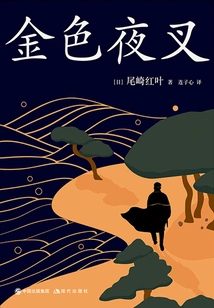
Golden Yaksha
by L
About This Novel
The Japanese version of "Wuthering Heights" and "The Yomiuri Shimbun", a masterpiece of Meiji literature that whetted readers' appetites, was serialized for several years and became popular all over Japan. Once published, it ranked first on the bestseller list for many years. It was as famous as Natsume Soseki and was highly praised by Mishima Yukio, Tanizaki Junichiro, Mori Ogai, etc. Ozaki Momiji's novel I read it in one sitting. It is really a fun book. --Yukio Mishima. "Golden Yaksha" is a bold, great novel based on reality. Money and love are in stark contrast, but underlying this theme is something much deeper. Today, the source of love is gradually drying up in the face of material desire. It can be said that this is an era of deepened material desire. --Yukio Mishima. A pair of childhood sweethearts, one is a beautiful woman from a well-to-do family, but her love is turbulent because of her extravagant desire for wealth; the other is a motivated man who relies on others to study diligently, but fails to save their love, and then hates them because of love, and turns into a money-scrupulous devil. The gradual departure is accompanied by deception, escape, hatred, and anger... Can a woman live a comfortable and wealthy life as she wishes after getting married? Can the man return to peace while frantically grabbing other people's money? This is "Golden Yasha", Ozaki Momiji's masterpiece, which Yukio Mishima once read in one sitting and praised for its interestingness. It is not only Momiji's final work, but also a novel that caused a national sensation in the history of Japanese literature. It was serialized in the "Yomiuri Shimbun" from January 1, 1897 to April 1902, triggering nationwide reading. However, Momiji died of stomach cancer, and finally the hero came to a halt when he was about to make a decision when facing the female father-in-law's confession letter, adding unlimited imagination to future generations. This book contains the complete manuscript of Ozaki Momiji, as well as three renewals widely recognized by Japanese readers and academic circles, and the "Book with Momiji Santo" written by Momiji himself. The three renewals were all written by Oguri Fuye, a protégé who deeply understood the essence of Momiji's creation. They were also collected, published and conducted for academic research by later generations.
Official Sources
What Readers Think
Rating
Community(0)
Rating
Community(0)