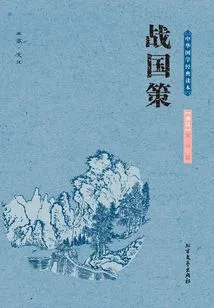
Classic Chinese Classics: Warring States Policy
by J
About This Novel
"Warring States Policy" compiled by Liu Xiang is a unique national history work compiled by Liu Xiang, a Han Chinese, based on the writings of strategists during the Warring States Period. It is actually a compilation of the lobbying words of strategists at that time. It mainly records the struggles of counselors and strategists during the Warring States Period. The book has beautiful diction, vivid language, full of eloquence and strategic wit. It describes the characters vividly and uses fables to explain the truth. It also occupies an important position in the history of Chinese classical literature.
Official Sources
What Readers Think
Rating
Community(0)
Official(40)Scraped 1mo ago
Classic Chinese studies, read slowly and have endless aftertaste
I don't think so
Introduction
Among all the books about the Warring States Period in the mobile QQ library, this book is considered the most complete. The translation is not bad but a bit stiff. The annotations are quite in place. There are very few errors and they do not affect reading. If you have a super member, you can read it for free. There are no unnecessary comments at the end of the chapter, and it is suitable for people who want to understand the Warring States policy on their own.
Those with evil intentions should not read this
I'm a little disappointed. There are fatal errors in the translation. It's not because of the level of skill, but because of sloppiness. The state of Qi is called the state of Zhao, and the state of Wei is also written as the state of Zhao. The logic of those who read it is confused.
Some of the tactics of the Warring States Period were untrustworthy, and although they could still be used, they would not last long.
translate
The Zhou royal family cannot be translated as Zhou Guo. The relationship between the Zhou royal family and the vassal states is not the relationship between countries in the current social sense. At that time, the vassal states were also called Zhuxia, which was divided into one family and one family. The divisions and mergers between them cannot be bluntly equated with the current relationship between foreign countries. Nor can their deeds be applied rigidly to the current relationship between different countries. There are serious errors and misleading in the translation!
It's all about profit relationships. Some people become famous because of profit, and some people are blinded by profit and lose their lives. Smart people are among them, they have a clear understanding of the situation, and they can wield the pen and ink of history with ease, while most people have become spectators.
Keep it up!
Although it is short and concise, it is enough for future generations to ponder.
Rating
Community(0)
Official(40)Scraped 1mo ago
Classic Chinese studies, read slowly and have endless aftertaste
I don't think so
Introduction
Among all the books about the Warring States Period in the mobile QQ library, this book is considered the most complete. The translation is not bad but a bit stiff. The annotations are quite in place. There are very few errors and they do not affect reading. If you have a super member, you can read it for free. There are no unnecessary comments at the end of the chapter, and it is suitable for people who want to understand the Warring States policy on their own.
Those with evil intentions should not read this
I'm a little disappointed. There are fatal errors in the translation. It's not because of the level of skill, but because of sloppiness. The state of Qi is called the state of Zhao, and the state of Wei is also written as the state of Zhao. The logic of those who read it is confused.
Some of the tactics of the Warring States Period were untrustworthy, and although they could still be used, they would not last long.
translate
The Zhou royal family cannot be translated as Zhou Guo. The relationship between the Zhou royal family and the vassal states is not the relationship between countries in the current social sense. At that time, the vassal states were also called Zhuxia, which was divided into one family and one family. The divisions and mergers between them cannot be bluntly equated with the current relationship between foreign countries. Nor can their deeds be applied rigidly to the current relationship between different countries. There are serious errors and misleading in the translation!
It's all about profit relationships. Some people become famous because of profit, and some people are blinded by profit and lose their lives. Smart people are among them, they have a clear understanding of the situation, and they can wield the pen and ink of history with ease, while most people have become spectators.
Keep it up!
Although it is short and concise, it is enough for future generations to ponder.
