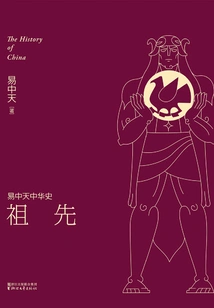
Yi Zhongtian Chinese History: Ancestors
by Yi Zhongtian
About This Novel
To see yourself clearly, you must first trace your roots. Myths and legends are the childhood memories of a nation, and they all contain the secrets and dreams of a certain culture. The history of God is the history of man, the spiritual history of man's self-understanding. As long as the mystery is removed, we can open the maze and vaguely see something real. This book will explore with you the origin of Chinese civilization and discover the true colors of our ancestors - Nuwa, Eve, Fuxi, Yanhuang, Yao and Shun. Scholar Yi Zhongtian subverts the writing method of traditional historical works. With beautiful poetic language and a unique and innovative global perspective, he will spend five years writing five masterpieces, "Yi Zhongtian History of China" with a total of thirty-six volumes: the first "Roots of China", the second "The First Empire", the third "Sui, Tang, Song and Yuan", the fourth "Ming and Qing", and the fifth "Modern Times". The first fifteen volumes have been published.
Official Sources
What Readers Think
Rating
Community(0)
Official(31)Scraped 2mo ago
Originally, Nuwa also wanted to mass produce, but Nuwa was also tired, so she had the current reproduction. Although all this seems to make sense, what is the reality?
The origin and birth of Chinese history
Ever since a person opened his eyes in his own world, a huge question mark has been hanging above his head: Who am I? Where do I come from? Where to go? People are seeking a kind of self-understanding and self-identity throughout their lives, and the pursuit of identity is also an eternal topic. To understand your identity, you must go back to your roots and understand your past history. As the only self-aware species on earth, humans need such an explanation, solace and accommodation. Without this explanation, we will be uneasy. Teacher Yi Zhongtian also explained the process of taking power from a female society to a male society from a mythological perspective. The former is fertility worship, and the latter has also become totem worship. This is also what must be done to change the situation. Totem worship will also be upgraded to ancestor worship one day in the future, and it is a unique feature of China. This book is more of a reversal of verdicts. Nuwa is not a snake but a frog, the Three Sovereigns and Five Emperors are unreliable, and Yao and Shun did not give in but coerce and induce. The development of human society is from primitive groups to clans, to tribes, to tribal alliances, and then to countries, that is, from points to areas, to slices, to circles, and to countries. From a certain perspective, people like Nuwa, Fuxi, Yandi, Huangdi, etc. Are just symbols and do not represent a certain person, a tribe, or an era. It can be a concept of time or a concept of space. However, myths are the inner reflections of people at that time, so it is not a bad idea to use mythical characters as a starting point to point out the real history. As a cultural heritage shared by all nations in the world, myths and legends are by no means accidental. Humans created them simply to use gods and mythical figures to clarify their origins, record history, and answer questions. Ancient history is complicated, but it is unreliable to always draw conclusions from myths. Moreover, this myth is also mixed with Western myths. It seems too jumpy. It is difficult to imagine whether the conclusion was known in advance and then inferred in reverse? The truth is always charming, it satisfies our innate simple curiosity. This is Yi Zhongtian's first Chinese history. Generally speaking, what he wants to say is explained. It's just that the reasoning process is really unacceptable to me. It is more like making up some consistent words for the conclusion. It is much inferior to the subsequent Chinese histories.
First reading of Teacher Yi's works
The teacher did not blindly believe in history books. He used logic and evidence to explain different prehistoric civilizations. It seemed nonsense, but in fact it was very logical. Worth recommending
If God is neither omniscient, omnipotent, nor omniscient, then why is God God?
In general, you can still take a look.
doubt
The Bible says that God is omniscient and omnipotent, but I have not found omniscient goodness (perhaps I did not read deeply enough). The Bible talks about a righteous God. According to Mr. Yi Zhongtian's reasoning, when God created Adam and Eve, he should have known that they would commit crimes (eat forbidden fruit) and that he had the ability to prevent the tragedy from happening, but did not prevent it (not being completely good). Therefore, he cannot be called an omniscient, omnipotent, and completely good God. The Bible does not mention perfection, so the logic does not hold. My understanding is: God gave man free will when he created him (man can choose freely and is the manager of the world), but later he was tempted to commit sin and was judged by God (the consequences can be found in the Genesis chapter of the Bible). This is a manifestation of the attribute of righteousness. --The purpose of telling this is not to refute and criticize. Compared with Mr. Yi, our knowledge is only a drop in the ocean. I just feel that good history books are hard to come by. I hope that historical views and historical facts will fly together. Chinese and Western cultures will not favor one or the other. I hope that Mr. Yi will produce another excellent work, so that we can talk about the ancient and modern events.
History: More serious, less humorous.
If Adam and Eve were the first man and woman, where did God come from? Did he create something out of nothing? If this is the case, then put the extremely small probability on a large enough time and space scale, It is inevitable that other things will exist out of nothing, just like humans believe in aliens. Then why is it called creation? He himself was created. So what is the difference between him and Pangu? Because Pangu came out of the egg with an axe, and he said "there must be light"? In this way, there is no so-called creator god in Western mythology, because as far as human cognition at that time was concerned, there was probably no concept of the universe.
Overall, it is a good book with very clear logic, but it is a pity due to the length limitation.
Notes
Chaos, incomprehensible, confused
Rating
Community(0)
Official(31)Scraped 2mo ago
Originally, Nuwa also wanted to mass produce, but Nuwa was also tired, so she had the current reproduction. Although all this seems to make sense, what is the reality?
The origin and birth of Chinese history
Ever since a person opened his eyes in his own world, a huge question mark has been hanging above his head: Who am I? Where do I come from? Where to go? People are seeking a kind of self-understanding and self-identity throughout their lives, and the pursuit of identity is also an eternal topic. To understand your identity, you must go back to your roots and understand your past history. As the only self-aware species on earth, humans need such an explanation, solace and accommodation. Without this explanation, we will be uneasy. Teacher Yi Zhongtian also explained the process of taking power from a female society to a male society from a mythological perspective. The former is fertility worship, and the latter has also become totem worship. This is also what must be done to change the situation. Totem worship will also be upgraded to ancestor worship one day in the future, and it is a unique feature of China. This book is more of a reversal of verdicts. Nuwa is not a snake but a frog, the Three Sovereigns and Five Emperors are unreliable, and Yao and Shun did not give in but coerce and induce. The development of human society is from primitive groups to clans, to tribes, to tribal alliances, and then to countries, that is, from points to areas, to slices, to circles, and to countries. From a certain perspective, people like Nuwa, Fuxi, Yandi, Huangdi, etc. Are just symbols and do not represent a certain person, a tribe, or an era. It can be a concept of time or a concept of space. However, myths are the inner reflections of people at that time, so it is not a bad idea to use mythical characters as a starting point to point out the real history. As a cultural heritage shared by all nations in the world, myths and legends are by no means accidental. Humans created them simply to use gods and mythical figures to clarify their origins, record history, and answer questions. Ancient history is complicated, but it is unreliable to always draw conclusions from myths. Moreover, this myth is also mixed with Western myths. It seems too jumpy. It is difficult to imagine whether the conclusion was known in advance and then inferred in reverse? The truth is always charming, it satisfies our innate simple curiosity. This is Yi Zhongtian's first Chinese history. Generally speaking, what he wants to say is explained. It's just that the reasoning process is really unacceptable to me. It is more like making up some consistent words for the conclusion. It is much inferior to the subsequent Chinese histories.
First reading of Teacher Yi's works
The teacher did not blindly believe in history books. He used logic and evidence to explain different prehistoric civilizations. It seemed nonsense, but in fact it was very logical. Worth recommending
If God is neither omniscient, omnipotent, nor omniscient, then why is God God?
In general, you can still take a look.
doubt
The Bible says that God is omniscient and omnipotent, but I have not found omniscient goodness (perhaps I did not read deeply enough). The Bible talks about a righteous God. According to Mr. Yi Zhongtian's reasoning, when God created Adam and Eve, he should have known that they would commit crimes (eat forbidden fruit) and that he had the ability to prevent the tragedy from happening, but did not prevent it (not being completely good). Therefore, he cannot be called an omniscient, omnipotent, and completely good God. The Bible does not mention perfection, so the logic does not hold. My understanding is: God gave man free will when he created him (man can choose freely and is the manager of the world), but later he was tempted to commit sin and was judged by God (the consequences can be found in the Genesis chapter of the Bible). This is a manifestation of the attribute of righteousness. --The purpose of telling this is not to refute and criticize. Compared with Mr. Yi, our knowledge is only a drop in the ocean. I just feel that good history books are hard to come by. I hope that historical views and historical facts will fly together. Chinese and Western cultures will not favor one or the other. I hope that Mr. Yi will produce another excellent work, so that we can talk about the ancient and modern events.
History: More serious, less humorous.
If Adam and Eve were the first man and woman, where did God come from? Did he create something out of nothing? If this is the case, then put the extremely small probability on a large enough time and space scale, It is inevitable that other things will exist out of nothing, just like humans believe in aliens. Then why is it called creation? He himself was created. So what is the difference between him and Pangu? Because Pangu came out of the egg with an axe, and he said "there must be light"? In this way, there is no so-called creator god in Western mythology, because as far as human cognition at that time was concerned, there was probably no concept of the universe.
Overall, it is a good book with very clear logic, but it is a pity due to the length limitation.
Notes
Chaos, incomprehensible, confused