L
by I
About This Novel
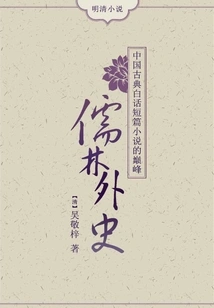
"The Scholars" is a long satirical novel depicting portraits of intellectuals. The work describes various absurd and hypocritical behaviors of Confucian scholars who were deeply poisoned by stereotypes. It belittles and satirizes fake Confucian scholars and fake celebrities, criticizes the corrupt secular atmosphere at that time, and creates the image of a few true Confucian scholars and real celebrities who stay away from fame and pursue freedom, in which the author's ideals are embedded. The Scholars is a model of ancient Chinese satirical literature, the first of its kind to use novels to directly evaluate real life. It can be compared with the works of Boccaccio, Cervantes, Balzac, Dickens and others. It also has a profound influence on the world's modern literature and can be called a world literary masterpiece.
Official Sources
What Readers Think
Rating
Community(0)
Official(336)Scraped 1mo ago
Introduction to The Scholars 1-22
1. Wang Mian came from a poor family and was good at painting lotus flowers. Wei Su, an official in the capital, wanted to see him, but because he did not want to make friends with the officials and was afraid of being harmed, he left for Shandong. After the flood in Shandong, he returned to his hometown. After his mother died, Zhu Yuanzhang took over the world at the end of the Yuan Dynasty, when the Ming army rebelled. In order to avoid becoming an official, he retired to Kuaiji Mountain. 2. The squires at Xuejiaji discussed holding a Dragon Lantern Festival during the Spring Festival. During this period, I mentioned that I wanted to hire a teacher for the children. Mr. Xia recommended Zhou Jin, who is over 60 years old. When Zhou Jin was having a banquet, he invited Mei Jiu to accompany him. However, Mei Jiu, who had won the title of scholar, teased Zhou Jin during the banquet and told Zhou Jin that he had dreamed about the scholar who had won a good omen. 3. Zhou Jin's brother-in-law and others took pity on Zhou Jin, so they pooled their money and donated a proctor for him, so that he could directly take the imperial examination, pass the examination, and later pass the Jinshi examination, and he was appointed as a scholar in Guangdong. Yu Fan entered the examination to be a scholar and was admitted out of pity for him. Later, he passed the examination and passed the examination. Squire Zhang came to make friends and gave him money and a house. This article embodies the abnormal psychology of literati who pursue official career and follow the trend. 4. Fan Jin's mother suddenly got a luxurious house and furnishings, and died of excitement. Three years after Fan Jin was in mourning, Zhang Jingzhai went with him to visit Tangzhi County, Gaoyao County. The imperial court ordered that the slaughter of farm cattle and the consumption of beef be prohibited. 5. After Tang Zhi County handled the murder case, two people came to sue Yan Gongsheng. One sued Yan Gongsheng for robbing other people's pigs, and the other said Yan Gongsheng wanted others' money by force. The magistrate ordered the arrest. Yan Gongsheng fled out of fear of crime. His brother Yan Jiansheng handled the lawsuit for him, paying for the compensation himself and taking care of everything. 6. Yan Jian died of illness. The Zhao family discussed with her elder brother Wang De and Wang Ren how to send Yan Jiansheng. Yan Gongsheng, the eldest brother of Yan Jiansheng, came back from the imperial examination. However, he ignored his brother's death and not only did not arrange the funeral, but instead went to the provincial capital for his son's marriage. Zhao's son later died of illness. Wang De wrote to Yan Gongsheng asking him to come back and discuss the establishment of an heir. At this time, Yan Gongsheng was in the provincial capital to pick up his bride. 7. Fan went in to meet his mentor Zhou Jin. Because Fan Jin was going to Shandong to study Taoism, Zhou Jin told Fan Jin to pay attention to Xun Mei and help her enroll in school. At that time, Xun Mei and Wang Hui had passed the exam together. The two met the fortune teller Chen Li and made a prediction about Wang Hui's future. 8. After Wang Hui returned to the provincial capital, he was ordered by the imperial court to fill the vacancy of Nanchang magistrate, so he took office. After arriving in Nanchang, he deliberately refused to accept the seal. It was not until Prefect Quang sent money that he officially took office. Later, King Ning rebelled and captured Nanchang, and Wang Hui surrendered. 9. On their way back to the provincial capital, Mr. Lou and his son saw Zou San, the son of Zou Jifu, the servant who was guarding the graves of his family, and said that he lived nearby. Mr. Lou then came home to visit. Xi Zhong learned that Yang Zhizhong was imprisoned because he had a deficit in accounting for others. Mr. Lou decided to save people. After returning home, he asked his servant Jinjue to take the money to the county to explain it to him. Taking advantage of the family prestige of Lou Mansion, the county magistrate released Yang Zhizhong. 10. Mr. Lou failed to find Yang Zhizhong for the second time, and met Lu Bianxiu on his way back. When talking about Yang Zhizhong, Editor Lu disagreed. A few days later, Chen Li came to visit. At this time, Gongsun Qu lived in the Lou Mansion, and Chen Li proposed marriage for the daughter of the Lu family. Old Master Qu sent a letter to Mr. Lou to handle it as appropriate. According to Lu Bianxiu's wishes, Zang Gongsun entered Zang Lu's family. On an auspicious day, the wedding took place. 11. After marriage, Miss Lu was both talented and beautiful, while Gongsun Qu's literary talent and knowledge were average, but there was nothing he could do about it. Zou Jifu came to Lou Mansion, talked about Yang Zhizhong again, and decided to visit again. After meeting, we had a great conversation. 12. When Mr. Lou was going to visit Quan Wuyong, the newly arrived Mr. Wei came to visit. Seeing that there were so many trivial matters, Yang Zhizhong suggested asking his servant to bring a letter to invite him. On the way, the servant learned that Quan Wuyong was a man who had nothing to do and was not doing his job properly. I came to Lou Mansion after writing two letters asking not to use it. And bring a knight. 13. Qu Gongsun met Ma Chunshang, who ran a class to help people learn knowledge. He was very inspired when he listened to him talk about the tips for getting into higher education. Huan Cheng, a servant of the Lou family, had an affair with Shuanghong, a maid of the Zang family, and ran away with the box that Wang Hui had left at Zang's house. 14. After bargaining, Ma Chun paid 92 taels of silver and wrote a redemption document for Shuang Hong on behalf of Zang Gongsun before he got the stolen box back. The messenger took most of the money. Huan Cheng and Shuang Hong left for a foreign land. After the matter was sorted out, Ma Chun went to Hangzhou. After arriving in Hangzhou, I traveled around for several days until I met an "immortal" named Hong Hanxian at the Ding Family Ancestral Hall. 15. The immortal learned that Ma Chunshang was in distress and wanted to help. Ma Chun was given a few pieces of black coal, and he took them home and refined them over fire, turning them into silver. The immortal also asked the wealthy Mr. Hu to provide ten thousand taels of silver to prepare the materials for alchemy. He said that in forty-nine days, the "Silver Mother" would be produced and the stone could be turned into gold. Later, the immortal "drove west on a crane". 16. Because Kuang Chaoren's third uncle wanted to occupy his father's house, he fell ill and his mother shed tears all day long. After Kuang Chaoren returned home, he devoted himself to serving his father and comforting his third uncle. And he used the money given by Ma Chun to do a small business to support his family. There was a fire in the village, and Kuang Chaoren's family was forced to move into a rented house. Once, the county magistrate passed by and saw Kuang Chaoren studying hard. He appreciated him very much and ordered him to take the exam. As a result, he passed the exams continuously until he passed the exam. 17. After Kuang Chaoren entered school, he visited his teacher one after another. Soon, his father died of illness. For unknown reasons, the county magistrate was dismissed from his post and his seal was removed, but the people supported the magistrate and surrounded the provincial officials. The higher-ups sent people to arrest the leader, which implicated Kuang Chaoren. Kuang Chaoren went to Hangzhou to avoid trouble. I got acquainted with the folk sage Jing Lanjiang and a group of his friends. These people often get together to compose poems. 18. The owner of Wenhan Building where Kuang Chaoren lived asked him to help select and compile some articles. Ma Chunshang took only seven days to complete the work that took two months to complete, and he received some remuneration (selection money) for this. Jing Lanjiang and Kuang Chaoren met some new literary friends through Hu Zhen (Mr. Hu San)'s birthday. They held poetry gatherings together, but some people's literary talents were really average. On the night when he went to the provincial capital to hold a poetry meeting, he was caught by an officer on patrol because he was walking drunk at night. This article reflects the stinginess of Hu Sangong, the son of the rich man, the false talents of the literati, and the ugly appearance after drinking. 19. Kuang Chaoren met Pan Ziye, Mr. Pan's younger brother. He was very cheerful and quick-witted, and he specialized in solving problems for others and making money. He Hua, a girl from a wealthy family, ran away and was caught by the government and wanted to be sent back to her place of origin. However, she was attracted by a rich man named Hu who offered her two hundred taels of silver. Pan San used various relationships to smooth things over with the government and get things done. Shi Meiqing wanted to sell his sister-in-law to someone else, but accidentally gave her away. The other party refused to return. Shi Meiqing filed a lawsuit, but there was no formality for selling his sister-in-law. She wanted to pay some money to settle the lawsuit, but Pan San also got the job done. Jin Dongya's son wanted to take the exam, but he had no knowledge. He wanted to spend 500 taels of silver to find someone to take the exam for him. After Pan San's careful planning, Kuang Chaoren took the exam for him and passed the exam successfully. Kuang Chaoren also received two hundred taels of silver, so he bought a house, and Pan Sanbao, the matchmaker, introduced Father Zheng's daughter to get married. Kuang Da wrote to his younger brother, asking him to go to Wenzhou to take the exam, and he passed the exam. At the same time, his teacher, the magistrate of Yueqing County, was framed, verified his release, and was promoted to the official position. He wrote to Kuang Chaoren and invited him to come. Pan San was finally imprisoned for committing too many crimes. 20. Kuang Chaoren found his teacher. The teacher admired his talent and wanted to marry his niece to him. He lied that he was unmarried and they got married. Once I went back to Zhejiang for business and stopped by to visit my wife. I didn't want my wife to die of illness because she was not used to country life. His old friend Jing Lanjiang found him and asked him to visit Pan San in prison. Because he was involved in Pan San's case, he excused himself by saying that he could not visit the prisoner because he was working for the court. After finishing the work, he met Niu Buyi on the boat back to Beijing. And brag to them about his talents and learning. Niu Buyi lived in a nunnery in Wuhu County and unfortunately died of illness. Before he died, he asked the old monk to take care of his funeral. The monk and the neighbors followed the instructions without fail. It reflects Kuang Chaoren's ugly attitude of disregarding his love for his wife, not missing old friendships, and being fond of bragging and exalting himself after becoming an official. 21. Niu Pulang was studying in the nunnery and met the old monk. While the old monk was away, he peeked at Niu Buyi's personal collection of poems. Since they had the same surname, he wanted to pass him off as Niu Buyi, so he changed his name to Niu Pu, with the courtesy name Buyi, and carved his own hand seal. Father Bu has a niece whose mother is dead and whose father has been doing business abroad all year round. He negotiated with Father Niu to marry Niu Pulang. Ushiuraro is not good at business. Since he took over his grandfather's grocery store, he has been losing money day by day. After hearing this, Mr. Niu got angry and died of illness. My in-laws, Father Bu, was old. After finishing the funeral of Father Niu, he passed away. The disciple of the old monk became the admiral of the nine sects and sent someone to take the old monk to Beijing, leaving the nunnery for Niupu to take care of. 22. Because Uupo pretended to be Niubuyi, Dong Ying came to visit him. In order to show his momentum, Uupo asked his two uncles, one to bring tea and water, and the other to clean up. After the reception, they complained about each other's lack of etiquette, causing Bu Xin and Bu Cheng to drive Niu Pu out of the house and find a place to live. Niupu had no choice but to go to Dong Ying. They met Niu Yupu on the boat. Because they had the same surname, Niu Yupu, who was bluffing, recognized Niu Pu as his grandson. Later, on the way, I met Niu Yupu's sworn brother Wang Yi'an. Wang Yi'an was beaten badly during the meal, which reflected Niu Yupu's character. After arriving in Hangzhou, Niu Pu went to visit Wan Xuezhai with Niu Yupu. While walking by the pond, he accidentally fell into the pond and was scolded by Niu Yupu and was knocked off the table.
I am here for the high school entrance examination, I wish you good results in the high school entrance examination!!!😂😂
One for the ninth grade freshman!
If it wasn't for homework, why would I come here?
The Chinese teacher recommended us to read this book
Thoughts on reading Fan Jin's examination
The imperial examination system is decadent, and Fan Jin is one example. He himself also reflects the atmosphere and environment of the entire society. People are keen on fame, and those who obtain it can enjoy a lifetime of glory and wealth. Who doesn't want to pass the exam? In the face of great temptation, it is impossible to resist. Of course, most people are like this. There are also some people in this book who can completely resist the temptation. In the face of temptation, we should resist.
To be honest, I feel that none of the books recommended by the Chinese teacher are good 😂😂😂
The Scholars Chapter 1 book review
After being recommended by a teacher, I am going to start reading it. It is very well written and not bad. It is actually good to read more famous books. Those who say they are too long can actually read the key points and skim them.
Who is here to complete the task (high school entrance examination)
A brief comparison with the Four Great Classics
Speaking of the story of Fan Jinzhongju, I believe everyone is familiar with it. In fact, this story comes from the very beginning of the classic novel The Scholars. Today, I will share with you the book The Scholars. What status does this book have? Before the founding of the People's Republic of China, it was jointly known as the Six Great Classics along with the Four Great Classics and Pu Songling's Strange Tales from a Chinese Studio. However, it may not be comparable to the other five in terms of popularity, but this does not affect the literary value and artistic achievement of this satirical novel. Some friends may be curious, it is so good, why is it not very well-known among the people? I think first of all, its subject matter is a bit ungrounded. It does not have the pleasure and hatred of Water Margin, the thousands of troops in the Three Kingdoms, and the monsters and monsters in Journey to the West and Liaozhai. It does not have these more attractive themes. It depicts the living beings of ancient literati, and most of what it describes is about things in the circle of intellectuals. Naturally, it is a little out of touch, which also leads to its cold reception among the people. Secondly, there is the particularity of the writing structure. I don't know if you have read Water Margin. Its writing logic is that Gao Qiu brought out Wang Jin and then brought out Shi Jin and brought out Lu Zhishen and brought out Lin Chong. After that, all the heroes of Water Margin appeared one after another. From this perspective, there are certain similarities between The Scholars and Water Margin, both of which are connected through a character string. Linking to the next character gradually advances the plot. It is a very clever structural arrangement that switches characters very naturally; but the difference between it and Water Margin is that the characters on multiple lines in Water Margin finally gather together, and finally gather together in Liangshan, which further strengthens the character image and forms a rich character structure. As for The Scholars, it is a real linear progression. The characters who played the leading role in a certain part before will no longer appear in the subsequent parts. At most, they are topics of conversation among people. Therefore, after reading all 56 chapters, you will find that The book does not have a so-called protagonist, which may be a shortcoming compared with the four major masterpieces. It lacks the blessing of the popularity of the original works by well-known folk figures such as Sun Wukong in Journey to the West, Bao Daichai in Dream of Red Mansions, and Liu Guan and Zhang in The Romance of the Three Kingdoms. Moreover, it also lacks the smooth feeling of reading where the protagonist participates and witnesses the whole process of the plot. You may be very engaged when reading a certain part, but you are very disengaged and difficult to engage when reading another part. It also lacks the pleasure of reading in one go. I have analyzed the reason for this perception, and it may be that this is not so much a novel as a collection of short stories that are very cleverly connected and excessive. The stories of each character alone do not affect the reading experience, so as a collection of short stories, readers naturally cannot think of a main character. Although it is impossible to find a single protagonist after reading the entire book, it still portrays many wonderful characters: For example, everyone is familiar with the story of Fan Jin who passed the national examination. His father-in-law, Hu Tutu, changed his face from being arrogant and respectful to Fan Jin. Before, he was irritated with Fan Jin, but later he was respectful and obedient to Fan Jin. The reason was that Fan Jin had the identity of the master of the examination, and vividly wrote about the social reality and the warmth and warmth of human beings. The two brothers of the Yan family are also very representative. Uncle Yan is obviously a squire with superior economic conditions, but he often uses his own power and the information asymmetry between them to threaten the people at the bottom to obtain small benefits for himself. And that benefit is just a small advantage for him, but for the people at the bottom, it is their labor and even their entire wealth. This kind of bullying and oppression of the people at the bottom by relying on power is really ugly. The portrayal of Mr. Yan is even more wonderful. Before his death, he refused to die, struggling with two fingers raised. Everyone thought it was because he had something important to say as his last words. Only his concubine understood him and knew that he meant that there were two wicks on the lamp, which was too oily, so he refused to die. When one wick was removed, he finally died peacefully. This description is very exquisite, and the image of Mr. Yan, an oriental Grandet miser, emerges vividly on the page. In fact, after winning the national examination and gaining fame and fortune, not only will the people around you have great changes in the successful candidate, just like the example of Fan Jin, but the successful candidate himself will also change. Kuang Chaoren was a student from a poor family. When his father was ill in bed, he served his father wholeheartedly and did not forget to stay up late to read at night. As a result, he was appreciated by the county magistrate and was regarded as a well-known filial son. But after he gained fame, he was no longer the sentimental person he used to be. He clung to powerful people and remarried wives. He gradually distanced himself from his friend who had tried his best to support him and was now in jail. He became an extremely realistic person. After he gained fame, he forgot his roots and became another person. The impermanence of fate can be seen in the novel. Bao Xiting was adopted by his adoptive father from a poor family and lived a life of adequate food. However, after his adoptive father died, he was not welcomed by his family. The family used deception to help him marry a rich woman and a widow. However, the widow became seriously ill because of the unfair person she entrusted to her and spent all her money. He lost his dowry, which made him poor again, but he met his biological brother who was a high official, and his fortune was about to turn around, but his brother fell ill and his thoughts of living a good life became empty again. The fate of life has gone through many ups and downs, but you should still keep a normal mind when facing life. Under the ancient communication technology, it was easier to be a person seeking fame and reputation. When Ushiuraro was a boy, he was studious and proficient in writing. Later, by chance, he got a collection of poems by the poet Niu Buyi, and he took it as his own. He had a reputation for talent and learning that was not worthy of the name, but he could speak a set of high-sounding diplomatic rhetoric and still gain the high regard of others. At least he could make ends meet for a long period of time. Through the shaping of these literati, the author either has a sad side or a hateful side, and these sad and hateful people reflect some of the shortcomings and black materials of intellectuals, including but not limited to academic fraud, compiling books for fame and fortune, forgetting one's roots when one has achieved something, enjoying each other's praise in the cultural circle, etc. Are these familiar to you? Although this book is a story about the Ming Dynasty written by a Qing Dynasty person, the dark side of people due to their pursuit of profit has not fundamentally changed due to the change of dynasties. Maybe the world is changing very quickly, with rapid changes in technology and lifestyle. Maybe the world is changing very slowly, and the most basic things like people's hearts and human nature have not changed much. The good and evil of human nature, the beauty and ugliness of the human heart, and the emotions and principles of how people behave in the world have not undergone fundamental changes. This is why classics can transcend the times and endure forever, even if the clothes and lives of people in the world of scholars and scholars are not consistent with our world. They are different, but the core of the two worlds is interlinked, because what is happening in the world are the most real people's stories. We can find the shadow of the current people and even the people around us from the books. By reading classic books, we can also better understand the world we live in. I hope to bring you more reading sharing in the future. Reading excerpts: Life has many different paths from north to south. Generals and ministers should be made by mortals even if they are gods. Hundreds of generations rise and fall, and the river wind blows down the trees in front of them. Fame and wealth have no credentials. No matter how hard I try, I always miss the moment. After three cups of turbid wine, you will be intoxicated. You will know where the water flows and the flowers fade. It is said that wealth and fame in life are external things. But as soon as people in the world see fame, they risk their lives to seek it, and when they get it, it tastes like wax. Today, when articles are important, why do you need to talk about the Han and Tang Dynasties? A good man does not live in separate families, and a good woman does not wear wedding clothes. He always earns a good reputation by himself, but relies on his grandfather, which is useless. Three rickety rooms, one person with a southern accent and a northern accent. If you just watch something happen to him and can't cover it up for him, then you are no longer a friend. It is good to study well, to farm well, and to learn well. It is difficult to start a business, and it is difficult to maintain success, but it is not difficult to know the difficulty. Poverty at home is not poverty, poverty on the road kills people. It's easy to practice in Gongmen. If you do this, you will be deceived and no one will repay you. Although it is said that kindness is given without expectation of repayment, one should not be so unclear about whether he is a virtuous person or not. When it comes to reading, it is necessary to go from studying to studying, and always focus on the experience. What are your father's last words? Answer: What you said is silly again. I'm here, it's my business. After I die, it will all be your business. In short, loyalty and filial piety are the foundation of a person, and the rest is secondary. Father Fengsi laughed and said: "My husband and I are not old friends, and I have never received any favor from you. This is just a temporary pleasure of mine." If you are serious about being grateful to me, that would be a disgrace. The gold and silver on board could not cover the fireworks debt. The situation of the world depends on the warmth and coldness, and the popularity of people is high and low. The phoenix stops high and the sky is high, and the insects sing in the small pavilion. At the same time, people are shorter and longer. It's over now! Take away the clothes and cicadas and wash your feet in the waves.
Thank you for the free book
I am very happy to read the whole book in 2 hours😊
Rating
Community(0)
Official(336)Scraped 1mo ago
Introduction to The Scholars 1-22
1. Wang Mian came from a poor family and was good at painting lotus flowers. Wei Su, an official in the capital, wanted to see him, but because he did not want to make friends with the officials and was afraid of being harmed, he left for Shandong. After the flood in Shandong, he returned to his hometown. After his mother died, Zhu Yuanzhang took over the world at the end of the Yuan Dynasty, when the Ming army rebelled. In order to avoid becoming an official, he retired to Kuaiji Mountain. 2. The squires at Xuejiaji discussed holding a Dragon Lantern Festival during the Spring Festival. During this period, I mentioned that I wanted to hire a teacher for the children. Mr. Xia recommended Zhou Jin, who is over 60 years old. When Zhou Jin was having a banquet, he invited Mei Jiu to accompany him. However, Mei Jiu, who had won the title of scholar, teased Zhou Jin during the banquet and told Zhou Jin that he had dreamed about the scholar who had won a good omen. 3. Zhou Jin's brother-in-law and others took pity on Zhou Jin, so they pooled their money and donated a proctor for him, so that he could directly take the imperial examination, pass the examination, and later pass the Jinshi examination, and he was appointed as a scholar in Guangdong. Yu Fan entered the examination to be a scholar and was admitted out of pity for him. Later, he passed the examination and passed the examination. Squire Zhang came to make friends and gave him money and a house. This article embodies the abnormal psychology of literati who pursue official career and follow the trend. 4. Fan Jin's mother suddenly got a luxurious house and furnishings, and died of excitement. Three years after Fan Jin was in mourning, Zhang Jingzhai went with him to visit Tangzhi County, Gaoyao County. The imperial court ordered that the slaughter of farm cattle and the consumption of beef be prohibited. 5. After Tang Zhi County handled the murder case, two people came to sue Yan Gongsheng. One sued Yan Gongsheng for robbing other people's pigs, and the other said Yan Gongsheng wanted others' money by force. The magistrate ordered the arrest. Yan Gongsheng fled out of fear of crime. His brother Yan Jiansheng handled the lawsuit for him, paying for the compensation himself and taking care of everything. 6. Yan Jian died of illness. The Zhao family discussed with her elder brother Wang De and Wang Ren how to send Yan Jiansheng. Yan Gongsheng, the eldest brother of Yan Jiansheng, came back from the imperial examination. However, he ignored his brother's death and not only did not arrange the funeral, but instead went to the provincial capital for his son's marriage. Zhao's son later died of illness. Wang De wrote to Yan Gongsheng asking him to come back and discuss the establishment of an heir. At this time, Yan Gongsheng was in the provincial capital to pick up his bride. 7. Fan went in to meet his mentor Zhou Jin. Because Fan Jin was going to Shandong to study Taoism, Zhou Jin told Fan Jin to pay attention to Xun Mei and help her enroll in school. At that time, Xun Mei and Wang Hui had passed the exam together. The two met the fortune teller Chen Li and made a prediction about Wang Hui's future. 8. After Wang Hui returned to the provincial capital, he was ordered by the imperial court to fill the vacancy of Nanchang magistrate, so he took office. After arriving in Nanchang, he deliberately refused to accept the seal. It was not until Prefect Quang sent money that he officially took office. Later, King Ning rebelled and captured Nanchang, and Wang Hui surrendered. 9. On their way back to the provincial capital, Mr. Lou and his son saw Zou San, the son of Zou Jifu, the servant who was guarding the graves of his family, and said that he lived nearby. Mr. Lou then came home to visit. Xi Zhong learned that Yang Zhizhong was imprisoned because he had a deficit in accounting for others. Mr. Lou decided to save people. After returning home, he asked his servant Jinjue to take the money to the county to explain it to him. Taking advantage of the family prestige of Lou Mansion, the county magistrate released Yang Zhizhong. 10. Mr. Lou failed to find Yang Zhizhong for the second time, and met Lu Bianxiu on his way back. When talking about Yang Zhizhong, Editor Lu disagreed. A few days later, Chen Li came to visit. At this time, Gongsun Qu lived in the Lou Mansion, and Chen Li proposed marriage for the daughter of the Lu family. Old Master Qu sent a letter to Mr. Lou to handle it as appropriate. According to Lu Bianxiu's wishes, Zang Gongsun entered Zang Lu's family. On an auspicious day, the wedding took place. 11. After marriage, Miss Lu was both talented and beautiful, while Gongsun Qu's literary talent and knowledge were average, but there was nothing he could do about it. Zou Jifu came to Lou Mansion, talked about Yang Zhizhong again, and decided to visit again. After meeting, we had a great conversation. 12. When Mr. Lou was going to visit Quan Wuyong, the newly arrived Mr. Wei came to visit. Seeing that there were so many trivial matters, Yang Zhizhong suggested asking his servant to bring a letter to invite him. On the way, the servant learned that Quan Wuyong was a man who had nothing to do and was not doing his job properly. I came to Lou Mansion after writing two letters asking not to use it. And bring a knight. 13. Qu Gongsun met Ma Chunshang, who ran a class to help people learn knowledge. He was very inspired when he listened to him talk about the tips for getting into higher education. Huan Cheng, a servant of the Lou family, had an affair with Shuanghong, a maid of the Zang family, and ran away with the box that Wang Hui had left at Zang's house. 14. After bargaining, Ma Chun paid 92 taels of silver and wrote a redemption document for Shuang Hong on behalf of Zang Gongsun before he got the stolen box back. The messenger took most of the money. Huan Cheng and Shuang Hong left for a foreign land. After the matter was sorted out, Ma Chun went to Hangzhou. After arriving in Hangzhou, I traveled around for several days until I met an "immortal" named Hong Hanxian at the Ding Family Ancestral Hall. 15. The immortal learned that Ma Chunshang was in distress and wanted to help. Ma Chun was given a few pieces of black coal, and he took them home and refined them over fire, turning them into silver. The immortal also asked the wealthy Mr. Hu to provide ten thousand taels of silver to prepare the materials for alchemy. He said that in forty-nine days, the "Silver Mother" would be produced and the stone could be turned into gold. Later, the immortal "drove west on a crane". 16. Because Kuang Chaoren's third uncle wanted to occupy his father's house, he fell ill and his mother shed tears all day long. After Kuang Chaoren returned home, he devoted himself to serving his father and comforting his third uncle. And he used the money given by Ma Chun to do a small business to support his family. There was a fire in the village, and Kuang Chaoren's family was forced to move into a rented house. Once, the county magistrate passed by and saw Kuang Chaoren studying hard. He appreciated him very much and ordered him to take the exam. As a result, he passed the exams continuously until he passed the exam. 17. After Kuang Chaoren entered school, he visited his teacher one after another. Soon, his father died of illness. For unknown reasons, the county magistrate was dismissed from his post and his seal was removed, but the people supported the magistrate and surrounded the provincial officials. The higher-ups sent people to arrest the leader, which implicated Kuang Chaoren. Kuang Chaoren went to Hangzhou to avoid trouble. I got acquainted with the folk sage Jing Lanjiang and a group of his friends. These people often get together to compose poems. 18. The owner of Wenhan Building where Kuang Chaoren lived asked him to help select and compile some articles. Ma Chunshang took only seven days to complete the work that took two months to complete, and he received some remuneration (selection money) for this. Jing Lanjiang and Kuang Chaoren met some new literary friends through Hu Zhen (Mr. Hu San)'s birthday. They held poetry gatherings together, but some people's literary talents were really average. On the night when he went to the provincial capital to hold a poetry meeting, he was caught by an officer on patrol because he was walking drunk at night. This article reflects the stinginess of Hu Sangong, the son of the rich man, the false talents of the literati, and the ugly appearance after drinking. 19. Kuang Chaoren met Pan Ziye, Mr. Pan's younger brother. He was very cheerful and quick-witted, and he specialized in solving problems for others and making money. He Hua, a girl from a wealthy family, ran away and was caught by the government and wanted to be sent back to her place of origin. However, she was attracted by a rich man named Hu who offered her two hundred taels of silver. Pan San used various relationships to smooth things over with the government and get things done. Shi Meiqing wanted to sell his sister-in-law to someone else, but accidentally gave her away. The other party refused to return. Shi Meiqing filed a lawsuit, but there was no formality for selling his sister-in-law. She wanted to pay some money to settle the lawsuit, but Pan San also got the job done. Jin Dongya's son wanted to take the exam, but he had no knowledge. He wanted to spend 500 taels of silver to find someone to take the exam for him. After Pan San's careful planning, Kuang Chaoren took the exam for him and passed the exam successfully. Kuang Chaoren also received two hundred taels of silver, so he bought a house, and Pan Sanbao, the matchmaker, introduced Father Zheng's daughter to get married. Kuang Da wrote to his younger brother, asking him to go to Wenzhou to take the exam, and he passed the exam. At the same time, his teacher, the magistrate of Yueqing County, was framed, verified his release, and was promoted to the official position. He wrote to Kuang Chaoren and invited him to come. Pan San was finally imprisoned for committing too many crimes. 20. Kuang Chaoren found his teacher. The teacher admired his talent and wanted to marry his niece to him. He lied that he was unmarried and they got married. Once I went back to Zhejiang for business and stopped by to visit my wife. I didn't want my wife to die of illness because she was not used to country life. His old friend Jing Lanjiang found him and asked him to visit Pan San in prison. Because he was involved in Pan San's case, he excused himself by saying that he could not visit the prisoner because he was working for the court. After finishing the work, he met Niu Buyi on the boat back to Beijing. And brag to them about his talents and learning. Niu Buyi lived in a nunnery in Wuhu County and unfortunately died of illness. Before he died, he asked the old monk to take care of his funeral. The monk and the neighbors followed the instructions without fail. It reflects Kuang Chaoren's ugly attitude of disregarding his love for his wife, not missing old friendships, and being fond of bragging and exalting himself after becoming an official. 21. Niu Pulang was studying in the nunnery and met the old monk. While the old monk was away, he peeked at Niu Buyi's personal collection of poems. Since they had the same surname, he wanted to pass him off as Niu Buyi, so he changed his name to Niu Pu, with the courtesy name Buyi, and carved his own hand seal. Father Bu has a niece whose mother is dead and whose father has been doing business abroad all year round. He negotiated with Father Niu to marry Niu Pulang. Ushiuraro is not good at business. Since he took over his grandfather's grocery store, he has been losing money day by day. After hearing this, Mr. Niu got angry and died of illness. My in-laws, Father Bu, was old. After finishing the funeral of Father Niu, he passed away. The disciple of the old monk became the admiral of the nine sects and sent someone to take the old monk to Beijing, leaving the nunnery for Niupu to take care of. 22. Because Uupo pretended to be Niubuyi, Dong Ying came to visit him. In order to show his momentum, Uupo asked his two uncles, one to bring tea and water, and the other to clean up. After the reception, they complained about each other's lack of etiquette, causing Bu Xin and Bu Cheng to drive Niu Pu out of the house and find a place to live. Niupu had no choice but to go to Dong Ying. They met Niu Yupu on the boat. Because they had the same surname, Niu Yupu, who was bluffing, recognized Niu Pu as his grandson. Later, on the way, I met Niu Yupu's sworn brother Wang Yi'an. Wang Yi'an was beaten badly during the meal, which reflected Niu Yupu's character. After arriving in Hangzhou, Niu Pu went to visit Wan Xuezhai with Niu Yupu. While walking by the pond, he accidentally fell into the pond and was scolded by Niu Yupu and was knocked off the table.
I am here for the high school entrance examination, I wish you good results in the high school entrance examination!!!😂😂
One for the ninth grade freshman!
If it wasn't for homework, why would I come here?
The Chinese teacher recommended us to read this book
Thoughts on reading Fan Jin's examination
The imperial examination system is decadent, and Fan Jin is one example. He himself also reflects the atmosphere and environment of the entire society. People are keen on fame, and those who obtain it can enjoy a lifetime of glory and wealth. Who doesn't want to pass the exam? In the face of great temptation, it is impossible to resist. Of course, most people are like this. There are also some people in this book who can completely resist the temptation. In the face of temptation, we should resist.
To be honest, I feel that none of the books recommended by the Chinese teacher are good 😂😂😂
The Scholars Chapter 1 book review
After being recommended by a teacher, I am going to start reading it. It is very well written and not bad. It is actually good to read more famous books. Those who say they are too long can actually read the key points and skim them.
Who is here to complete the task (high school entrance examination)
A brief comparison with the Four Great Classics
Speaking of the story of Fan Jinzhongju, I believe everyone is familiar with it. In fact, this story comes from the very beginning of the classic novel The Scholars. Today, I will share with you the book The Scholars. What status does this book have? Before the founding of the People's Republic of China, it was jointly known as the Six Great Classics along with the Four Great Classics and Pu Songling's Strange Tales from a Chinese Studio. However, it may not be comparable to the other five in terms of popularity, but this does not affect the literary value and artistic achievement of this satirical novel. Some friends may be curious, it is so good, why is it not very well-known among the people? I think first of all, its subject matter is a bit ungrounded. It does not have the pleasure and hatred of Water Margin, the thousands of troops in the Three Kingdoms, and the monsters and monsters in Journey to the West and Liaozhai. It does not have these more attractive themes. It depicts the living beings of ancient literati, and most of what it describes is about things in the circle of intellectuals. Naturally, it is a little out of touch, which also leads to its cold reception among the people. Secondly, there is the particularity of the writing structure. I don't know if you have read Water Margin. Its writing logic is that Gao Qiu brought out Wang Jin and then brought out Shi Jin and brought out Lu Zhishen and brought out Lin Chong. After that, all the heroes of Water Margin appeared one after another. From this perspective, there are certain similarities between The Scholars and Water Margin, both of which are connected through a character string. Linking to the next character gradually advances the plot. It is a very clever structural arrangement that switches characters very naturally; but the difference between it and Water Margin is that the characters on multiple lines in Water Margin finally gather together, and finally gather together in Liangshan, which further strengthens the character image and forms a rich character structure. As for The Scholars, it is a real linear progression. The characters who played the leading role in a certain part before will no longer appear in the subsequent parts. At most, they are topics of conversation among people. Therefore, after reading all 56 chapters, you will find that The book does not have a so-called protagonist, which may be a shortcoming compared with the four major masterpieces. It lacks the blessing of the popularity of the original works by well-known folk figures such as Sun Wukong in Journey to the West, Bao Daichai in Dream of Red Mansions, and Liu Guan and Zhang in The Romance of the Three Kingdoms. Moreover, it also lacks the smooth feeling of reading where the protagonist participates and witnesses the whole process of the plot. You may be very engaged when reading a certain part, but you are very disengaged and difficult to engage when reading another part. It also lacks the pleasure of reading in one go. I have analyzed the reason for this perception, and it may be that this is not so much a novel as a collection of short stories that are very cleverly connected and excessive. The stories of each character alone do not affect the reading experience, so as a collection of short stories, readers naturally cannot think of a main character. Although it is impossible to find a single protagonist after reading the entire book, it still portrays many wonderful characters: For example, everyone is familiar with the story of Fan Jin who passed the national examination. His father-in-law, Hu Tutu, changed his face from being arrogant and respectful to Fan Jin. Before, he was irritated with Fan Jin, but later he was respectful and obedient to Fan Jin. The reason was that Fan Jin had the identity of the master of the examination, and vividly wrote about the social reality and the warmth and warmth of human beings. The two brothers of the Yan family are also very representative. Uncle Yan is obviously a squire with superior economic conditions, but he often uses his own power and the information asymmetry between them to threaten the people at the bottom to obtain small benefits for himself. And that benefit is just a small advantage for him, but for the people at the bottom, it is their labor and even their entire wealth. This kind of bullying and oppression of the people at the bottom by relying on power is really ugly. The portrayal of Mr. Yan is even more wonderful. Before his death, he refused to die, struggling with two fingers raised. Everyone thought it was because he had something important to say as his last words. Only his concubine understood him and knew that he meant that there were two wicks on the lamp, which was too oily, so he refused to die. When one wick was removed, he finally died peacefully. This description is very exquisite, and the image of Mr. Yan, an oriental Grandet miser, emerges vividly on the page. In fact, after winning the national examination and gaining fame and fortune, not only will the people around you have great changes in the successful candidate, just like the example of Fan Jin, but the successful candidate himself will also change. Kuang Chaoren was a student from a poor family. When his father was ill in bed, he served his father wholeheartedly and did not forget to stay up late to read at night. As a result, he was appreciated by the county magistrate and was regarded as a well-known filial son. But after he gained fame, he was no longer the sentimental person he used to be. He clung to powerful people and remarried wives. He gradually distanced himself from his friend who had tried his best to support him and was now in jail. He became an extremely realistic person. After he gained fame, he forgot his roots and became another person. The impermanence of fate can be seen in the novel. Bao Xiting was adopted by his adoptive father from a poor family and lived a life of adequate food. However, after his adoptive father died, he was not welcomed by his family. The family used deception to help him marry a rich woman and a widow. However, the widow became seriously ill because of the unfair person she entrusted to her and spent all her money. He lost his dowry, which made him poor again, but he met his biological brother who was a high official, and his fortune was about to turn around, but his brother fell ill and his thoughts of living a good life became empty again. The fate of life has gone through many ups and downs, but you should still keep a normal mind when facing life. Under the ancient communication technology, it was easier to be a person seeking fame and reputation. When Ushiuraro was a boy, he was studious and proficient in writing. Later, by chance, he got a collection of poems by the poet Niu Buyi, and he took it as his own. He had a reputation for talent and learning that was not worthy of the name, but he could speak a set of high-sounding diplomatic rhetoric and still gain the high regard of others. At least he could make ends meet for a long period of time. Through the shaping of these literati, the author either has a sad side or a hateful side, and these sad and hateful people reflect some of the shortcomings and black materials of intellectuals, including but not limited to academic fraud, compiling books for fame and fortune, forgetting one's roots when one has achieved something, enjoying each other's praise in the cultural circle, etc. Are these familiar to you? Although this book is a story about the Ming Dynasty written by a Qing Dynasty person, the dark side of people due to their pursuit of profit has not fundamentally changed due to the change of dynasties. Maybe the world is changing very quickly, with rapid changes in technology and lifestyle. Maybe the world is changing very slowly, and the most basic things like people's hearts and human nature have not changed much. The good and evil of human nature, the beauty and ugliness of the human heart, and the emotions and principles of how people behave in the world have not undergone fundamental changes. This is why classics can transcend the times and endure forever, even if the clothes and lives of people in the world of scholars and scholars are not consistent with our world. They are different, but the core of the two worlds is interlinked, because what is happening in the world are the most real people's stories. We can find the shadow of the current people and even the people around us from the books. By reading classic books, we can also better understand the world we live in. I hope to bring you more reading sharing in the future. Reading excerpts: Life has many different paths from north to south. Generals and ministers should be made by mortals even if they are gods. Hundreds of generations rise and fall, and the river wind blows down the trees in front of them. Fame and wealth have no credentials. No matter how hard I try, I always miss the moment. After three cups of turbid wine, you will be intoxicated. You will know where the water flows and the flowers fade. It is said that wealth and fame in life are external things. But as soon as people in the world see fame, they risk their lives to seek it, and when they get it, it tastes like wax. Today, when articles are important, why do you need to talk about the Han and Tang Dynasties? A good man does not live in separate families, and a good woman does not wear wedding clothes. He always earns a good reputation by himself, but relies on his grandfather, which is useless. Three rickety rooms, one person with a southern accent and a northern accent. If you just watch something happen to him and can't cover it up for him, then you are no longer a friend. It is good to study well, to farm well, and to learn well. It is difficult to start a business, and it is difficult to maintain success, but it is not difficult to know the difficulty. Poverty at home is not poverty, poverty on the road kills people. It's easy to practice in Gongmen. If you do this, you will be deceived and no one will repay you. Although it is said that kindness is given without expectation of repayment, one should not be so unclear about whether he is a virtuous person or not. When it comes to reading, it is necessary to go from studying to studying, and always focus on the experience. What are your father's last words? Answer: What you said is silly again. I'm here, it's my business. After I die, it will all be your business. In short, loyalty and filial piety are the foundation of a person, and the rest is secondary. Father Fengsi laughed and said: "My husband and I are not old friends, and I have never received any favor from you. This is just a temporary pleasure of mine." If you are serious about being grateful to me, that would be a disgrace. The gold and silver on board could not cover the fireworks debt. The situation of the world depends on the warmth and coldness, and the popularity of people is high and low. The phoenix stops high and the sky is high, and the insects sing in the small pavilion. At the same time, people are shorter and longer. It's over now! Take away the clothes and cicadas and wash your feet in the waves.
Thank you for the free book
I am very happy to read the whole book in 2 hours😊