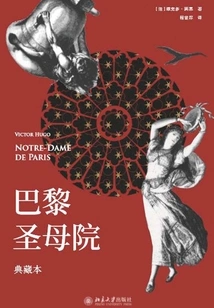
Notre Dame De Paris (collection Edition)
by H
About This Novel
"Notre Dame de Paris" is the representative work of French writer Victor Hugo. It is a historical novel rich in romanticism. The book takes the twists and turns of the beautiful and kind-hearted street performer Esmeralda and the ugly Notre Dame bell-ringer Quasimodo as the main line. It panoramically displays the customs, beliefs, ethics, law, art and other aspects of medieval Paris, with exciting plots and rich scenes. With his certain philosophical cultivation and profound historical knowledge, the writer's profound insight into the society at that time and the rich presentation of the tragic situation of the people at the bottom triggered readers to think about what is truth, goodness and beauty, and what is false, evil and ugly. This made the novel a world literary classic that transcends time and space, and its influence continues to this day. The translator, Mr. Cheng Zenghou, had a lifelong love and accumulation of Hugo. When he was nearly 60 years old, he began to translate "Notre Dame de Paris" and regarded it as an academic project. In addition to careful consideration of the translation, it also provides contemporary Chinese readers with more than a thousand annotations and more than a hundred exquisite pictures that are rare in other Chinese translations, so as to help readers better experience the full picture of Paris in medieval France while reading the classics.
Official Sources
What Readers Think
Rating
Community(0)
Official(6)Scraped 1mo ago
The movie on paper is really nice
When Hugo wrote "The Hunchback of Notre Dame", he did not simply tell a story. He took filmmaking on paper to the extreme. The words are all lens-like, and the skeleton of the entire book is the contrasting aesthetics without blind spots. Whether it is up or down, beauty or ugliness, light or dark, it is all the ultimate contrast, and the most ruthless human and aesthetic core is hidden in the contrast. Look at the most intuitive contrast between the top and bottom: above the bell tower is Father Claude, wearing the skin of a priest, full of twisted desires, representing the hypocrisy of the upper class and the filth of power; below the bell tower is the square, where Esmeralda dances and Quasimodo is teased. The people at the bottom look miserable, but they hide the truest kindness and freedom. The top and bottom of space are directly the top and bottom of human nature, piercing the mask of class at a glance. Then there is the contrast between beauty and ugliness. This is the most awesome thing about Hugo - Quasimodo is extremely ugly, hunchbacked, one-eyed and deaf, and is regarded as a monster, but his soul is extremely clean, his love for Esmeralda is pure and loyal, and he will guard her even to death; on the contrary, Claude, who looks holy and elegant on the outside, is full of jealousy and possessiveness in his heart. In order to get what he wants, he will not hesitate to frame up and strip away all the evil in human nature. There is also Esmeralda, who is so beautiful that she shines, like a light in the world, but her fate is extremely miserable. The contrast between beauty and tragedy directly illustrates the fragility of beauty and the darkness of the times. And his words are all like movie shots, not dry narratives: one moment is an overhead shot of the bell tower, looking at the various human activities in the square; another moment is a close-up shot of Quasimodo's face, describing the tenderness in his eyes; and another moment is a panoramic shot of the Gothic spire of Notre Dame de Paris, contrasting with the coldness of the gallows. There is no need to think about it, as soon as the words come out, the picture is right in front of you. This is the essence of paper movies. To put it bluntly, Hugo's comparisons are never for comparison's sake, but to use these extreme contrasts to talk about true aesthetics: beauty is never single, it does not mean that you are beautiful on the outside, nor does you mean being in a high position, it is the purity of the soul and the purity of the heart that is the real beauty; and those who are cloaked in beauty and kindness but rotten on the inside are the ugliest. The whole book uses a tragedy to tear apart the fake beauty and bring out the true beauty. This is the core of "Notre Dame de Paris".
.
A blockbuster A blockbuster A blockbuster



.
A blockbuster A blockbuster A blockbuster
.
A blockbuster A blockbuster A blockbuster



.
A blockbuster A blockbuster A blockbuster

.
A blockbuster A blockbuster A blockbuster

Rating
Community(0)
Official(6)Scraped 1mo ago
The movie on paper is really nice
When Hugo wrote "The Hunchback of Notre Dame", he did not simply tell a story. He took filmmaking on paper to the extreme. The words are all lens-like, and the skeleton of the entire book is the contrasting aesthetics without blind spots. Whether it is up or down, beauty or ugliness, light or dark, it is all the ultimate contrast, and the most ruthless human and aesthetic core is hidden in the contrast. Look at the most intuitive contrast between the top and bottom: above the bell tower is Father Claude, wearing the skin of a priest, full of twisted desires, representing the hypocrisy of the upper class and the filth of power; below the bell tower is the square, where Esmeralda dances and Quasimodo is teased. The people at the bottom look miserable, but they hide the truest kindness and freedom. The top and bottom of space are directly the top and bottom of human nature, piercing the mask of class at a glance. Then there is the contrast between beauty and ugliness. This is the most awesome thing about Hugo - Quasimodo is extremely ugly, hunchbacked, one-eyed and deaf, and is regarded as a monster, but his soul is extremely clean, his love for Esmeralda is pure and loyal, and he will guard her even to death; on the contrary, Claude, who looks holy and elegant on the outside, is full of jealousy and possessiveness in his heart. In order to get what he wants, he will not hesitate to frame up and strip away all the evil in human nature. There is also Esmeralda, who is so beautiful that she shines, like a light in the world, but her fate is extremely miserable. The contrast between beauty and tragedy directly illustrates the fragility of beauty and the darkness of the times. And his words are all like movie shots, not dry narratives: one moment is an overhead shot of the bell tower, looking at the various human activities in the square; another moment is a close-up shot of Quasimodo's face, describing the tenderness in his eyes; and another moment is a panoramic shot of the Gothic spire of Notre Dame de Paris, contrasting with the coldness of the gallows. There is no need to think about it, as soon as the words come out, the picture is right in front of you. This is the essence of paper movies. To put it bluntly, Hugo's comparisons are never for comparison's sake, but to use these extreme contrasts to talk about true aesthetics: beauty is never single, it does not mean that you are beautiful on the outside, nor does you mean being in a high position, it is the purity of the soul and the purity of the heart that is the real beauty; and those who are cloaked in beauty and kindness but rotten on the inside are the ugliest. The whole book uses a tragedy to tear apart the fake beauty and bring out the true beauty. This is the core of "Notre Dame de Paris".
.
A blockbuster A blockbuster A blockbuster
.
A blockbuster A blockbuster A blockbuster
.
A blockbuster A blockbuster A blockbuster
.
A blockbuster A blockbuster A blockbuster
.
A blockbuster A blockbuster A blockbuster