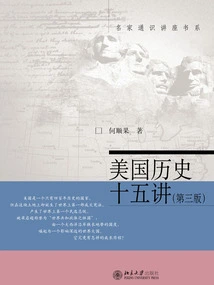
Fifteen Lectures on American History (third Edition)
by He Shunguo
About This Novel
From the perspective of social history, this book tells the historical origin of American civilization, its occurrence and development in the New World, and the growth of society, culture, science and technology that accompanied its political and economic development, and provides basic questions and basic clues for studying American history.
Official Sources
What Readers Think
Rating
Community(0)
Official(1)Scraped 1mo ago
A few days ago, a news broke on the Internet that Trump was preparing to impose sanctions and use force against Venezuela, and brought warships to Venezuela's doorstep. This news made me think about this: a country that developed from a colony, a civilization with a history of only more than 200 years, why has its strength and status become so strong in today's world, and can it be tyrannical around the world? Thinking about this issue aroused my interest in the development of American history, so I began to look for some books that explained American history. But there are many books about American history on the Internet. I didn't know which one to start with, and I kept choosing. Finally, I came across Fifteen Lectures on American History by He Shunguo, so I put it on my bookshelf as an introductory book for me to understand American history. Since the first sailing ship of the European Age of Discovery arrived on the eastern coast of America, colonists from various European countries have begun to go to the New World one after another for development. From establishing strongholds to establishing rule, and then forming a relatively complete society, it took about one or two hundred years to form the thirteen colonies of the United States. The American colonies in the 17th and 18th centuries were extremely dependent on Europe, both politically and in terms of brokerage, and militarily they were directly controlled by European countries such as the United Kingdom. So what was the reason that made the thirteen American colonies demand to get rid of the vassal status of the mother country? From this book, I saw some reasons that we have learned before, but now I understand these reasons more deeply. These reasons are closely related to the maturation of society established by Europeans in the Americas, the rapid development of the capitalist economy in the Americas, and the spread of the European religious reform and enlightenment movements in the Americas in the 17th and 18th centuries. But for the United States to develop into the super strength and status it has today, I think one extremely important reason is: opportunity. The first opportunity was the gunfire at Lexington, which allowed the United States to start a war against its mother country. Later, it drafted and issued the Declaration of Independence. It won the support of France and Spain during the war, and finally gained independence. The second opportunity was that the Westward Expansion and the purchase of a large amount of land achieved the extreme expansion of the US territory, laying a favorable foundation for subsequent overseas hegemony. It also had the protection of two oceans, forming a natural isolation barrier. The third opportunity is to seize the development opportunity of the first industrial revolution and achieve rapid development of the American economy. The unification of the Civil War stabilized and consolidated the economic situation and market of the United States. The third opportunity is that the development and application of the theory of sea power enabled the United States to shift from continental revolution to overseas expansion and colonization, occupying key strategic points and passages around the world, and providing a good guarantee for the United States' overseas hegemony. The fourth opportunity was the United States' attempt to compete for the center of the world stage during World War I. It sold arms and provided loans to those warring countries, which enabled the United States to reverse its status from a debtor to a creditor country in one fell swoop. World War I caused an expansionary leap in the U. S. Economy. The economy accounts for more than 20% of the world's total economy. The fifth opportunity was the transition of the United States from neutral isolationism to the anti-fascist alliance during World War II, in which it played a pivotal role. The establishment of the Brinton-Shellwood System can be said to have initially established the hegemony centered on the United States. The sixth opportunity is that the United States became the world's superpower after the Cold War. At that time, no country in the world had absolute strength to compete with the United States. After the Cold War, the United States established its position as hegemon. When we look back at the development of the United States, a very important reason why the United States has developed into a superpower in the world today is that it has seized opportunities and is good at observing changes in the world. Taking history as a mirror, we should also be good at seizing opportunities and seizing opportunities to improve ourselves in the development process of our own lives.
Rating
Community(0)
Official(1)Scraped 1mo ago
A few days ago, a news broke on the Internet that Trump was preparing to impose sanctions and use force against Venezuela, and brought warships to Venezuela's doorstep. This news made me think about this: a country that developed from a colony, a civilization with a history of only more than 200 years, why has its strength and status become so strong in today's world, and can it be tyrannical around the world? Thinking about this issue aroused my interest in the development of American history, so I began to look for some books that explained American history. But there are many books about American history on the Internet. I didn't know which one to start with, and I kept choosing. Finally, I came across Fifteen Lectures on American History by He Shunguo, so I put it on my bookshelf as an introductory book for me to understand American history. Since the first sailing ship of the European Age of Discovery arrived on the eastern coast of America, colonists from various European countries have begun to go to the New World one after another for development. From establishing strongholds to establishing rule, and then forming a relatively complete society, it took about one or two hundred years to form the thirteen colonies of the United States. The American colonies in the 17th and 18th centuries were extremely dependent on Europe, both politically and in terms of brokerage, and militarily they were directly controlled by European countries such as the United Kingdom. So what was the reason that made the thirteen American colonies demand to get rid of the vassal status of the mother country? From this book, I saw some reasons that we have learned before, but now I understand these reasons more deeply. These reasons are closely related to the maturation of society established by Europeans in the Americas, the rapid development of the capitalist economy in the Americas, and the spread of the European religious reform and enlightenment movements in the Americas in the 17th and 18th centuries. But for the United States to develop into the super strength and status it has today, I think one extremely important reason is: opportunity. The first opportunity was the gunfire at Lexington, which allowed the United States to start a war against its mother country. Later, it drafted and issued the Declaration of Independence. It won the support of France and Spain during the war, and finally gained independence. The second opportunity was that the Westward Expansion and the purchase of a large amount of land achieved the extreme expansion of the US territory, laying a favorable foundation for subsequent overseas hegemony. It also had the protection of two oceans, forming a natural isolation barrier. The third opportunity is to seize the development opportunity of the first industrial revolution and achieve rapid development of the American economy. The unification of the Civil War stabilized and consolidated the economic situation and market of the United States. The third opportunity is that the development and application of the theory of sea power enabled the United States to shift from continental revolution to overseas expansion and colonization, occupying key strategic points and passages around the world, and providing a good guarantee for the United States' overseas hegemony. The fourth opportunity was the United States' attempt to compete for the center of the world stage during World War I. It sold arms and provided loans to those warring countries, which enabled the United States to reverse its status from a debtor to a creditor country in one fell swoop. World War I caused an expansionary leap in the U. S. Economy. The economy accounts for more than 20% of the world's total economy. The fifth opportunity was the transition of the United States from neutral isolationism to the anti-fascist alliance during World War II, in which it played a pivotal role. The establishment of the Brinton-Shellwood System can be said to have initially established the hegemony centered on the United States. The sixth opportunity is that the United States became the world's superpower after the Cold War. At that time, no country in the world had absolute strength to compete with the United States. After the Cold War, the United States established its position as hegemon. When we look back at the development of the United States, a very important reason why the United States has developed into a superpower in the world today is that it has seized opportunities and is good at observing changes in the world. Taking history as a mirror, we should also be good at seizing opportunities and seizing opportunities to improve ourselves in the development process of our own lives.