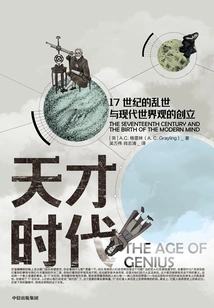
The Age of Genius: Troubled Times in the 17th Century and the Creation of the Modern World View
About This Novel
The 17th century in Europe can be called a century of wars. There were only three years without war in 100 years. The social landscape of Europe underwent drastic changes. At the same time, this was also a century of great creativity. European scholars made brilliant achievements in the field of thought, and a large number of scientific and ideological giants such as Galileo, Descartes, Newton, Boyle, Hobbes, and John Locke emerged. It was the great changes of this century that pushed Western civilization to the center of the stage of human history. "The Age of Genius" explores the connection between social changes and intellectual progress in 17th-century Europe. The brutal Thirty Years' War dealt a heavy blow to the ideological monopoly of the Catholic Church, allowing faith and thought to gradually gain freedom. Because of this, the 17th century also became an era of mixed thoughts and ideas. This era not only had meticulous scientific exploration, but also had a strong enthusiasm for supernatural powers, and an obsession with alchemy, occultism, astrology, and magic; even the founders of new world views such as Newton and Descartes had inexplicable connections with them. But the noise will gradually end, and scientific thinking will finally emerge from the fog to form the cornerstone of modern thought.
Official Sources
What Readers Think
Rating
Community(0)
Rating
Community(0)
