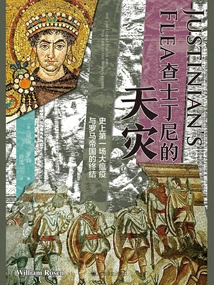
Justinian's Scourge: History's First Great Plague and the End of the Roman Empire
About This Novel
A "Guns, Germs and Steel" of the Roman Empire. Justinian I was the last Eastern Roman emperor to be titled "Emperor" in the late classical era. He and his generation of capable ministers and generals were also called "the last Romans". He was born into a poor peasant family in the border province of Illyria, but he was crowned the supreme ruler of the empire at the age of forty; he enriched the empire's treasury and regained the empire's old capital, Rome; he built the history of human architecture on the ruins of the old church that was burned during the Nika riots. He went to the miraculous Hagia Sophia; he issued a pardon, appointed a group of jurists, and compiled a masterpiece of Roman law - the "Justinian Code", which laid the cornerstone of the civil law system... Any of the above achievements is enough to make an emperor famous in history. Why could such a talented and ambitious emperor not be able to revive the Roman Empire? In fact, there are many reasons. The most shocking one is the Yersinia pestis that originated in Africa. When this seemingly insignificant organism collided with the largest empire in the world at the time, the result was a great plague that swept across the entire Mediterranean world. After paying the price of 25 million corpses, losing one-third of the population, and turning dozens of prosperous and prosperous cities, including Constantinople, into ghost towns, the historical trajectory of Rome, and even the entire world, was irreversibly changed. The ambition, intelligence and dreams of the "last Romans" were so vulnerable to the storms of history and nature.
Official Sources
What Readers Think
Rating
Community(0)
Rating
Community(0)