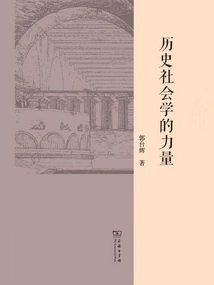
The Power of Historical Sociology
by Terry Gou
About This Novel
Since the Second World War, historical sociology has gradually developed into an intellectual movement with international influence, promoting knowledge innovation and academic prosperity in history, social sciences, and interdisciplinary studies. After entering the 21st century, Chinese social sciences have truly realized the importance of China's local experience and begun to value its own unique and complex historical resources. Historical sociology provides a wealth of theoretical resources, research paths and methods for Chinese social sciences to "turn to history". However, in Western academia, whether it is history and social science as mainstream disciplines, or the group of scholars who have long regarded themselves as historical sociology researchers, there has always been controversy over the "identity" of historical sociology. Is historical sociology a discipline, a theory, a method, a way of thinking, or simply the intersection of sociology and history? This issue deserves in-depth consideration and discussion by Chinese social science researchers, and is directly related to how we "turn to history" in our research. In the process of this exploration, we urgently need to sort out the intellectual tradition of Western historical sociology, deeply explore its influence and trends at different levels of epistemology and methodology, and reflect on the many debates among related disciplines, scholars, and major research fields. Based on the perspective of intellectual history, this book explores the academic history of historical sociology and understands historical sociology as an intellectual movement that has resisted the differentiation of disciplines since the 20th century and has continued to differentiate itself. It is an attempt to continue and develop the intellectual tradition of historical research and social sciences in the 19th century. The content arrangement is divided into two parts.
Official Sources
What Readers Think
Rating
Community(0)
Rating
Community(0)