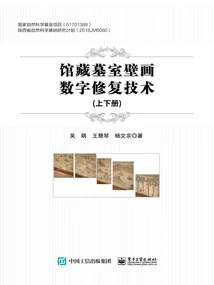
Digital Restoration Technology of Tomb Murals in Museum Collections (part 1 and 2)
About This Novel
Under the background of digital survival of cultural relics, museums have successively carried out high-definition digital collection of cultural relics in their collections, resulting in a large number of cultural relic image materials full of traces of time. This digital cultural relic information is an important material for studying culture and verifying history. In the process of irreversible decline of cultural relics, the use of digital information processing methods to record and reconstruct cultural relic information is a development trend in the scientific and technological protection of cultural relics. Especially for two-dimensional cultural relics such as murals, if the cultural and historical information passed down by their pictures disappears, the value of the cultural relic itself will no longer exist. They are the type of cultural relics that museums most urgently need to restore. The restoration of murals in museum collections involves a tedious process and the restoration cycle is very long. Due to the unpredictable effects of restoration and the shortage of restoration personnel, most of the murals are stored in the storage department and have not yet entered the exhibition hall. The research object of this article is the digital information of the tomb murals collected in high definition. The research goal is to extract the digital files of the murals non-contactly and non-destructively through the analysis of the existing information, and simulate the process of manual restoration of the murals, so as to establish a complete digital restoration system that meets the museum management process. The digital restoration of the tomb murals in the collection is based on the Bayesian inverse principle and includes three parts: extracting prior knowledge of the remaining information on the murals, establishing a data model for the mural disease information, and establishing a repair model for the damaged mural information. During the research process, the paper fully considered the strong pathological nature of solving such inverse problems and the principles of Gestalt visual psychology, established subjective and objective evaluation methods, and designed an interactive digital restoration management platform to share remote expert experience and dynamically adjust restoration plans.
Official Sources
What Readers Think
Rating
Community(0)
Rating
Community(0)
