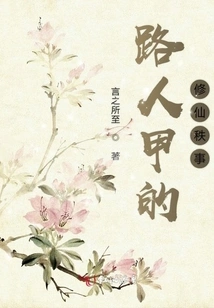
Passerby's Immortal Cultivation Matters
About This Novel
Ning Ran, a quasi-college student, woke up and became a little bun through time travel. Then he was packed away and sent to cultivate as an immortal. Ning Ran said he was helpless, I just wanted to go back to study in college properly! As soon as he came, he was content with it, and Ning Ran began to live a life of cultivating immortals by eating melons and watching dramas.
Official Sources
What Readers Think
Rating
Community(0)
Official(5)Scraped 1mo ago
The heroine's choice of weapons is not suitable for her. Because she lacks domineering power
This article is too bland and boring. Clear soup with little water
Damn, are you still updating? Isn't it a trap?
Good looking🌸
Come on ↖(^ω^)↗, it looks great!!! Is it no cp?
Is this article a 1v1? ? Ask for answers
nice
But Dad, you don't seem to have written down the level of cultivation, such as Qi training, foundation building, golden elixir, Nascent Soul, spirit transformation, distraction, void refining, integration, out of body, transcending tribulations, Mahayana, ascending to the immortal world. I also want to ask Dad, is this heroine a sword practitioner? I think the heroine in Da Da likes to use swords. Is there a male protagonist? Also, when I read this article, I felt that it was not explained clearly. For example, the elder who drew the talisman did not write what kind of cultivation he was, nor did the leader. Generally, articles on immortal cultivation will clearly write it down at the beginning. For example, Jindan calls the real person, and the master gives him the Taoist name. Later generations call him XX real person, Nascent Soul calls the true king, the transformed spirit calls the Taoist, and then the Taoist and Zhenzun are unified in this way. If there is a real person written about in the article, the reader will know that the person is in the golden elixir level. The main character needs to clearly state whether he is in the early stage of the golden elixir, or in the middle or late stage, or in the final stage of the golden elixir, and so on. In the article, the heroine goes on a task with someone, and calls a person who is in the golden elixir stage to be called senior sister. I feel that the seniority is a bit wrong, because the heroine does not have the title of someone who has the cultivation level of the Nascent Soul. Master, you should not call someone senior sister. It would be better to call someone a real person, or a senior. There is also a heroine who calls a person with Jindan cultivation a senior sister. It will make people think that person is very young, and it will also make people think that it is very simple and easy to have Jindan cultivation at such a young age. Wouldn't it be better if you could introduce the age of this real person with Jindan cultivation by the way? I don't know if it's my misunderstanding. I feel like after reading the whole thing, the people in it are all so young and they practice so fast. There is no feeling that it is difficult to practice. For example, the heroine is only 7 years old. She has already practiced Qi at the fifth level just a few months after joining the sect. Even if the heroine has some special physique, she shouldn't be so fast. Otherwise, wouldn't the heroine have established the foundation before she was 10 years old? In general fairy tales, the author will ask the heroine to practice for 10 years or so during the Qi training period to lay a good foundation. When she is 15-20 years old, she will directly build the foundation. All aspects of her body will have grown well. You don't have to worry about her body not growing taller after the foundation is built. In fairy tales, foundation building is to fix the body shape. Only when your lifespan is coming to an end will you slowly grow old. It will take another few decades to reach 100 years to reach the golden elixir, and 100 to 300 years to reach the Nascent Soul. Writing these things will make people feel that cultivation is difficult. It also does not clearly explain how many lifespans there are in the Qi training period and how many lifespans there are in the foundation building period.
Rating
Community(0)
Official(5)Scraped 1mo ago
The heroine's choice of weapons is not suitable for her. Because she lacks domineering power
This article is too bland and boring. Clear soup with little water
Damn, are you still updating? Isn't it a trap?
Good looking🌸
Come on ↖(^ω^)↗, it looks great!!! Is it no cp?
Is this article a 1v1? ? Ask for answers
nice
But Dad, you don't seem to have written down the level of cultivation, such as Qi training, foundation building, golden elixir, Nascent Soul, spirit transformation, distraction, void refining, integration, out of body, transcending tribulations, Mahayana, ascending to the immortal world. I also want to ask Dad, is this heroine a sword practitioner? I think the heroine in Da Da likes to use swords. Is there a male protagonist? Also, when I read this article, I felt that it was not explained clearly. For example, the elder who drew the talisman did not write what kind of cultivation he was, nor did the leader. Generally, articles on immortal cultivation will clearly write it down at the beginning. For example, Jindan calls the real person, and the master gives him the Taoist name. Later generations call him XX real person, Nascent Soul calls the true king, the transformed spirit calls the Taoist, and then the Taoist and Zhenzun are unified in this way. If there is a real person written about in the article, the reader will know that the person is in the golden elixir level. The main character needs to clearly state whether he is in the early stage of the golden elixir, or in the middle or late stage, or in the final stage of the golden elixir, and so on. In the article, the heroine goes on a task with someone, and calls a person who is in the golden elixir stage to be called senior sister. I feel that the seniority is a bit wrong, because the heroine does not have the title of someone who has the cultivation level of the Nascent Soul. Master, you should not call someone senior sister. It would be better to call someone a real person, or a senior. There is also a heroine who calls a person with Jindan cultivation a senior sister. It will make people think that person is very young, and it will also make people think that it is very simple and easy to have Jindan cultivation at such a young age. Wouldn't it be better if you could introduce the age of this real person with Jindan cultivation by the way? I don't know if it's my misunderstanding. I feel like after reading the whole thing, the people in it are all so young and they practice so fast. There is no feeling that it is difficult to practice. For example, the heroine is only 7 years old. She has already practiced Qi at the fifth level just a few months after joining the sect. Even if the heroine has some special physique, she shouldn't be so fast. Otherwise, wouldn't the heroine have established the foundation before she was 10 years old? In general fairy tales, the author will ask the heroine to practice for 10 years or so during the Qi training period to lay a good foundation. When she is 15-20 years old, she will directly build the foundation. All aspects of her body will have grown well. You don't have to worry about her body not growing taller after the foundation is built. In fairy tales, foundation building is to fix the body shape. Only when your lifespan is coming to an end will you slowly grow old. It will take another few decades to reach 100 years to reach the golden elixir, and 100 to 300 years to reach the Nascent Soul. Writing these things will make people feel that cultivation is difficult. It also does not clearly explain how many lifespans there are in the Qi training period and how many lifespans there are in the foundation building period.