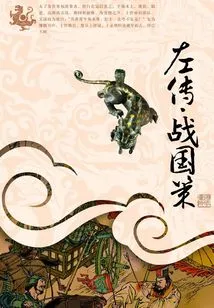
Zuo Zhuan·warring States Policy
by Editorial Board Of "illustrations Of The World·chinese Studies Academy Series"
About This Novel
"Zuo Zhuan" and "Warring States Policy" are important classics recording the history of the Spring and Autumn Period and the Warring States Period. "Zuo Zhuan" explains the "Spring and Autumn" and is said to have been written by Zuo Qiu Ming in the late Spring and Autumn Period. It not only records the historical facts of the Spring and Autumn Period, but also cites many historical facts of the previous dynasties. It has very important historical material value and represents the highest achievement of pre-Qin historiography. It has a great influence on the historical research and development of later generations, especially in establishing the status of chronicle history books. It is also a very excellent literary work. It is good at describing wars and characters, and pays attention to recording the characters' diction. "Warring States Policy" mainly records the political opinions and diplomatic strategies of various countries' advisers and strategists during the Warring States Period, as well as their lobbying words. It is a country-specific history book that is divided into the Eastern Zhou Dynasty, the Western Zhou Dynasty, Qin, Qi, Chu, Zhao, Wei, Han, Yan, Song, Wei, and Zhongshan. It is compiled into 33 volumes in total. The history recorded in it starts from Zhibo's destruction of the Fan family in 490 BC, to Gao Jianli's attack on Qin Shihuang in 221 BC. "Warring States Policy" centers on the lobbying activities of strategists, reflects the political and diplomatic conditions of various countries during this period, and preserves a summary of the history of the Warring States Period for more than two hundred years, which has important historical value. At the same time, "Warring States Policy" is also a very good historical prose work, marking a new period in the development of ancient Chinese prose. The literary nature is very prominent, especially in the portrayal of characters, the use of language and rhetoric, and the description of fables. It has very distinctive artistic features.
Official Sources
What Readers Think
Rating
Community(0)
Official(2)Scraped 2mo ago
Chinese culture
Chinese culture has a long history
Chinese culture must be supported
Rating
Community(0)
Official(2)Scraped 2mo ago
Chinese culture
Chinese culture has a long history
Chinese culture must be supported