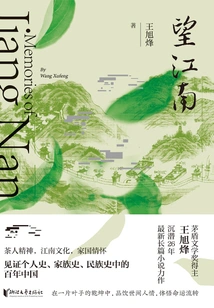
Looking South of the Yangtze River
by Wang Xufeng
About This Novel
"Looking to the South of the Yangtze River" is a novel written by Wang Xufeng, winner of the Mao Dun Literature Prize, who spent 26 years in hiding. The novel narrates the ups and downs of the Hang family, a tea family in the south of the Yangtze River, and the fate of the characters during the magnificent social process in the nearly twenty years before and after the founding of New China. Wang Xufeng writes about tea people and tea affairs. In the earth-shaking era, he writes about the choice and openness, integration and advancement of the Chinese people soaked in the mist and rain of Jiangnan; in the excitement and wind and thunder of the times, Wang Xufeng writes about the fragrance and nature of tea, the poetry and power of Jiangnan culture, and the Chinese style, feelings and character. The story of the Hang family is also a Chinese story. It intersects historical memories and emotional imagination. It is not only a reconstruction of the lost time, but also an exploration of the modern inheritance of cultural traditions. This novel provides a new narrative for the dramatic changes and permanence of Chinese life and spirit, and witnesses the century-old China in personal history, family history, and national history.
Official Sources
What Readers Think
Rating
Community(0)
Official(11)Scraped 2mo ago
How can I look for a confidant in human and heaven? I always feel that I am in the same group because of my downfall. Humanity and sophistication blend into tea, leaving endless aftertaste
Longjing jade is green and green, and a misty rain cape looks towards the south of the Yangtze River
Tea, as one of my country's top ten national quintessences, can trace its origins back to the Shennong era five thousand years ago. According to the "Shen Nong's Materia Medica": "Shennong tasted hundreds of herbs and encountered seventy-two poisons every day, and got tea to relieve them." The world's tea culture is in China, and the ancestor of Chinese tea is Shennong. The name of tea originated from the "Tea Classic". The first chapter of the "Tea Classic" written by Lu Yu, the tea sage of the Tang Dynasty, records the origin of the word tea: the word tea comes from grass, wood, or a combination of grass and trees. The beauty of tea lies in the word, name, intention and taste. Since ancient times, people have placed unconventional and indifferent feelings in tea. "Don't miss your old friends and your homeland, and try new tea with new fires." The novel "Looking to the South", written by Wang Xufeng, the winner of the Mao Dun Literature Prize, has been studying for 26 years. It combines the tenderness of the south of the Yangtze River with tea culture, and goes through China's magnificent social process in the past 20 years in the light fragrance of tea. The arduous construction of China and the journey towards the world are integrated into this small city of Hangzhou with beautiful mountains and clear waters. Reading it is like fragrant tea in the mouth, with endless flavors. This is a history of tea people's unyielding struggle. After the Hang family, whose business was tea, experienced the ravages of war, their business became increasingly sluggish, and China's tea industry also hit rock bottom. Faced with heavy pressure, the leader of the Hang family relied on his integrity and courage to lead the Hang family to move forward in the storm. In the end, Hang Tea ushered in technological innovation, realized machine-made tea, and went abroad. The tea people in the work have gone through ups and downs and struggled in the cracks of the changes of the years, but they never bowed to their troubled fate. When the Japanese invaded, Hang Jiahe resolutely refused to play chess with them and resolutely affirmed his ambition. This is the integrity flowing in his blood, and it is also the Hang family's feelings for the country and the family. Their days flow quietly in the tea garden, slipping away amid the blooming of camellias and the mellow fragrance of tea buds at their fingertips. They were infiltrated by tea into the unique harmony, tranquility, open-mindedness and cheerfulness of the Jiangnan water town. Tea gave them the calmness and indifference to regard suffering as making tea, driving away the smoke of vanity fair, leaving only the purity and elegance of this tea garden. They are tea makers, and they also have a tea soul that takes root downwards and blooms upwards. The faith and persistence of the tea people are the ship that supports them through hardships and joys, and are also the tributaries that converge into the determination of China's rise. This is a beautiful painting of tea affairs and tea feelings. The whole book unfolds slowly against such a heavy background, but there is no trace of sadness, fear or negativity at all, and the words as delicate and gentle as tea run through to the final chapter. There are many references to tea culture, which also shows the author's rich cultural heritage. In addition to the very different life trajectories of the two brothers Hang Jia and Hang Jiaping as the main line, the deeds and lives of many characters unfold in different branches and orders, which is vast but not messy. Jiahe and Ye Zi protect each other across nationalities and worldly shackles, Hang Pan and Cao Jiayuan fall in love at first sight, Ji Cao and Luo Li remain consistent in the rush of revolution, Huang Jiaofeng and Hang Han know each other innocently and innocently and stay together... Generations of tea The affection between children and their love and hatred is witnessed by the long fragrance of tea. Family affection, love, friendship, life and death, Hang's fireworks continue in the tea. What remains unchanged is the simplicity, honesty and loyalty engraved in Hang's blood filtered through countless hard years. This emotion is not only for each other and the family, but also for the collective and the country. The half-life relationship between them and their families and their lifelong companionship are tenderness in the context of the times, and it is also a side of human fireworks. And test new tea with new fire. Poetry and wine take advantage of the youth. Hang's tea industry finally went to the world, which is the perfect ending of the book. For you and me, and for China, it is the starting point for the rise of great powers. And in the universe of a leaf, look for a thunder.
Chickens raised by oneself are the most fragrant. Wanluo's mother also set aside a place to raise chickens in her spare time. She can kill one every time during the New Year and holidays.
Camellia flower
I felt a bit of Jiangnan atmosphere. Compared with the feelings of family and country, in fact, the small family that I hold on to in my heart is also an ideal.
Still unfinished! Was Luo Li's identity finally proven?
The last one, finally collected!
About the history of tea, about the history of China. The combination of the two is life and experience. The characters are vivid and individual, and the diction is quite literary. Worth a try
Damn, some things are something you are willing to fight or endure. It was clear that Jiaping had to bear Ye Zi first, but Jiahe didn't think so. It can only be said that they both have their own ideas.
People of different age groups will have different feelings when they see the same thing. When Lin Wangyou came to Yue Temple in Hangzhou again, he seemed to have seen his mother when she was there, and he must have missed her too.
There are no big winds, big waves, big ups and downs, just a magnificent history of our family and country just narrated like this. Without being in the environment of that year, the words can make people sympathize. Generally speaking, we are living in the happiest moment in Chinese history.
Rating
Community(0)
Official(11)Scraped 2mo ago
How can I look for a confidant in human and heaven? I always feel that I am in the same group because of my downfall. Humanity and sophistication blend into tea, leaving endless aftertaste
Longjing jade is green and green, and a misty rain cape looks towards the south of the Yangtze River
Tea, as one of my country's top ten national quintessences, can trace its origins back to the Shennong era five thousand years ago. According to the "Shen Nong's Materia Medica": "Shennong tasted hundreds of herbs and encountered seventy-two poisons every day, and got tea to relieve them." The world's tea culture is in China, and the ancestor of Chinese tea is Shennong. The name of tea originated from the "Tea Classic". The first chapter of the "Tea Classic" written by Lu Yu, the tea sage of the Tang Dynasty, records the origin of the word tea: the word tea comes from grass, wood, or a combination of grass and trees. The beauty of tea lies in the word, name, intention and taste. Since ancient times, people have placed unconventional and indifferent feelings in tea. "Don't miss your old friends and your homeland, and try new tea with new fires." The novel "Looking to the South", written by Wang Xufeng, the winner of the Mao Dun Literature Prize, has been studying for 26 years. It combines the tenderness of the south of the Yangtze River with tea culture, and goes through China's magnificent social process in the past 20 years in the light fragrance of tea. The arduous construction of China and the journey towards the world are integrated into this small city of Hangzhou with beautiful mountains and clear waters. Reading it is like fragrant tea in the mouth, with endless flavors. This is a history of tea people's unyielding struggle. After the Hang family, whose business was tea, experienced the ravages of war, their business became increasingly sluggish, and China's tea industry also hit rock bottom. Faced with heavy pressure, the leader of the Hang family relied on his integrity and courage to lead the Hang family to move forward in the storm. In the end, Hang Tea ushered in technological innovation, realized machine-made tea, and went abroad. The tea people in the work have gone through ups and downs and struggled in the cracks of the changes of the years, but they never bowed to their troubled fate. When the Japanese invaded, Hang Jiahe resolutely refused to play chess with them and resolutely affirmed his ambition. This is the integrity flowing in his blood, and it is also the Hang family's feelings for the country and the family. Their days flow quietly in the tea garden, slipping away amid the blooming of camellias and the mellow fragrance of tea buds at their fingertips. They were infiltrated by tea into the unique harmony, tranquility, open-mindedness and cheerfulness of the Jiangnan water town. Tea gave them the calmness and indifference to regard suffering as making tea, driving away the smoke of vanity fair, leaving only the purity and elegance of this tea garden. They are tea makers, and they also have a tea soul that takes root downwards and blooms upwards. The faith and persistence of the tea people are the ship that supports them through hardships and joys, and are also the tributaries that converge into the determination of China's rise. This is a beautiful painting of tea affairs and tea feelings. The whole book unfolds slowly against such a heavy background, but there is no trace of sadness, fear or negativity at all, and the words as delicate and gentle as tea run through to the final chapter. There are many references to tea culture, which also shows the author's rich cultural heritage. In addition to the very different life trajectories of the two brothers Hang Jia and Hang Jiaping as the main line, the deeds and lives of many characters unfold in different branches and orders, which is vast but not messy. Jiahe and Ye Zi protect each other across nationalities and worldly shackles, Hang Pan and Cao Jiayuan fall in love at first sight, Ji Cao and Luo Li remain consistent in the rush of revolution, Huang Jiaofeng and Hang Han know each other innocently and innocently and stay together... Generations of tea The affection between children and their love and hatred is witnessed by the long fragrance of tea. Family affection, love, friendship, life and death, Hang's fireworks continue in the tea. What remains unchanged is the simplicity, honesty and loyalty engraved in Hang's blood filtered through countless hard years. This emotion is not only for each other and the family, but also for the collective and the country. The half-life relationship between them and their families and their lifelong companionship are tenderness in the context of the times, and it is also a side of human fireworks. And test new tea with new fire. Poetry and wine take advantage of the youth. Hang's tea industry finally went to the world, which is the perfect ending of the book. For you and me, and for China, it is the starting point for the rise of great powers. And in the universe of a leaf, look for a thunder.
Chickens raised by oneself are the most fragrant. Wanluo's mother also set aside a place to raise chickens in her spare time. She can kill one every time during the New Year and holidays.
Camellia flower
I felt a bit of Jiangnan atmosphere. Compared with the feelings of family and country, in fact, the small family that I hold on to in my heart is also an ideal.
Still unfinished! Was Luo Li's identity finally proven?
The last one, finally collected!
About the history of tea, about the history of China. The combination of the two is life and experience. The characters are vivid and individual, and the diction is quite literary. Worth a try
Damn, some things are something you are willing to fight or endure. It was clear that Jiaping had to bear Ye Zi first, but Jiahe didn't think so. It can only be said that they both have their own ideas.
People of different age groups will have different feelings when they see the same thing. When Lin Wangyou came to Yue Temple in Hangzhou again, he seemed to have seen his mother when she was there, and he must have missed her too.
There are no big winds, big waves, big ups and downs, just a magnificent history of our family and country just narrated like this. Without being in the environment of that year, the words can make people sympathize. Generally speaking, we are living in the happiest moment in Chinese history.
