In Vain Grass (hefeng Translation)
by K
About This Novel
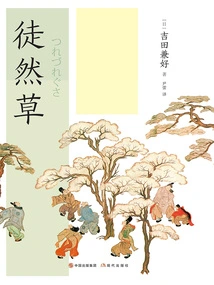
"Turancao (Chinese-Japanese Illustrated Edition)" is one of the classic works of Japanese classical literature launched by Modern Publishing House and the Wind Translation Series. Yoshida Kaneyoshi's "Uranso" and Kiyoshi Shōnagon's "Pillow Soko" are collectively known as the "Double Wall of Japanese Essays". The first two, together with Kamo Nagaaki's "Hojo Chronicles", are known as the "Three Major Essays in Japan". "Turancao (Chinese-Japanese Illustrated Edition)" adopts the Karasuma version, which has the least errors and is the most widely circulated among more than a hundred versions, and is based on "The Complete Works of Japanese Classical Literature 27·Turancao" (Shogakukan, 1983); using the Chinese-Japanese comparative translation, it also The original work is a mixture of Han Chinese and Japanese characters, mainly kana; it contains nearly a hundred exquisite illustrations such as "Uranso Painting Notes" painted by Yoshiki Kei and "Illustrated Turanso" painted by Nishikawa Yunobu, which three-dimensionally presents the social scene of Japan at the end of the Kamakura period. "Furancao" was created in the late Kamakura period. The whole book consists of a prologue and 243 incoherent paragraphs of mixed feelings, comments, short stories with morals, records of people from all walks of life or research works of different lengths. The author Kaneyoshi Yoshida is a famous singer who is proficient in Confucianism, Buddhism, and Lao-Zhuang studies. After becoming a monk, he created "Uran Grass" with exquisite writing style. He observes all things in the world, changes in the world, and changes in personnel with a clear and transparent heart. The lines are full of poetry, interest, and philosophy. "Furancao" is the origin of Japanese hermit literature. It represents the outstanding achievements of Japanese medieval prose creation. It occupies an important position in the history of Japanese literature and has a profound impact on later writers such as Shu Zuoren, Kawabata Yasunari, and Natsume Soseki. It has long been used as an introductory textbook for classical literature in Japan and is one of the most widely read literary works.
Official Sources
What Readers Think
Rating
Community(0)
Rating
Community(0)
