Who Will Dominate the Empire
About This Novel
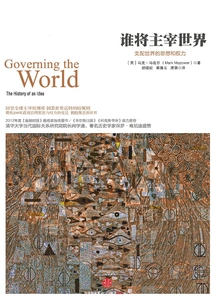
Looking at the European coordination in 1815 to internationalism in the 19th century, as well as the League of Nations during World War I and the United Nations after World War II, we can see that state status determines the development of international organizations. When Britain was strong, the League of Nations was a vassal of Britain. As the United States gradually grew stronger and became the world's largest power, the early United Nations had to take orders from the United States. However, since the 1960s, the Third World began to enter the international political arena as a real political force, and the United States began to lose its leading position in the world's discourse. The gaudy, exaggerated and comical expectations of the 1990s are also reproduced in the book, and the disintegration of post-millennium optimism and the subsequent fear it has spawned has made the Western world laugh. In the past 200 years or so, Europe and the United States have successively achieved a certain dominant position in the world, but they are no longer what they used to be. A new system of polycentric global balance is taking shape, and a new world of ideas is coming. This work not only fundamentally redefines our understanding of the past, it also offers us an opportunity to reexamine the present. As China rises, what is particularly worth thinking about for Chinese readers is what influential ideas China can provide to international politics. This book should not be missed by anyone who cares about the human condition.
Official Sources
What Readers Think
Rating
Community(0)
Rating
Community(0)