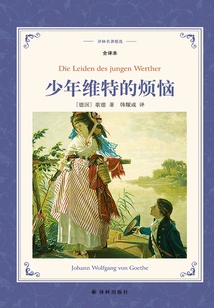
The Sorrows of Young Werther (selected Translation of Lin's Masterpieces)
About This Novel
"The Sorrows of Young Werther" is an epistolary novel written in the first person. It not only conveys the transitional period in Europe from the ancient feudal system to the bourgeoisie, but also the strong desire of the young and middle-aged generation to pursue "personality liberation", "emotional freedom", "restoration of the natural social state" and "establishing equal relationships between people". It also clarifies the author's own distinct position. Werther is a young man who yearns for freedom and equal life. He has the sentimentality, frankness and cuteness of young people, and his extreme thoughts. He met Charlotte at a dance and fell in love with her at first sight. However, Charlotte was already engaged and deeply in love with her fiancé Albert. Werther couldn't help but fall deeply in love. This love that had no results from the beginning but always worked hard made Werther struggle. The misery made him almost unable to bear it. In the end, Werther committed suicide by drinking a bullet with the belief that "if you cannot live for love, you will die for love."
Official Sources
What Readers Think
Rating
Community(0)
Official(1)Scraped 2mo ago
Werther is not just a boy
Werther is just a boy. Some people love this world and fantasize about freedom. He says that he feels joy and he is very happy. However, this world is just the world he thought it was. This world will one day be overturned. Although it will not be completely different, it will still be incomplete. In this sense, almost every one of us has been an incarnation of Werther, since we were all young at one time or another. The tone of this book seems to be "depressed", "sad and lonely", but at the beginning, Werther was not a weak person who complained about life. From the beginning, he loved the world with a passionate passion. The mist slowly rose from the beautiful mountain gorge, and the sun hung high over the densely shaded forest. When only a few rays of sunlight penetrated into the depths of the forest, I lay beside the trickling stream, in the deep grass, close to the ground, admiring the various forms of fine grass; I felt that my heart was closer to me. Near the bustling little world among the grass, close to countless insects, ants, and gnats of various shapes, I felt the presence of Almighty God, who created us in His own image. I felt the breath of God, who loves all living beings, and supports us to soar in eternal joy. Yes, this is exactly the world in Werther's mind. He loves nature, pursues beauty, and yearns for life. But the situation in reality caused him to leave the city where he had lived for many years and came to a small town, where he met a girl who determined the direction of his life, Lotte. He loved Lotte just like he loved nature and the world in his heart, but he also encountered torture, which came from the soul that he regarded as a treasure. Lotte has a husband. She admires Werther and has a common topic, but she is also sure that she still loves her husband. The subtle emotional entanglement in this is very embarrassing. In the end, Lotte rejected Werther. She hoped to maintain a sincere friendship and regard Werther as a brother. But the last illusion in Werther's heart was shattered. The contradiction between the love he had been seeking and reality dragged him step by step into the abyss, swallowing up his remaining imagination and vitality. He chose death. Yes, I am just a wanderer on earth, a pilgrim! Aren't you? Werther does not want to destroy Lotte's happiness, and he is unable to withstand the impact of losing love. Perhaps death is the best place to avoid anxiety and pain. In this way, step by step, Werther came to the end of his life under the oppression of reality. Once we give up on ourselves, everything becomes boring. We might laugh at Werther for being too silly and childish. Just like the day we heard in reality that a certain young man died because of a broken love, and without thinking, he said "not mature enough". Yes, Werther is indeed a teenager. Werther did die for love. But if a certain young man has strengthened his idea of dying for love because of reading Werther's story, or it has given him the idea that dying for love is a "worthy of recognition". Then it can only be said that he does not understand Goethe and literature. The story of Werther dying for love is just a microcosm of the society at that time, a concrete expression, and of course there is a metaphor hidden in it. Love is synonymous with all good things, and Lotte is undoubtedly the embodiment of "nature" in Werther's heart, pure and flawless, and desirable. But in the process of chasing beauty, there is a bloody reality lying in between. This leads to an inevitable confrontation between the mind and reality. It can be seen from Werther's letters that Werther was by no means an immature boy who could only understand fantasy. His letters not only contain his passionate expectations for love and delicate emotional expressions, but also have a profound understanding of society and human nature. This is the characteristic of our spirit. Wherever we do not know exactly, we always think of it as chaos and darkness. The interpretation of human nature in these passages is definitely not something that ordinary love-crazed teenagers can understand. People are still people, even if they have a little sense, when they are passionate and break through the boundaries of human nature, reason will rarely work, or even not work at all. Indeed, we are all born like this. We compare others with ourselves and ourselves with others. Happiness and misfortune exist in our comparison with each other, so the greatest danger is loneliness. Werther is a love-mad man, a pursuer of freedom, and a redeemer of the soul. In Goethe's writings, Werther is a tragic figure with a rich heart but suppressed into an almost morbid mentality. He was enthusiastic and radical in the early stage, then became anxious and melancholy, and finally despaired and discouraged and sought death for relief. This step by step is exactly what reality creates. He values my wisdom and talents but ignores my heart. My heart is my only pride. It is the source of everything, the source of all strength, all blessings, and all disasters. Well! What I know, anyone can know. --Only my heart is unique to me. The world kills Werther's soul, the thing he cares about most. Human beings are still emotional animals after all, and pure rationality is not something humans can achieve. At least, with Werther, he really couldn't. So, he was troubled. Of course, we are also distressed, but we have to be grateful for the blessings of the times. Werther's troubles are not just because he is a teenager.
Rating
Community(0)
Official(1)Scraped 2mo ago
Werther is not just a boy
Werther is just a boy. Some people love this world and fantasize about freedom. He says that he feels joy and he is very happy. However, this world is just the world he thought it was. This world will one day be overturned. Although it will not be completely different, it will still be incomplete. In this sense, almost every one of us has been an incarnation of Werther, since we were all young at one time or another. The tone of this book seems to be "depressed", "sad and lonely", but at the beginning, Werther was not a weak person who complained about life. From the beginning, he loved the world with a passionate passion. The mist slowly rose from the beautiful mountain gorge, and the sun hung high over the densely shaded forest. When only a few rays of sunlight penetrated into the depths of the forest, I lay beside the trickling stream, in the deep grass, close to the ground, admiring the various forms of fine grass; I felt that my heart was closer to me. Near the bustling little world among the grass, close to countless insects, ants, and gnats of various shapes, I felt the presence of Almighty God, who created us in His own image. I felt the breath of God, who loves all living beings, and supports us to soar in eternal joy. Yes, this is exactly the world in Werther's mind. He loves nature, pursues beauty, and yearns for life. But the situation in reality caused him to leave the city where he had lived for many years and came to a small town, where he met a girl who determined the direction of his life, Lotte. He loved Lotte just like he loved nature and the world in his heart, but he also encountered torture, which came from the soul that he regarded as a treasure. Lotte has a husband. She admires Werther and has a common topic, but she is also sure that she still loves her husband. The subtle emotional entanglement in this is very embarrassing. In the end, Lotte rejected Werther. She hoped to maintain a sincere friendship and regard Werther as a brother. But the last illusion in Werther's heart was shattered. The contradiction between the love he had been seeking and reality dragged him step by step into the abyss, swallowing up his remaining imagination and vitality. He chose death. Yes, I am just a wanderer on earth, a pilgrim! Aren't you? Werther does not want to destroy Lotte's happiness, and he is unable to withstand the impact of losing love. Perhaps death is the best place to avoid anxiety and pain. In this way, step by step, Werther came to the end of his life under the oppression of reality. Once we give up on ourselves, everything becomes boring. We might laugh at Werther for being too silly and childish. Just like the day we heard in reality that a certain young man died because of a broken love, and without thinking, he said "not mature enough". Yes, Werther is indeed a teenager. Werther did die for love. But if a certain young man has strengthened his idea of dying for love because of reading Werther's story, or it has given him the idea that dying for love is a "worthy of recognition". Then it can only be said that he does not understand Goethe and literature. The story of Werther dying for love is just a microcosm of the society at that time, a concrete expression, and of course there is a metaphor hidden in it. Love is synonymous with all good things, and Lotte is undoubtedly the embodiment of "nature" in Werther's heart, pure and flawless, and desirable. But in the process of chasing beauty, there is a bloody reality lying in between. This leads to an inevitable confrontation between the mind and reality. It can be seen from Werther's letters that Werther was by no means an immature boy who could only understand fantasy. His letters not only contain his passionate expectations for love and delicate emotional expressions, but also have a profound understanding of society and human nature. This is the characteristic of our spirit. Wherever we do not know exactly, we always think of it as chaos and darkness. The interpretation of human nature in these passages is definitely not something that ordinary love-crazed teenagers can understand. People are still people, even if they have a little sense, when they are passionate and break through the boundaries of human nature, reason will rarely work, or even not work at all. Indeed, we are all born like this. We compare others with ourselves and ourselves with others. Happiness and misfortune exist in our comparison with each other, so the greatest danger is loneliness. Werther is a love-mad man, a pursuer of freedom, and a redeemer of the soul. In Goethe's writings, Werther is a tragic figure with a rich heart but suppressed into an almost morbid mentality. He was enthusiastic and radical in the early stage, then became anxious and melancholy, and finally despaired and discouraged and sought death for relief. This step by step is exactly what reality creates. He values my wisdom and talents but ignores my heart. My heart is my only pride. It is the source of everything, the source of all strength, all blessings, and all disasters. Well! What I know, anyone can know. --Only my heart is unique to me. The world kills Werther's soul, the thing he cares about most. Human beings are still emotional animals after all, and pure rationality is not something humans can achieve. At least, with Werther, he really couldn't. So, he was troubled. Of course, we are also distressed, but we have to be grateful for the blessings of the times. Werther's troubles are not just because he is a teenager.