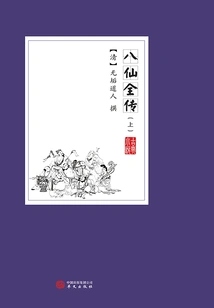
The Complete Biography of the Eight Immortals
About This Novel
The story of the Eight Immortals originated from Taoist immortal legends. The legend of gods can be traced back to three ancient generations. In order to let people "know the art of casting gold, it is true, and the beauty will last for a long time, it is true, but the world is not diligent in seeking it", the alchemists in the late Han Dynasty entrusted Liu Xiang's name to "collect the stories of gods and immortals from ancient times and the three dynasties of Qin and Han Dynasties" and compiled them into "Biographies of Immortals". In order to promote Taoism, Ge Hong of the Jin Dynasty even "copied the ancient immortals' books found in the Immortal Scriptures, dietary prescriptions and hundreds of schools of thought" and compiled it into the "Biography of Immortals". In the Tang Dynasty, the emperor surnamed Li recognized Li Er, the ancestor of Taoism, and Taoism flourished. Coupled with the romance and imagination of the Tang people, stories about gods became more popular. Since the Song and Yuan Dynasties, people have continued to add various folk legends to the Eight Immortals, making the stories of the Eight Immortals more and more rich and bizarre, and they have almost become representatives of the gods in the minds of the masses. In the Ming and Qing Dynasties, a variety of novels based on the stories of the Eight Immortals appeared. The more famous ones include "Journey to the East" written by Wu Yuantai in the Ming Dynasty, "The Complete Biography of Han Xiangzi" written by Yang Erzeng in the Ming Dynasty, "The Complete Biography of Lu Xian Fei Sword" written by Deng Zhimo in the Ming Dynasty, "The Complete Biography of Lu Zu" written by Wang Xiangxu in the Qing Dynasty, "Three Plays with White Peony" written by an unknown person in the Qing Dynasty, and "The Eight Immortals Enlightenment" written by Taoist Wuguo in the Qing Dynasty.
Official Sources
What Readers Think
Rating
Community(0)
Official(3)Scraped 2mo ago
Peace is to go to the place mentioned by the Taoist in the middle of the night. You can achieve this secretly. It may be about gods, but in their family, if they are really superstitious about such gods, it may also bring a kind of comfort to themselves!
It seems that everyone is very attached to the story of the Eight Immortals, because after all, if there are legal persons, why can't there be immortals? This is the idea of Lie Gong and others, but the immortals mentioned now are actually very insignificant. Although this book is attributed to the Eight Immortals, it is actually a simple novel, similar to Journey to the West.
After such a statement, everyone may believe such a thing, but as for the existence of the Eight Immortals, maybe in the world of Taoists, he may exist, but for some ordinary people, he may not exist at all, there is only an illusion
Rating
Community(0)
Official(3)Scraped 2mo ago
Peace is to go to the place mentioned by the Taoist in the middle of the night. You can achieve this secretly. It may be about gods, but in their family, if they are really superstitious about such gods, it may also bring a kind of comfort to themselves!
It seems that everyone is very attached to the story of the Eight Immortals, because after all, if there are legal persons, why can't there be immortals? This is the idea of Lie Gong and others, but the immortals mentioned now are actually very insignificant. Although this book is attributed to the Eight Immortals, it is actually a simple novel, similar to Journey to the West.
After such a statement, everyone may believe such a thing, but as for the existence of the Eight Immortals, maybe in the world of Taoists, he may exist, but for some ordinary people, he may not exist at all, there is only an illusion
