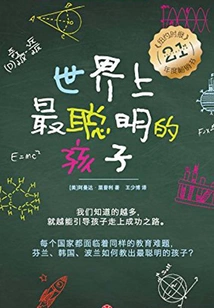
The Smartest Kid in the World
by (us) Ripley
About This Novel
"The Smartest Kids in the World" three American high school students went to Finland, South Korea, and Poland for a year of exchange. All three countries produce some of the smartest kids in the world, but just a few decades ago, their kids weren't that smart at all. By telling the stories of exchange students, combined with the author's in-depth field investigations in the three countries, and comprehensive communication with many education policy makers, teachers, parents and students, this book explains: How can Finland, South Korea, and Poland change the situation of mediocre education in their countries? What kind of soil was the world's smartest child born from? What did three American children see? What did you learn? What kind of education is excellent? How to find a good world-class school? The narration of the whole book is vivid and realistic, and has strong readability and reference.
Official Sources
What Readers Think
Rating
Community(0)
Official(4)Scraped 2mo ago
You can take a look
New thinking and new concepts
It's a pity
Why is there no evaluation of Chinese education? Why not do a PIZA test in China? I am looking forward to the author's views on Chinese education and the performance of Chinese students.
What kind of education can make children better?
① Never underestimate children's learning ability and let them have the "intrinsic drive" to learn; ② It is important to cultivate children's deep thinking ability through reading and mathematics; ③ Family environment and peers have a great impact on children's performance; ④ The overall academic professionalism and teaching level of the teaching industry are very important (all teachers in Finland must obtain a master's degree); ⑤ More free time for students does not necessarily correlate with poor grades. The relationship depends on the kind of education; ⑥ From the national education level, the later the "delayed diversion" of children is carried out, the better the children's PISA test performance; ⑦ Give equal educational financial support to poor areas and wealthy areas; ⑧ Racially diverse countries should allow children to receive equal education; ⑨ In addition to paying attention to the reform of the education system, we should also pay attention to the resulting public relations impact.
Rating
Community(0)
Official(4)Scraped 2mo ago
You can take a look
New thinking and new concepts
It's a pity
Why is there no evaluation of Chinese education? Why not do a PIZA test in China? I am looking forward to the author's views on Chinese education and the performance of Chinese students.
What kind of education can make children better?
① Never underestimate children's learning ability and let them have the "intrinsic drive" to learn; ② It is important to cultivate children's deep thinking ability through reading and mathematics; ③ Family environment and peers have a great impact on children's performance; ④ The overall academic professionalism and teaching level of the teaching industry are very important (all teachers in Finland must obtain a master's degree); ⑤ More free time for students does not necessarily correlate with poor grades. The relationship depends on the kind of education; ⑥ From the national education level, the later the "delayed diversion" of children is carried out, the better the children's PISA test performance; ⑦ Give equal educational financial support to poor areas and wealthy areas; ⑧ Racially diverse countries should allow children to receive equal education; ⑨ In addition to paying attention to the reform of the education system, we should also pay attention to the resulting public relations impact.