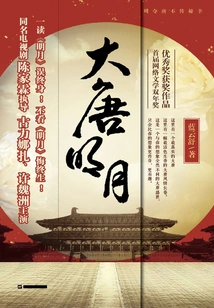
Datang Mingyue (finale)
by Lan Yunshu
About This Novel
After twelve years of separation, neither Pei Xingjian nor Kudi Liuli expected that what was waiting for them in Chang'an City would be two strange funerals and a shocking change. The once-familiar city has turned into a huge maze without knowing it. The once-familiar faces have long since become unrecognizable due to the intrigues. There may be a fatal trap hidden around every corner; behind every change, there may be a terrible secret hidden. This was the eve of Wu Zhou's seizure of the Tang Dynasty. After going through the storm of official selection and restructuring and numerous conspiracies, a greater test awaited Pei Xingjian and Liuli. When everything was irreversible, she swore that even if she fell into hell forever and never recovered, she would still see with her own eyes those who had harmed him get retribution; when the dust of the past had settled, he sighed, he had made a big mistake in his life and there were only a few years left, so what qualifications did he have to hope for happiness. In the bloody changes, is there a way for them to reach the end together?
Official Sources
What Readers Think
Rating
Community(0)
Official(11)Scraped 2mo ago
There is neither the Tang Dynasty nor the bright moon (Part 2)
(I don't mean to judge this novel. A few years ago, I had already heard a little bit about the historical figure Yuzheng Kudi. And in the autumn of 2019, ever since I heard that the time-travel romance novel "Datang Mingyue", in which the heroine is based on Kudi, was going to be made into a film and television, I finished reading this novel with infinite humiliation and tears. Faced with the author's cruel suppression and persecution of Cudi, I feel heartbroken and deeply regretful that no one pays attention to the historical truth. I regret that many people have been led to a distorted historical understanding by this romance novel. Even such a romance novel full of loopholes can be mistaken for historical research by some historical novices! If "Datang Mingyue" is just a fictional romance, I have no intention of judging a single sentence. However, the author insists on using the names of real historical figures to write, as if tearing and crushing beautiful things, but then covering them with inferior paint. I have learned from this painful experience and must tell the truth to the real Kurdish in history and provide justice. ) (Part 2) Continued--(Part 2) At the end of the novel, Liuli decided to enter the court just to avenge Pei Xingjian, and use Wu Zetian's power to eliminate Pei Xingjian's former enemies. After the revenge was completed, she immediately gave up power, resigned from Wu Zetian and left. Historically, after her husband Pei Xingjian died, Kudi Yuzheng was recruited into the palace by Wu Zetian, worshiped as Yuzheng, and drafted books. This was the beginning of Kudi Yuzheng's career. Regarding the post of Yuzheng, "Emperor Ming appointed Yuzheng as Chief Silun." ([Book of Zhou·Shen Huizhuan]) Among them, "Silun" refers to the emperor's edict. [Tongdian] also has the following record: "Later Zhou Sui Dynasty, Zheng Wu Ming Tian Guan Si Hui, Zong Shi, Zuo Gong Bo, Yu Zheng..." From this we can see that from the Northern Zhou Dynasty to the Sui Dynasty, "Yu Zheng" was the foreign official who drafted edicts. But in the Five Dynasties period after the Tang Dynasty, "Yu Zheng" also referred to female officials. "At the time of Zhuangzong, the number of harems was particularly large, including Zhaorong, Zhaoyi, Zhaoyuan, Chushi, Yuzheng... The rest of the titles are incomparable." ([New History of the Five Dynasties·Biography of Emperor Zhuangzong of the Tang Dynasty, Empress Min Jing Liu's Biography]) Before the Northern Zhou and Sui Dynasties, the official system of the Tang Dynasty no longer had the position of "Yuzheng", and in the Five Dynasties after the Tang Dynasty, there was indeed the position of "Yuzheng" as a female official. Wu Zhou established many new official positions, and there is the possibility of setting up the post of "royal official" again. The epitaph of Sima Shenwei, the husband of another female official of the Wu Zhou Dynasty, Li Shi, reads: "Mrs. Li Shi of Longxi, in the early years of the book, the empress dowager came to court to ask for female history... In the 15th year of Chenji, Mo issued a poem and was written by many wives." It can be confirmed that the specific function of female officials in the Wu Zhou Dynasty was not palace affairs, but drafting edicts. Therefore, regardless of whether the "Yu Zheng" is a foreign official or a female official, the function of Kudi Yuzheng is the same as that of Yu Zheng as a foreign official. Pei Xingjian's epitaph records that "Zhongzong practiced Zuo, returned to his private family, and paid tribute every year." From "returning to his private family" and Zhongzong's humble attitude, we can infer that Ku Diyu was already quite public during the Wuzhou Dynasty and had a high political status. Furthermore, the epitaph of Pei Guangting records that "the rites of the wife of the Jin Dynasty of the mother's family were for the purpose of seizing power, and the Tao was in line with the state. She started from Weitang and entered the Wen Dynasty." As a feudal writing style, "rituals are for the seizure of power" indirectly pointed out how shocking such behavior was at that time. There is a bold speculation that regarding the theory of "entering the Wen Dynasty", there is indeed the possibility of becoming a foreign official. However, if Wu Zetian appoints women as foreign officials, it will inevitably touch the core interests of male society. Therefore, it is indeed more likely that the position of "royal official" is the position of a female official. However, even if "Yu Zheng" is the official title of a female official, the real Kudi Yuzheng in history was a woman who drafted and made books, and can be regarded as an ancient political heroine who challenged the authority of male rule. However, Liuli in the novel, as a modern time-traveling woman, attaches great importance to family life and has a limited taste for power. Her career has ended when she just started. She is even far less feminine than the original version of Kudi Yuzheng in ancient times. Not only is Kudi Liuli's concept of being a modern time traveler extremely unreasonable, there is also a time traveling woman in the novel, Cui Shisanniang, who also looks like a woman from the Ming and Qing Dynasties. Women in the Tang Dynasty had the right to reconcile with marriage. When Cui Shisanniang was forced to marry a loser in history, she had every chance to reconcile with Pei Yan. What's more, Pei Yan is a political opportunist, and his personal charm is probably far less than that of the male protagonist Pei Xingjian. But Cui Shisanniang's concept is like that of women in the Ming and Qing Dynasties, who "married a chicken, followed the chicken, married a dog, followed the dog". She only focused on planning a future for her husband, and even tried to change history. Many passionate and unrestrained women of the Tang Dynasty in the novel are also portrayed as short-sighted housewives, such as Princess Linhai, Princess Changle, and Mrs. Rongguo. The eldest princesses of the Tang Dynasty had a residence of 600 households and an independent princess palace. However, the eldest princesses became vicious female partners vying for petty profits in the house fight novel. Historically, Mrs. Rong Guo believed in Christianity and had a pure heart. But in the novel, Mrs. Rongguo began to have a formal friendship with Liuli because Liuli sold her a large property, and Mrs. Rongguo only wanted to cover up her grandson's crimes, ss many maids were silenced, and she was like a little woman who put interests first and had no idea of good and evil. "Datang Mingyue" has a certain fantasy color in its setting, including the prophecies of Li Chunfeng and Xuanzang, but it still maliciously smeares Z religious culture. Although Liuli said in the later period that he had read some F scriptures, he definitely did not read them at all. If Liuli's character image could be consistent with the real Kudi Yuzheng in history and had a certain degree of legal cultivation, Daci'en Temple would not only focus on concrete murals, and would not think that Xuanzang supported Wu Zetian in ascending to the throne as an act of condescension that "there is no real peace in this world." It would not misinterpret Wu Zetian's naming of his son "Shenxuan", and there would be no deep prejudice against Wu Zetian. In short, through the vilification of many historical figures, as well as the protagonist's incorrect ideas and timid behavior, the entire novel makes people feel seriously depressed and dull. The so-called "Datang Mingyue" is neither "Datang" nor "Mingyue". [Datang Mingyue] allows celebrities in the Tang Dynasty to hold on to the loyal thoughts of the Ming and Qing Dynasties and live an extremely depressing and mediocre life. The "Ming Moon of the Tang Dynasty" that was supposed to be "brightly dressed, angry horses, orchids like flowers" has become a gloomy and dull "dark moon".
This is the real history
In the novel, Liuli dragged her sick body to give birth to an heir for Pei Xingjian, and at the same time she had to be crushed by various female supporting characters. But in real history, Cudi can be described as a real winner in life, and has never had an aggrieved experience like in the novel. The historical prototype of the heroine Kudi Liuli is Kudi. Not only is her name unknown, but her surname is also controversial. "Shedi" is a Xianbei surname, originating from the ancient Western Qiang people. Later, some of the surnames were changed to "Kudi". By the Tang Dynasty, both "Shedi" and "Kudi" surnames existed. [Old Book of Tang·Biography of Pei Guangting] is called the Kudi family, [New Book of Tang·Biography of Pei Guangting] is called the Shedi family, and Pei Xingjian's epitaph is called the Kudi family. However, books may have typographical errors due to ancient printing, and epitaphs may be misprinted due to unclear handwriting. Therefore, the question of whether it is "Shedi" or "Kudi" is still doubtful. In addition, based on the origin of the surname Kudi or Shedi, it may be speculated that the Kudi family may have lived in northwest China in their early years. Pei Xingjian married his stepmother only after he took office in Xizhou. Therefore, the younger Kudi family should have married the older Pei Xingjian than in the novel. In the novel, Liuli and Pei Xingjian had four sons, but the two Tang books only record that Kudi was the mother of Pei Guangting. Pei Xingjian's epitaph has unclear records about his descendants, and there are several versions: "The eldest son/eldest grandson Shenxuan served as governor of Jingdeng and Dengzhou; the second son Yanxiu served as governor of Weiling; the second son Qingyuan was Xielulang; Ji Ziguangting served as a minister and minister of the Ministry of Civil Affairs." Not only is the identity of Pei Shenxuan's eldest son/eldest grandson unknown, but there are also two second sons, and twins will not be called this way. The youngest son, Pei Guangting, has the highest official position among Pei Xingjian's descendants. There is some disorder in seniority, which may be related to the identity of his biological mother. Pei Xingjian also had two daughters, one married to Su Weiwei and the other to Wang Xiu. From the age of these two, it can be seen that the two daughters were born earlier. Judging from the fact that Cudi was the imperial official and only promoted Pei Guangting, Pei Guangting should be the only birth record between Cudi and Pei Xingjian. Pei Xingjian's other children's biological mothers were either Lu's or concubines. Kudi's last words were to be buried near the tomb of Zen Master Xinxing in Zhongnan Mountain, and she did not want to be buried with her husband Pei Xingjian. (In the eighth month of the fifth year of Kaiyuan, the body was moved behind the spiritual pagoda of Zen Master Xinxing at Zhongnan Mountain. They were not buried together in ancient times, but their souls were all buried together, which was a legacy.) In Lu Xiangqian's [Analysis of Pei Xingjian's Marriage-- "A Trial Discussion on Hu Hua's Marriage Relationship in the Tang Dynasty", through the relationship between Pei Xingjian and his eldest son Pei Zhenyin, his eldest grandson/eldest son's unknown identity Pei Shenxuan, and Pei Xingjian's epitaph quoting the Book of Songs "He is beautiful and Meng Jiang, his virtues are not forgotten." This Meng Jiang refers to Wen Jiang, who had a disorderly conduct during the Spring and Autumn Period. It is speculated that Ku Di was first the wife of Pei Xingjian's eldest son, Pei Zhenyin, and later married Pei Xingjian. This is considered to be the reason why Ku Di did not want to be buried together. But Lu's words to the former family cannot be used to characterize this relationship. In the biography of Pei Xingjian in the Two Tang Dynasties, there is no record of Kudi's family. Therefore, it is speculated that the reason why Kudi and Pei Xingjian were not buried together may be because the relationship between the couple was relatively dull. Historically, Pei Xingjian's life was not like the novel in which he encountered repeated suppression, and was eventually so disappointed that he faked his death and hid in seclusion. Official history records that Pei Xingjian opposed Wu Zetian's establishment during the Yonghui period. This may be true, but the reason cannot be that "this is the beginning of national turmoil" written by feudal historians. After all, Wu Zetian was just Zhaoyi from a humble background and did not participate in politics. If Pei Xingjian can really foresee the future, then he himself is a time traveler. The reason why Pei Xingjian opposed Wu Zetian's establishment of a queen most likely represented the struggle between the gentry and the poor family. As a prominent family, the Pei family in Hedong would look down on Wu Zetian's poor background. After opposing Wu Zetian's establishment, Pei Xingjian was demoted to Xizhou by Emperor Gaozong of the Tang Dynasty. However, when he returned to the center of power again, he was quickly reused by Li Zhi, was given military power, and made great achievements. The only records of Kudi's family are all in the Wu Zhou period, which is not the timeline in the novel. Pei Xingjian's epitaph states: "The stepmother is Mrs. Kudi of Huayang, who has the virtue of being a concubine and the talent of Banzuo. The Holy Empress came to the court, summoned her to the palace, and worshiped her as the emperor." There are similar records in two books of the Tang Dynasty. It can be seen that after Wu Zetian came to the court, Kudi worshiped as the imperial official, drafted and produced books, and was deeply favored. Regarding the position of "royal official", it is more likely that it will still be a female official. But as the person responsible for drafting the edict, Cudi must have great political power. In addition, the good relationship between Kudis and Wu Zetian is not full of contradictions as in the novel. "When Ze Tianshi summoned her to the palace, she was treated very well by her relatives." (Old Book of Tang Dynasty, Pei Guangting's Biography) "Empress Wu was summoned into the palace, as a royal official, and she was very favored by her relatives." (New Book of Tang Dynasty, Pei Guangting's Biography) Pei Guangting's marriage to Wu Sansi's daughter also confirms that during the Wu and Zhou Dynasties, the Kudi family had good relations with Wu Zetian and the Wu clan. As for the reason for "being treated very personally", you can find it in Pei Xingjian's epitaph: "Mrs. She is profoundly spiritual and full of honors. She has realized the truth from afar. She is stubborn and tired, and transcends the world. Every time she reads the collected works of Zen Master Xingxing, she will always respect her." Wu Zetian believed in Buddhism and had a high level of Buddhist cultivation. He even composed the opening stanza himself: "The supremely profound and subtle Dharma has been encountered in hundreds of millions of tribulations. I have now accepted and upheld what I have seen and heard, and am willing to understand the true meaning of the Tathagata." Therefore, due to their common religious realm, these two women developed a sense of mutual sympathy and resonance, and then became close friends. Moreover, no matter whether there were more or less conflicts because of Pei Xingjian's previous demotion, they all understood each other and no longer cared about each other as in the past. On the other hand, regardless of whether the position of "royal official" is a female official or a foreign official, Kudis assisted Wu Zetian in drafting the edict, and she has become a deviant who challenged male hegemony as a woman just like Wu Zetian became emperor. Therefore, the two women join hands to fight against male hegemony, which has become another important reason why Cudi is so "kind to each other". Historically, after the death of her husband, Cudi became the emperor, drafted edicts, reached the pinnacle of life, and enjoyed the happy life of an independent woman! She should have great political power, write freely, and be arrogant among the crowd. She should not be like in this time-travel romance novel, being squeezed out by various female partners in turn, reduced to a reproductive machine, humbled to dust, and raised to the level of eyebrows! But in this novel, the only relationship between the heroine Kudi Liuli and women is fighting. Many female historical figures and fictional characters are just tools that exist to suppress and harm the heroine. The female protagonist can only rely on the protection of the male protagonist. It is her destiny that the male protagonist treats her well. After reading the plot of the novel, people feel extremely depressed and dull. If this novel is just a fictional romance, then no matter how willing the heroine is to be as contemptuous as a feudal woman, I have no intention of judging a single sentence. However, the author insists on writing with the names of real historical figures, portraying the historical figures beyond recognition, as if tearing and crushing beautiful things, but then covering them with inferior paint! Seeing the truth being buried and the facts being distorted, I was not only depressed and depressed, but also heartbroken beyond measure. I don't mean to criticize this novel. A few years ago, I had already heard a little bit about the historical figure Yu Zhengkudi. And in the autumn of 2019, ever since I heard that this time-travel romance novel whose heroine is based on Cudi was going to be made into a film and TV show, I finished reading the novel with infinite humiliation and tears. Facing the author's cruel suppression and persecution of the heroine, I feel heartbroken and deeply regretful. I have learned from this painful experience and must tell the truth to the real Kurdish in history and get justice!
There is neither the Tang Dynasty nor the bright moon (Part 2)
(I don't mean to judge this novel. A few years ago, I had already heard a little bit about the historical figure Yuzheng Kudi. And in the autumn of 2019, ever since I heard that the time-travel romance novel "Datang Mingyue", in which the heroine is based on Kudi, was going to be made into a film and television, I finished reading this novel with infinite humiliation and tears. Faced with the author's cruel suppression and persecution of Cudi, I feel heartbroken and deeply regretful that no one pays attention to the historical truth. I regret that many people have been led to a distorted historical understanding by this romance novel. Even such a romance novel full of loopholes can be mistaken for historical research by some historical novices! If "Datang Mingyue" is just a fictional romance, I have no intention of judging a single sentence. However, the author insists on using the names of real historical figures to write, as if tearing and crushing beautiful things, but then covering them with inferior paint. I have learned from this painful experience and must tell the truth to the real Kurdish in history and provide justice. ) (Part 2) continued - (Part 1) In the novel, Pei Xingjian and Liuli have four sons: Shenxuan, Yanxiu, Qingyuan, and Guangting. However, is such a loving couple's life real? Pei Xingjian's epitaph has unclear records about his descendants. There are several versions: "The eldest son/eldest grandson Shenxuan, official to Jing (Shangzhou, from the third rank) Deng Erzhou governor... The second son Yanxiu, Bingzhou Weiling (county magistrate, from the sixth rank to the seventh rank)... Times Zi Qingyuan, Xielu Lang (eighth grade)... Ji Ziguangting, Shizhong and Minister of the Ministry of Civil Affairs (eighth grade)..." Not only is the identity of Pei Shenxuan's eldest son/grandson unknown, but there are also two second sons (twins will not be called this way). The youngest son, Pei Guangting, has the highest official position among Pei Xingjian's descendants. There is some disorder in seniority, which may be related to the identity of his biological mother. Pei Xingjian also had two daughters. One daughter was married to Su Weiwei (Su Weiwei was born in б48), and the other was married to Wang Xiu (Wang Bo's second brother, born 650 years earlier than Wang Bo). It can be speculated that the two daughters were born earlier. Judging from the fact that Cudi was the imperial official and only promoted Pei Guangting, Pei Guangting should be the only birth record between Cudi and Pei Xingjian. Pei Xingjian's other children's biological mothers were either Lu's or concubines. Also, Kudi Yuzheng's last words were to be buried near Zen Master Xinxing's tomb in Zhongnan Mountain, and he did not want to be buried with her husband Pei Xingjian. Pei Xingjian's epitaph states, "In August of the fifth year of Kaiyuan... They were moved behind the memorial pagoda of Zen Master Xinxing at Gumingdui in Zhongnan Mountain. They were not buried together in ancient times, but their souls are all buried together, which is a legacy." So what kind of mentality makes a wife prefer to serve the Z religion rather than be buried with her husband? In Lu Xiangqian's analysis of Pei Xingjian's marriage in [A Trial Discussion on Huhua Marriage Relationships in the Tang Dynasty - Also on the Jue Lineage], it is shown that the Tang Dynasty followed the "Huhua state of marriage between a man and his daughter-in-law", and Lu Xiangqian had a relationship with his eldest son Pei Zhenyin and his eldest grandson/eldest son Pei Shenxuan, whose identity is unknown , and information such as Pei Xingjian's epitaph quoting from the Book of Songs "The beauty of Meng Jiang is unforgettable" (this Meng Jiang refers to Wen Jiang who wrote fbuj in the Spring and Autumn Period) and other information, it is speculated that Ku Di was first the wife of Pei Xingjian's eldest son, Pei Zhenyin, and later married Pei Xingjian, and this was regarded as the reason why Ku Di did not want to be buried together. But Lu's words to the former family cannot be used to characterize this relationship. Furthermore, if the wife has done something to assist her husband, it will usually be mentioned in the history books and biographies. However, in the Biography of Pei Xingjian in the Two Tang Dynasties, there is no record of Kudi. Of course, this is most likely because the ancient history writers deliberately erased the achievements of women. However, judging from the biography alone, it is speculated that Ku Diyu may have been relatively transparent in assisting Pei Xingjian in his official career during his lifetime, and did not show any political ability. Therefore, it can be speculated that the relationship between Kudi Yuzheng and Pei Xingjian may be relatively indifferent, and they may even not pay attention to the issue of burial. Just like many ancient p-boy novels, the male protagonist in the time-travel novel is good in that he only loves the female protagonist, but has other shortcomings such as feudal ideas, coercion of the female protagonist, etc., Which are hard to describe. In the novel, Li Zhi, Emperor G of the Tang Dynasty, was shown to be ignorant and incompetent, and the political stances of Emperor G and Wu Zetian were antagonized. The male protagonist Pei Xingjian swore allegiance to the G clan and opposed Wu Zetian. As an original ancient, Pei Xingjian seems understandable in his loyalty, but this may not be the case in real history. Unlike the Southern Song Dynasty and even the Ming and Qing Dynasties, the Tang Dynasty did not have any requirement for loyalty to its ministers. If the emperor wants his ministers to be loyal to him, he must first show favor to his ministers. Pei Xingjian repeatedly claimed in the novel that he had "received the emperor's favor". In fact, the G clan not only demoted Pei Xingjian, but also added to the plot in the novel, the G clan tried to punish Liuli who was about to give birth, causing Liuli to have a difficult delivery on the road, almost killing one and three others. It also blocked the loving life of Pei Xingjian and his wife several times. Since Pei Xingjian loves Liuli so much in the novel, how could he be like Xue Gang and others in the Ming and Qing novels, who were devoted to the emperor and resolutely opposed Wu Zetian as emperor? Furthermore, if you are a loyal minister of the G dynasty, do you really need to dislike Wu Zetian? Pei Xingjian opposed the establishment of Wu Zetian during the Yonghui period. The reason could not be because "this was the beginning of national turmoil" written by feudal historians. After all, at that time, Wu Zetian's Zhaoyi, who was from a humble background, did not have such great energy. If Pei Xingjian could really foresee the future, then he himself would be a time traveler. Historically, the reason why Pei Xingjian opposed Wu Zetian's establishment of a queen most likely represented the struggle between the gentry and the poor family. As a prominent family in Hedong, the Pei family would look down on Wu Zetian's humble background. After opposing Wu Zetian's establishment, Pei Xingjian was demoted to Xizhou by Tang Zong, but when he returned to the power center again, he was quickly reused. During the entire period of Emperor Zong's reign, the political interests of Li Zhi and Wu Zetian were absolutely consistent. If they were inconsistent, Li Zhi had the power to overthrow Wu Zetian at any time. Wu Zetian only had a supporting role in the political situation during the period of Emperor Zong, and there could be no differences in political interests. If the ministers were only loyal to Li Zhi but opposed Wu Zetian, it would be equivalent to hindering the loving life of the emperor and empress. Just like Shangguan Yi, Li Zhi also has the power to deal with such a guy who is ignorant of current affairs at any time, and it is even less possible for Pei Xingjian to be reused or even given military power. Moreover, in the concept of the Tang Dynasty, there was no partial understanding that women could never have sex. Empress Changsun had many records of sexual intercourse, and her work "Guidelines for Women" also specifically taught women how to do sexual intercourse to assist their husbands. Yan Zhitui, a descendant of Yan Hui who has the most authority to interpret the rules of etiquette, as a native of the Northern Zhou Dynasty to the Sui Dynasty, stated in the "Yan Family Instructions" that women "if they are intelligent and knowledgeable about the past and present, they should assist the gentleman and help him when he is incompetent." It can be seen that during the Sui and Tang Dynasties, the issue of women's sexual intercourse was quite encouraged. In the G dynasty, officials would not be dissatisfied with Wu Zetian's sexual intercourse. Therefore, in history, even if Pei Xingjian may have opinions about Wu Zetian due to his previous demotion, he only complained in his heart and would not confront her openly. Not finished yet, continue--(Part 2)
There is neither the Tang Dynasty nor the bright moon (Part 1)
[Comments on [The Bright Moon of the Tang Dynasty] and research on the real Kudi Yuzheng in history] (I don't mean to judge this novel. In the past few years, I have heard a little bit about the historical figure Yuzheng Kudi. And in the autumn of 2019, ever since I heard that the time-travel romance novel "Datang Mingyue" in which the heroine is based on Kudi was going to be made into a film and television, I finished reading the novel with infinite humiliation and tears. Faced with the author's cruel suppression and persecution of Kudi , I am devastated and deeply regretful. It is a pity that no one pays attention to the historical truth, and it is a pity that many people have been led to a distorted historical understanding by this romance novel. Even such a romance novel full of loopholes can be mistaken for historical research by some historical novices! If "Datang Mingyue" is just a fictional romance, I have no intention of judging a single sentence. However, the author insists on using the names of real historical figures to write, as if tearing and crushing beautiful things, but then covering them with inferior paint. I have learned from this painful experience and must tell the truth to the real Kurdish in history and provide justice. ) [Datang Mingyue] claims to be "strictly based on historical facts", but it is limited to researching daily life materials, but it portrays many historical figures in a way that is completely inconsistent with real history. In the novel, an ancient female Jecudi who dared to challenge the social constraints on women was portrayed as an ancient "good wife and mother" who was content with her family life, keen on infighting among women, and worked hard to assist her husband. Ku Di Yuzheng was an ancient woman who was originally very feminine, but was transformed into a ignorant and timid little woman by modern people, just like Chu Yu in "Feng Prison Phoenix" traveled through time and became the Shanyin Princess Liu Chuyu. Moreover, most of Kudi Yuzheng's achievements in his life were focused on drafting and producing books during the Wu Zhou period, while Kudi Liuli and the fake Pei Xingjian both went into seclusion in the first year of Chui Gong, just like Huo Qubing in "The Ballad of the Desert" who said, "The Huns are not destroyed, so why do they have a family?" He eventually eloped with the adopted daughter of the Huns. Such a complete disregard for historical facts and distortion of the true image of historical figures can be described as extremely historical nihilism. In addition, "Datang Mingyue" also smeared many other historical figures. For example, it made Emperor Li Zhi of the Tang Dynasty obscurant and incompetent, and used the demonized image of Empress Wu Zetian written by Jianshi. Wu Zetian's mother, Mrs. Rongguo, was also portrayed as a little woman who had a blind eye for money and could not distinguish between right and wrong. However, "Datang Mingyue" claims to have researched the life data of the Tang Dynasty from a professional perspective of art history, but there are still obvious loopholes in the life history aspect. For example, in the early Tang Dynasty, the habit of drinking tea had not yet appeared, but in the novel Pei Xingjian often drank tea with Qiuji. As an institution, the Imperial Medical Office of the Tang Dynasty did not have the title of "imperial physician" for individuals, and male medical officers were not allowed to treat concubines. In the Tang Dynasty, there was no self-titled title of "concubine". Instead, concubines and concubines should call themselves "concubine" or "concubine". In the Tang Dynasty, the four concubines and princes were not allowed to be called "Your Highness". "Your Highness" could only be used to address the queen, queen mother, and prince. However, in the novel, the titles "His Royal Highness Shu Fei" and "His Royal Highness King Pei" appeared in the novel. Like most women in ancient times, the historical prototype name of the heroine is unknown. The novel names the heroine "Liuli". However, not only is the name of this Kudi unknown, but there is still controversy over whether the surname is "Sheidi" or "Kudi". "Shedi" is a Xianbei surname, originating from the ancient Western Qiang people. Later, some of the surnames were changed to "Kudi". By the Tang Dynasty, both "Shedi" and "Kudi" surnames existed. [Old Book of Tang·Biography of Pei Guangting] is called the Kudi family, [New Book of Tang·Biography of Pei Guangting] is called the Shedi family, and Pei Xingjian's epitaph is called the Kudi family. According to the historical judgment method, when there are differences between the inscriptions and later documentary records, the inscriptions should prevail. However, books may have typos due to ancient printing, epitaphs may also be mistranscribed due to unclear handwriting, and the character "厍" is a rare character compared to the character "ku", so it is more likely to be mistranscribed. Therefore, the question of whether it is "Shedi" or "Kudi" is still doubtful. However, for the time being, the entire text is collectively referred to as "Kudi". At the beginning of the novel, at Kudi's house, although Liuli is somewhat clever, apart from striving for some independence in marriage, she only spends all her intelligence on fighting within the family home with her concubine Cui Shi, concubine Coral and others, but she is timid about future plans and passively avoids them. Later, after her engagement and marriage to Pei Xingjian, Liuli continued to use all her little cleverness in fighting between her wives and the female relatives of the Pei family. In the fourth year of Yonghui, Liuli discovered the first pot of gold in her life by showing her kindness to Mrs. Rongguo and later Mrs. Wushun of Han G. Moreover, after getting engaged to Pei Xingjian, Mrs. Rongguo took Liuli to meet her married woman, and she married Pei Xingjian in the sixth year of Yonghui. Historically, the birth year of Kudi cannot be determined. If according to the setting in the novel, Kudi married Pei Xingjian in the early sixth year of Yonghui, then he would have been over seventy years old when he died in the fifth year of Kaiyuan (717), which is considered a very long life. And during the Chuigong period (684-), it was unlikely that Kudi was close to retirement age. Therefore, Cudi's birth year is still doubtful, but it is later than possible in the novel. Also, Pei Xingjian was demoted because his private discussions were known to Mrs. Rong Guo. Therefore, during the G sect period, the Kudi family did not have too close contact with the Wu family. In the novel, various unfounded facts from official history books were used to smear Wu Zetian, smearing her image and shaping her into a negative image with no emotions and deliberate intentions. In the later plot, Wu Zetian almost became the biggest obstacle to the happy life of the male and female protagonists. As for Liuli's attitude towards Wu Zetian, although she expressed good intentions, she was limited to using her political resources. In fact, she was full of prejudice and acted against her, and everything she did was still to pave the way for Pei Xingjian. For example, Liuli disdains marriage with the Wu family, and finally thinks that she can help repay Li Tang by recommending Di Renjie, etc. During the G dynasty, the only possible interaction between Kudis and Wu Zetian was after Pei Xingjian was re-employed. Empress Wu Zetian occasionally met Kudis when she met her concubine. At this time, Mrs. Huayang's title has not yet appeared, and she will not be engaged to the Wu family. Kudi Yuzheng's career began after Wu Zetian came to court. The title of Mrs. Huayang should come after the end of Wu Zhou. The reason for "Guang Ting was moved to Taichang Cheng" was obviously that "Kudi was the imperial official". However, Pei Xingjian's epitaph concealed the fact that "son is valued by mother" with the words "Mother is valued by her son, and my wife was granted the title of Huayang and was given the title of Jin Kingdom". The third-rank real official made in the Tang Dynasty was already at the top level, and the mother and wife of the third-rank official were the county wives. Therefore, Mrs. Huayang's rank should be higher than that of Yu Zheng. To sum up, both "Mrs. Huayang" and "Mrs. Jin" should have been given titles after the end of the Wu Zhou Dynasty for promotion, but in fact they erased women's political achievements. Historically, Kudi Yuzheng and Wu Zetian had a good relationship, which was by no means full of contradictions as in the novel. This point is mentioned in both Tang books. "My mother, Kudi, was called into the palace at the right time, and she was treated very well by my family." ([Old Book of Tang·Pei Guangting Biography]) "My mother, Shedi, was a woman of virtue. Empress Wu called her into the palace to serve as the imperial official, and she was very favored by her family." ([New Book of Tang·Pei Guangting Biography]) "Later, Pei Guangting married Wu Sansi's daughter, and she was also considered favored. This proves that during the Wu Zhou Dynasty, Ku Di Yuzheng had good relations with Wu Zetian and the Wu clan. As for the reason for "being treated very personally", it can be found in Pei Xingjian's epitaph: "Madame was profoundly enlightened, enlightened from afar, was stubborn in words, and transcended the secular world. Every time I read the collected works of Zen Master Xinxing, I will always respect her. "Wu Zetian believed in Buddhism and had a very high level of Dharma cultivation. She even composed the opening stanza herself: "The supreme and profound Dharma has been encountered for hundreds of millions of kalpas. I have accepted and upheld what I have seen and heard, and I am willing to understand the true meaning of the Tathagata. "Therefore, Ku Di and Wu Zetian developed a sense of mutual sympathy and resonance due to their common religious realm, and then became close friends. Regardless of whether there were more or less conflicts due to Pei Xingjian's incident, they all understood each other and no longer care about each other as in the past. On the other hand, Ku Di Yuzheng assisted Wu Zetian in drafting the edict, and has become a deviant like Wu Zetian who became emperor. As a woman, she challenged male hegemony. Although she still cannot be called a woman in the modern sense q z Y, but the two women working together to fight against the male power has become another important reason why Ku Di Yuzheng is "very affectionate". In the novel, Liuli, as a modern time travel girl, bears the shell of the queen's best friend Ku Di Yuzheng, but she can only be a hard-working wife and loving mother who supports her husband, and her view of Wu Zetian is full of pedantic prejudices in constructing ideas. Not finished, continue--(Part 2)
Kudi Liuli and Pei Xingjian's love that weeps with both humans and gods
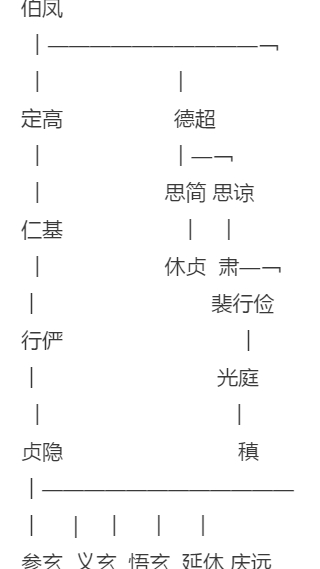
The love between Yuzheng Kudi and Pei Xingjian, the historical prototype of Kudi Liuli, is just like that between Yang Yuhuan and Li Longji, just like the seventh chapter of Dream of Red Mansions, even if you are embarrassed to talk about it! Their love made people and gods weep together, and Kudi's hatred for Pei Xingjian will last forever! [Reprint] Analysis of Lu Xiangqian-Pei Xingjian's Marriage Pei Xingjian was a famous figure during the reign of Emperor Gaozong of the Tang Dynasty, and his biography is recorded in both New and Old Tang Books. His family name is Hedong Wenxi, and he is known as the "Pei family in the middle", and the Pei family is "famous to the eight kings and has a reputation throughout the country." He himself was born in the Ming Dynasty, was good at calligraphy, and diligent in writing. "He was also good at predicting cloud weather and predicting the weather." Such a person should focus on his family style, but this is not the actual situation. [New Tang Book] Volume 71 of the "Genesis Table of Prime Ministers" lists the descendants of the Pei family under the two tigers [Table] See picture columns. The collation note [3] of the punctuated edition of Zhonghuo Bookstore says: "According to the old volume 84 and the current volume 108 Pei Xingjian's Biography, Wenyuan Yinghua Volume 884 Zhang Jiuling Pei Guangting's Shinto Stele, Volume 972 Duhu and Pei Zhen's Xingzheng and Volume 228 of the entire Tang Dynasty says that Xingjian was the son of Renji, while Yanxiu and Qingyuan were Zhenyin's younger brothers. It is suspected that this statement is true, but it seems to have missed the point. The reason why there are such errors in the genealogy table of the prime ministers is not only due to the negligence of the compiler [the table was compiled by Lu Xiaqing], but it may also contain the good intention of "keeping taboos for the wise". Zhang said [Testing Pei Xingjian's Shinto Stele] that Pei Xingjian's first wife was "the Lu family of Henan, the daughter of Lu Shuang, the minister of the Ministry of War". The Lu family died early, and his step-wife was "Hua Yang's wife Kudi". The problem lies with the stepwife Ku Shidi. Kudi's birth year is unknown and she died in the fifth year of Kaiyuan. She had "the virtue of Ren Si and the talent of Zuo". She was once called into the palace by Wu Zetian and held the post of Yuzheng. However, this Cudi's "feminine virtue" is very questionable. The Shinto stele says: "Poetry says that the civil and military scholars have established constitutions for all nations, and the grand master has Yan. He also says that Meng Jiang is beautiful and his virtues are unforgettable. The little king has Yan; the Sutra of Filial Piety says that one should stand up and practice the Tao to honor his parents and serve in the middle." The grand master and the middle servant refer to Pei Xingjian and Guangting's father and son, and the junior prince refers to the Kudi family. At first glance, this article seems to be full of flattery, but after careful analysis, it turns out to be slightly sarcastic. "He is beautiful and beautiful, Meng Jiang, and his virtues are not forgotten." It comes from [The Book of Songs has a chapter about women riding together, and their faces are like Shunhua! The generals are soaring, and they are wearing jade, and they are beautiful and beautiful, and their virtues are not forgotten. There are women traveling together, and their faces are like Shunying; they are flying, and they are wearing jade, and they are beautiful and beautiful, and their virtues are not forgotten. "The preface says: "There is a woman who is stabbed in the car. The prince of Zheng is not afraid of Qi. The prince of Qi wants his wife, but he refuses to take her. When she sees her, she is assassinated by the people of the country. However, in the spring of the 18th year of Duke Huan's reign, Meng Jiangshi, the wife of Lu, had an affair with her brother, Duke Xiang of Qi. The predecessors were quite confused about the praise of Meng Jiang in this chapter of the Book of Songs. Kong Yingda Shu in the early Tang Dynasty said: "Zheng Zhi and Zhang Yi asked, this preface is about the virtuous women of Qi, and the virtues of the scriptures are not forgotten. Wen Jiang was buried in Nei, Shiren Chafu, and almost perished in the state of Lu. Therefore, Qi has the thorn of a male fox, and Lu has the gift of a poor scorpion. How can the virtues of virtue be there? The answer is that at that time, there were good ears, but the later ones had it, or they married early, so they would not be so good. This. The author speaks according to the time, and the preface expresses the meaning of the scripture. "The author of the Shinto stele is not aware of this Spring and Autumn allusion, especially Kong Yingda's remarks, but he still insisted on saying it like this. Pei Guangting, who was a servant at the time, recognized it tacitly, which shows that Kudi did have a lot of articles on "women's virtues". Ordinarily, Zhang Shuo and Pei Guangting were officials in the same dynasty at this time, so such a matter could be avoided. However, considering that Pei Guangting was prosperous in official career at that time, Zhang Shuo was on the decline in his official career. Cudi's "feminine ethics" problem is also reflected in her nephew's burial. According to many Shinto steles and epitaphs in [Wenyuan Yinghua], it is shown that the wife and nephew were buried in the same place. For example, Volume 886 of Quan De Yu Dong Jin's Shinto Monument states, "The Duke was buried in the plains of Wan'an Mountain in Henan County. His former wife, Zhang family of Nanyang, and his step-wife, Wei family, were the nephews of the Zhou Dynasty."; In Volume 910, Zhang said that Ge Weide was the god. The Taoist tombstone says "the former wife was Wang's, and the later wife Guo was the nephew, so this is the etiquette." Also in the epitaph of Bai Juyi and Bai Jilian in Volume 959, the tomb of the former wife Xue's family was revealed and the nephew's wife Jing's family were all examples. But what about the situation of Pei Xingjian and his wife? After Pei Xingjian died, "I was buried in Dongliangyuan where I heard the news, which is the etiquette." It is not said where Pei Xingjian's first wife, Mrs. Lu, was buried, but she was probably buried in Wenxi. However, as for Kudi, the Shinto stele says that she was "deep in precepts and full of glory, enlightened from afar, with a firm vocabulary, and transcended the secular world. Every time she read the collected works of Zen Master Xinxing, she will always respect her. She returned to Zhenjing on April 2, the fifth year of Kaiyuan, and in August of that year she moved to behind the spiritual pagoda of Zen Master Xinxing in Zhongnan Mountain. Buried together, the souls are all alive, and the legacy will be fulfilled. "It may be credible that the Kudi family believed in Buddhist teachings. In the genealogy table of the prime ministers, Zhenyin had sons Shenxuan, Yixuan, and Wuxuan [perhaps born from the Kudi family], which can be used as a footnote. Wu Zetian admired Buddhism, and citing the Kudi family as similar people can also prove this theory. However, because she believed in Buddhism and was not buried in the same place as Wenxi and Pei Xingjian, there may be an unspeakable secret. According to the author's analysis, this secret is because she married Pei Zhenyin first and then his wife Pei Xingjian, which turned into a marriage between a married woman and a daughter-in-law. If she were buried at Wenxi, her position would put her in an embarrassing situation. As the youngest son of the Kudi family, Pei Guangting also understood this state of mind, so he accepted her idea of burying Zhongnan instead of Wenxi. The compiler of the Genealogy Table of Prime Ministers was either confused or had tampered with it, which resulted in the current situation. There is another strong evidence of the marriage between Pei Xingjian and Kudi. Various versions of Pei Xingjian's Shinto stele describe his descendants. They all say that Pei Xingjian died on April 28th of the first year of Yongchun. "In the Spring and Autumn Period, four out of the sixty years, the eldest son Zhenyin died early, and his legitimate grandson Shenxuan Si was granted the title of successor." However, "I despised the orphans and mourned the children." Therefore, Gaozong "farewelled." He was ordered to stay behind, and the crown prince was appointed to select a sixth-rank official to inspect the school and family affairs, and wait for five or six years until his children and grandchildren grew up. "It seems that at the time of Pei Xingjian's death, his children and grandchildren were not yet old enough to stand on their own feet. Later, Pei Guangting, the seventh son of Xuanzong, was only seven years old. Later, after the Shinto stele narrated the deeds of Pei Xingjian's successor, Kudi, there were three different versions of it [Kudi's? ] Descendants: A Zhonghuo Book Company Yingying Wenyuan Yinghua edition, Heyuan Yingying Sikuquanshu Wenyuange edition Zhang Yangong Collection Volume 18, Wuyingdian Collection Edition Zhang Yangong Collection Volume 15, and the series collection first edition Zhang Yangong Collection Volume 15, both are titled "Eldest Son Shenxuan" , Second son Yanxiu, second son Qingyuan, Ji Zi Guangting", B Zhonghuo Book Company Jiaang Sheng Tang text works "Changsun Shenxuan, second son Yanxiu, second son Qingyuan, Ji Zi Guangting"; C four-part series of Zhang Shuozhi's collected works Volume 14, Jieyi Lu Zhu's remaining series. The fourteenth volume of Zhang Shuozhi's collected works is written as "Shen Xuan, the second son Yanxiu, the second son Qingyuan, and Ji Zi Guangting". Of course, we cannot judge whether it is correct or incorrect based solely on the number of versions. However, if we carefully read the words of the Shinto stele about Kudi [in connection with the situation we analyzed above], the relationship between Kudi and Pei Xingjian and Pei Zhenyin will be clear, and the correctness of the three versions can be known. I think that A should be the original version, which regards "the eldest son Shenxuan, the second son Yanxiu, the second son Qingyuan, Ji Zi Guangtingkuo, etc." As the descendants of the Kudi family. B seems to have seen the contradiction in the text of the Shinto stele, so it revised it and listed "Changsun Shenxuan" and "Ji Zi Guangting" as descendants of Pei Xingjian; C seems to be the descendants of Pei Xingjian. He almost discovered the contradiction, but did not dare to conclude rashly, so he compromised A and B. The "eldest grandson" or "eldest son" was not listed above Shenxuan, but it actually supported A's view. And it is precisely in these different versions of records that we discovered the relationship between Pei Xingjian, Pei Zhenyin and his son, and the Kudi family. If based on the Pei Guangting Shinto Monument, Pei Xingjian had seven sons, all of whom seemed to have been minors when he died. If Zhenyin's other sons Yixuan and Wuxuan are listed under Pei Xingjian in the lineage table of prime ministers, and Zhenyin himself is listed under Pei Xingjian, then the number of Zhenyin, Shenxuan, Yixuan, Wuxuan, Yanxiu, Qingyuan and Guangting happens to be seven. Whether this is indeed the case, we dare not say. However, since the names of Shenxuan, Yanxiu, Qingyuan, and Guangting follow Kudi's deeds, and only four of the seven sons are listed, there is no doubt that these four were born to Kudi. In other words, Kudi married Zhenyin first [Zhenyin seems to have been born to Pei Xingjian's first wife, Lu's wife]. Because of her "early death", she also married Pei Xingjian, which became the Hu version of a marriage between a father-in-law and his wife. The forms of Pei Xingjian, Kudi, Zhenyin, Shenxuan, and Guangting are one of the ethnic minorities in the north before they took over the Central Plains, and the other of the authentic aristocratic families of the Central Plains. We do not have to narrowly identify this as the result of Xianbeiization. It is probably the product of Pei Xingjian's "seven or eight years of political service" in the Western Regions, or, as Mr. Chen Yinke said, it was infected by the barbarian tendency in the Heshuo area. In this way, rather than saying that Pei's marriage is a vertical continuation, it is a horizontal influence. In the early Tang Dynasty, the Tufenxianghuo Brotherhood Law was established in Chang'an City, which had an inevitable impact on the Pei family's marriage pattern. -- The love story between Cudi and Pei Xingjian is just like that between Yang Yuhuan and Li Longji, just like the seventh chapter of Dream of Red Mansions but you are too embarrassed to tell it! Their love made people and gods weep together, and Kudi's hatred for Pei Xingjian will last forever! Fortunately, after Pei Xingjian's death, Kudi became the imperial official and drafted and produced books. Otherwise, if you are not careful, you will wither in entanglement and melancholy like Qin Keqing!
The Bright Moon of the Tang Dynasty is unbearable to read
At the beginning of the novel, Kudi Liuli, the legitimate daughter of a good family, was almost forced into prostitution by her father's concubine because she was greedy for a little money and was sold into a brothel. Later, the heroine was teased when she went out, and she was spotted by Pei Yan and Pei Ruzhuo at the same time and wanted to take her as their concubine. The concubine of the heroine's father wanted to sell her again. The heroine cleverly imitated the tone of the martyrs of the Ming and Qing Dynasties and cut off a lock of her hair and said: "In order to avoid future quarrels and damage to the reputation of the two houses, Liuli hereby swears that she will never be the concubine of the two houses in this life! If she violates this oath, heaven will hate her and the earth will abandon her, and this will happen!" Therefore, the heroine escaped the fate of being sold at a low price again. Later, the heroine entered the Tang Palace by chance, and was attracted by Tang Gaozong Li Zhi who basically insisted on monogamy in the future and almost wanted to be included in the harem, but the heroine had to tactfully refuse. Under the repeated protection of the male protagonist Pei Xingjian, the female protagonist finally escaped from the palace and got engaged to the male protagonist. The male protagonist takes the unmarried female protagonist around and even dares to admit that the unmarried female protagonist is his wife in front of monks. Although the novel maintains the 1v1 pampering mode after the male protagonist is determined, the pile of bad romances the female protagonist incurred before marriage is enough to highlight the female protagonist's personal charm. When the heroine had not yet given birth to a son, Su Dingfang once taught Pei Xingjian that "there are three things to be unfilial" about taking concubines. However, Pei Xingjian, who was over fifty years old, would rather have no children and no grandchildren than dote on the heroine alone. Later, the female protagonist finally dragged her sick body and worked hard to give birth to four sons for Pei Xingjian. She also gave birth to twins in a narrow escape, fulfilling the obligation of a good wife to carry on the male protagonist's family line. When the male protagonist returned to the center of power, Pei Xingjian, who had the loyalty to the emperor during the Ming and Qing Dynasties, strongly rejected Tang Gaozong Li Zhi's enthusiastic request to take a concubine several times. Later, the male protagonist appropriately took the opportunity to fake his death at the year of his death recorded in history books, and finally reunited with the female protagonist at the age of seventy, and lived happily ever after. From the novel, we see an extremely extravagant Tang Dynasty. Through the author's splendid prose, I feel that the author's lavish, extravagant, outwardly strong, but inept Tang Dynasty is actually not far away from us, just like the dynasty closest to us. Romance novels that are popular among the public are not necessarily good novels, because readers of online novels generally have vulgar tastes and touching IQs. If you carefully read the above paragraphs of my introduction to the plot of the novel, I believe that people with normal intelligence will feel that it is stuck in their throats. Sometimes, Mary Sue, golden finger, and 1v1 sweet pet settings add to the personal charm of the protagonist and become the shining point of a romance novel being sought after. The three views conveyed by this kind of market-oriented novels that only cater to readers' interests may be controversial and difficult to ponder. In order to exaggerate the mutual oppression between women, the novel did not hesitate to set up the heroine's father's concubine who dared to force the heroine into prostitution and sell her into a brothel while the heroine's father was still alive. It did not hesitate to set up the eldest princesses of 600 households in the city who have independent princess mansions to compete with the heroine for petty profits in the back house. In order to exaggerate men's admiration for the heroine, the novel did not hesitate to assume that the heroine was molested by two prodigal sons in broad daylight and that Tang Gaozong Li Zhi, who basically insisted on monogamy, was tempted to include her in the harem. The novel also did not hesitate to assume that the heroine, who is over fifty years old, would rather have no children than take concubines and dare to refuse the concubine given to him by the emperor. Some people think that this novel is not a Mary Sue. In fact, a novel does not have to have a heavyweight male lead to be called a Mary Sue. In the novel, the heroine is incompetent and imbecile, yet she is admired by men. The male protagonist has feudal ideas, but he only has a love brain. Isn't this called Mary Sue? What is a Mary Sue? If anyone still thinks that the plot of this novel is rigorous, please refer to the above paragraphs again to briefly describe whether the plot of the novel really meets your strict standards. This novel also claims to be "strictly based on historical facts." How should we view this issue? For example, "Ruyi's Royal Love in the Palace", a palace-fighting novel that claims to be based on the history of the Qing Dynasty, does not violate recorded history, but in fact it makes historical figures collapse at every turn and exaggerates the cruel strife between women. Another example is the time-travel novel "Unique World", which claims to be based on the history of historical wars, but has the least research on the heroine. Ye He, who got married at the age of thirty-three and died soon after, changed her identity several times and finally lived a happy life with Huang Taiji. It also portrayed many female historical figures as vicious female supporting characters who competed with the heroine for men. From this perspective, is this really a romance novel based on historical research? This novel romanticizes the historical figure Pei Xingjian, and portrays many historical figures as tools who exist only to suppress the male and female protagonists. The heroine Cudi is the least researched. I admit that due to the author's expertise, this novel has a certain emphasis on the history of art customs. But for the historical part, the author probably only read the biographies of a few people such as Emperor Gaozong and Pei Xingjian in the Two Tang Dynasties, and never thought deeply about it. He even had a playful attitude and thought that the male protagonist Pei Xingjian, who was over 50 years old and remarried, doted on the little Lolita female protagonist. The author agrees with the historians of the Song Dynasty that Tang Gaozong Li Zhi is dim and incompetent, cowardly and can be bullied, and secretly adds a lustful setting, so that Tang Gaozong Li Zhi still tirelessly deals with many concubines, and even had the idea of getting involved with the heroine before she got married. The author also agrees with the historians of the Song Dynasty that Wu Zetian had a vicious mind and regarded human life as nothing. She was even outraged by both humans and gods, and was not tolerated by heaven and earth. As a result, she was despised by her own relatives, and was despised and strongly opposed by the righteous people represented by the male protagonist. What is the reason for the above problems in this novel? For another example, in the ancient time-travel novel "Phoenix Prisoner of the Phoenix", the heroine Liu Chuyu, who was originally known as a naughty character in history, was time-traveled by a love-minded woman, so she was re-adapted into a good woman who is loyal to love. The Empress Dowager Feng of the Northern Wei Dynasty, an important political woman in history, was distorted and smeared into a marginalized and vicious female supporting role. In the same way, in this novel, Cudi, who originally entered the political stage after her husband's death, was time-traveled by a modern little woman, so she was re-adapted into a vassal woman who relied on her husband, and even completely erased her political career in the second half of her life. Wu Zetian, the only empress in Chinese history, was distorted and portrayed as an evil woman with no emotions and evil intentions. The same crux of Datang Mingyue and Feng Qiuhuang is that the authors of these two novels have a seriously biased positioning of women. Kudi and Liu Chuyu only participated in politics a little and were not very clean about women's affairs (this article includes Kudi, please see the academic article Lu Xiangqian [Analysis of Pei Xingjian's Marriage] from [A Trial Discussion on Hu Hua Marriage Relations in the Tang Dynasty - Also on the Turkic Lineage]). They have not caused much damage to male authority, so they are still qualified to accept the author's reform of bad women. To create, we only need to adapt and reinterpret Kudi, who was a woman who entered the government affairs, drafted and wrote books in real history, into a good wife and mother who had no political ambitions and wholeheartedly assisted her husband. In real history, Liu Chuyu, who had dozens of lovers and interfered in government affairs, was adapted and reinterpreted into a good and serious woman who was loyal to love and only loved the male protagonist. However, Empress Wu Zetian and Empress Dowager Feng, who is now in charge of the dynasty, are not satisfied with their female responsibilities and publicly dominate the political situation as women, which has seriously violated male authority. Therefore, they are unforgivable and irredeemable. They must be portrayed as marginalized and vicious female supporting characters who are deliberately malicious and blindly persecute the heroine. The oppression of women in ancient times must have been far more severe than in modern times. The heroines Ku Dishi and Liu Chuyu of Tang Mingyue and Feng Qiuhuang can be said to be one of the few ancient heroines who broke away from certain constraints and made valuable achievements in the ancient environment. But a very small number of ancient heroines have been reinterpreted by modern people. They were transformed from independent and all-powerful women into little women who lacked autonomy, had lower IQs, relied on the protection of their male spouses, and fought with women in the house and palace. The above phenomenon is not an isolated case. The author of the recently aired "Yanyuntai" is not only the first time to obsess over a major heroine in history, but also portrays Xiao Chuo, a female politician who takes power after her husband's death, as a little Mary Sue who is favored by her husband and her first love. Another example is the yet-to-be-aired film and television drama "Win the World", which also pairs Ba Qing, a female businessman from the Qin Dynasty, with Qin Shihuang. Many authors of women's novels position successful women as happy little women who are loved by their husbands, content at home, caring for their husbands and raising children, and lacking in career ambitions. If you create fictional literature, there is nothing wrong with it. However, the authors of female videos who are keen on obscene romance are no longer satisfied with fictional creations. They have repeatedly extended their claws to great women who actually existed in ancient history. They ignored the valuable efforts made by these great women and misinterpreted each real heroine in history into a little Mary Sue who fought with women and was doted on by men. Her gender concept seemed to return to before liberation overnight. In the novel, the only relationship between the heroine Liuli and women is fighting, and many female characters are just tools that exist to suppress and harm the heroine. The female protagonist can only rely on the protection of the male protagonist. It is her destiny that the male protagonist treats her well. The plot of the novel feels extremely depressing and dull. If it is just a fictional romance, then no matter how willing the heroine is to be as contemptuous as a feudal woman, I will never judge a sentence. However, the author insists on writing with the names of real historical figures, portraying the historical figures beyond recognition, as if tearing and crushing beautiful things, but then covering them with inferior paint! Seeing the truth being buried and the facts being distorted, I was not only depressed and depressed, but also heartbroken beyond measure. Historically, after the death of her husband, Cudi became the emperor, drafted edicts, and reached the pinnacle of her life. As an independent woman, she wrote freely and stood arrogantly, instead of being as humble as the dust in the novel and raising her eyebrows.
Distorting history and pretending to be textual research! The protagonist is too frustrated! Not worth reading!
Distorting history and pretending to be textual research! The protagonist is too frustrated. Isn't it bad to be a female official? Why force her to be a good wife and mother!
Touching heaven and earth, Tang Mingyue, thank you for making me cry
The bright moon of the Tang Dynasty moved the heavens and the earth, and Ku Di Liuli was wronged through the ages! This article was so cruel that it made me cry! [Datang Mingyue] is like taking Hua Mulan as the heroine, starting with her triumphant return and being admitted into the harem by the emperor, and then "rigorously studying" the harem system of the Northern Wei Dynasty, and writing a palace-fighting novel that is not very wise. Finally, Hua Mulan's identity was rewritten as a queen of the Northern Wei Dynasty. Hua Mulan's well-known military career can be "omitted" because "it is meaningless for a woman to join the war." For a woman, the "best destination" for her is to marry a "good family." Marrying into the Heavenly Family is of course the "best" and "best destination". Of course, it would be good for Kudi to marry his father Pei Xingjian after the death of her husband Pei Zhenyin. After all, the Pei family is a noble family and is better than the royal family. But Yuzheng Kudi later became a female official drafting books and so on. How could a woman do this? Not worth mentioning. Another example, I remember there was a fanfic called "Rebirth" where Meng Lijun was finally written as the empress of the Yuan Dynasty. Meng Lijun was deprived of her right to prove herself for life, but what she gained was the favor of the Emperor of Heaven. Do you think she was worth it? At that time, Chen Duansheng encouraged the women of later generations: "There is no need to return the husband-in-law, because I am pregnant with the princess of the royal family." "The official salary of the prime minister is high, and he can support himself." What would she think if Cudi, who had received a royal salary, drafted books, and received court certificates, came to read this fictional time-travel novel "The Moon of the Tang Dynasty", in which she wrote about a family life that even she didn't know about? I heard that a male video author came here to whitewash [Ming Yue of the Tang Dynasty], and he even misremembered the surname of Wang after Emperor Gaozong was deposed. It was also written as Queen Liu. It's really touching that he used his level of Tang history to help clear his name, but thank you for the hard work. Men, of course, like to deprive a woman of her right to prove herself, and then let her return to her loving family! The mistake of Datang Mingyue was to erase the most important deeds of the heroine Kudis. So if it doesn't turn white, don't wash it. This is the eternal injustice of the Yuzheng Kudi family. Everyone will cry bitterly when they see it! 😭😭😭
His posture was still respectful, but his steps became steady.
masterpiece
I bought the original book a long time ago, but it doesn't have the ending. It's been a blast today! It's like a chain that Holmes can't solve. The author brings a group of historical figures to life, and readers feel as if they are actually there as they follow the description and have a strong sense of immersion!
Rating
Community(0)
Official(11)Scraped 2mo ago
There is neither the Tang Dynasty nor the bright moon (Part 2)
(I don't mean to judge this novel. A few years ago, I had already heard a little bit about the historical figure Yuzheng Kudi. And in the autumn of 2019, ever since I heard that the time-travel romance novel "Datang Mingyue", in which the heroine is based on Kudi, was going to be made into a film and television, I finished reading this novel with infinite humiliation and tears. Faced with the author's cruel suppression and persecution of Cudi, I feel heartbroken and deeply regretful that no one pays attention to the historical truth. I regret that many people have been led to a distorted historical understanding by this romance novel. Even such a romance novel full of loopholes can be mistaken for historical research by some historical novices! If "Datang Mingyue" is just a fictional romance, I have no intention of judging a single sentence. However, the author insists on using the names of real historical figures to write, as if tearing and crushing beautiful things, but then covering them with inferior paint. I have learned from this painful experience and must tell the truth to the real Kurdish in history and provide justice. ) (Part 2) Continued--(Part 2) At the end of the novel, Liuli decided to enter the court just to avenge Pei Xingjian, and use Wu Zetian's power to eliminate Pei Xingjian's former enemies. After the revenge was completed, she immediately gave up power, resigned from Wu Zetian and left. Historically, after her husband Pei Xingjian died, Kudi Yuzheng was recruited into the palace by Wu Zetian, worshiped as Yuzheng, and drafted books. This was the beginning of Kudi Yuzheng's career. Regarding the post of Yuzheng, "Emperor Ming appointed Yuzheng as Chief Silun." ([Book of Zhou·Shen Huizhuan]) Among them, "Silun" refers to the emperor's edict. [Tongdian] also has the following record: "Later Zhou Sui Dynasty, Zheng Wu Ming Tian Guan Si Hui, Zong Shi, Zuo Gong Bo, Yu Zheng..." From this we can see that from the Northern Zhou Dynasty to the Sui Dynasty, "Yu Zheng" was the foreign official who drafted edicts. But in the Five Dynasties period after the Tang Dynasty, "Yu Zheng" also referred to female officials. "At the time of Zhuangzong, the number of harems was particularly large, including Zhaorong, Zhaoyi, Zhaoyuan, Chushi, Yuzheng... The rest of the titles are incomparable." ([New History of the Five Dynasties·Biography of Emperor Zhuangzong of the Tang Dynasty, Empress Min Jing Liu's Biography]) Before the Northern Zhou and Sui Dynasties, the official system of the Tang Dynasty no longer had the position of "Yuzheng", and in the Five Dynasties after the Tang Dynasty, there was indeed the position of "Yuzheng" as a female official. Wu Zhou established many new official positions, and there is the possibility of setting up the post of "royal official" again. The epitaph of Sima Shenwei, the husband of another female official of the Wu Zhou Dynasty, Li Shi, reads: "Mrs. Li Shi of Longxi, in the early years of the book, the empress dowager came to court to ask for female history... In the 15th year of Chenji, Mo issued a poem and was written by many wives." It can be confirmed that the specific function of female officials in the Wu Zhou Dynasty was not palace affairs, but drafting edicts. Therefore, regardless of whether the "Yu Zheng" is a foreign official or a female official, the function of Kudi Yuzheng is the same as that of Yu Zheng as a foreign official. Pei Xingjian's epitaph records that "Zhongzong practiced Zuo, returned to his private family, and paid tribute every year." From "returning to his private family" and Zhongzong's humble attitude, we can infer that Ku Diyu was already quite public during the Wuzhou Dynasty and had a high political status. Furthermore, the epitaph of Pei Guangting records that "the rites of the wife of the Jin Dynasty of the mother's family were for the purpose of seizing power, and the Tao was in line with the state. She started from Weitang and entered the Wen Dynasty." As a feudal writing style, "rituals are for the seizure of power" indirectly pointed out how shocking such behavior was at that time. There is a bold speculation that regarding the theory of "entering the Wen Dynasty", there is indeed the possibility of becoming a foreign official. However, if Wu Zetian appoints women as foreign officials, it will inevitably touch the core interests of male society. Therefore, it is indeed more likely that the position of "royal official" is the position of a female official. However, even if "Yu Zheng" is the official title of a female official, the real Kudi Yuzheng in history was a woman who drafted and made books, and can be regarded as an ancient political heroine who challenged the authority of male rule. However, Liuli in the novel, as a modern time-traveling woman, attaches great importance to family life and has a limited taste for power. Her career has ended when she just started. She is even far less feminine than the original version of Kudi Yuzheng in ancient times. Not only is Kudi Liuli's concept of being a modern time traveler extremely unreasonable, there is also a time traveling woman in the novel, Cui Shisanniang, who also looks like a woman from the Ming and Qing Dynasties. Women in the Tang Dynasty had the right to reconcile with marriage. When Cui Shisanniang was forced to marry a loser in history, she had every chance to reconcile with Pei Yan. What's more, Pei Yan is a political opportunist, and his personal charm is probably far less than that of the male protagonist Pei Xingjian. But Cui Shisanniang's concept is like that of women in the Ming and Qing Dynasties, who "married a chicken, followed the chicken, married a dog, followed the dog". She only focused on planning a future for her husband, and even tried to change history. Many passionate and unrestrained women of the Tang Dynasty in the novel are also portrayed as short-sighted housewives, such as Princess Linhai, Princess Changle, and Mrs. Rongguo. The eldest princesses of the Tang Dynasty had a residence of 600 households and an independent princess palace. However, the eldest princesses became vicious female partners vying for petty profits in the house fight novel. Historically, Mrs. Rong Guo believed in Christianity and had a pure heart. But in the novel, Mrs. Rongguo began to have a formal friendship with Liuli because Liuli sold her a large property, and Mrs. Rongguo only wanted to cover up her grandson's crimes, ss many maids were silenced, and she was like a little woman who put interests first and had no idea of good and evil. "Datang Mingyue" has a certain fantasy color in its setting, including the prophecies of Li Chunfeng and Xuanzang, but it still maliciously smeares Z religious culture. Although Liuli said in the later period that he had read some F scriptures, he definitely did not read them at all. If Liuli's character image could be consistent with the real Kudi Yuzheng in history and had a certain degree of legal cultivation, Daci'en Temple would not only focus on concrete murals, and would not think that Xuanzang supported Wu Zetian in ascending to the throne as an act of condescension that "there is no real peace in this world." It would not misinterpret Wu Zetian's naming of his son "Shenxuan", and there would be no deep prejudice against Wu Zetian. In short, through the vilification of many historical figures, as well as the protagonist's incorrect ideas and timid behavior, the entire novel makes people feel seriously depressed and dull. The so-called "Datang Mingyue" is neither "Datang" nor "Mingyue". [Datang Mingyue] allows celebrities in the Tang Dynasty to hold on to the loyal thoughts of the Ming and Qing Dynasties and live an extremely depressing and mediocre life. The "Ming Moon of the Tang Dynasty" that was supposed to be "brightly dressed, angry horses, orchids like flowers" has become a gloomy and dull "dark moon".
This is the real history
In the novel, Liuli dragged her sick body to give birth to an heir for Pei Xingjian, and at the same time she had to be crushed by various female supporting characters. But in real history, Cudi can be described as a real winner in life, and has never had an aggrieved experience like in the novel. The historical prototype of the heroine Kudi Liuli is Kudi. Not only is her name unknown, but her surname is also controversial. "Shedi" is a Xianbei surname, originating from the ancient Western Qiang people. Later, some of the surnames were changed to "Kudi". By the Tang Dynasty, both "Shedi" and "Kudi" surnames existed. [Old Book of Tang·Biography of Pei Guangting] is called the Kudi family, [New Book of Tang·Biography of Pei Guangting] is called the Shedi family, and Pei Xingjian's epitaph is called the Kudi family. However, books may have typographical errors due to ancient printing, and epitaphs may be misprinted due to unclear handwriting. Therefore, the question of whether it is "Shedi" or "Kudi" is still doubtful. In addition, based on the origin of the surname Kudi or Shedi, it may be speculated that the Kudi family may have lived in northwest China in their early years. Pei Xingjian married his stepmother only after he took office in Xizhou. Therefore, the younger Kudi family should have married the older Pei Xingjian than in the novel. In the novel, Liuli and Pei Xingjian had four sons, but the two Tang books only record that Kudi was the mother of Pei Guangting. Pei Xingjian's epitaph has unclear records about his descendants, and there are several versions: "The eldest son/eldest grandson Shenxuan served as governor of Jingdeng and Dengzhou; the second son Yanxiu served as governor of Weiling; the second son Qingyuan was Xielulang; Ji Ziguangting served as a minister and minister of the Ministry of Civil Affairs." Not only is the identity of Pei Shenxuan's eldest son/eldest grandson unknown, but there are also two second sons, and twins will not be called this way. The youngest son, Pei Guangting, has the highest official position among Pei Xingjian's descendants. There is some disorder in seniority, which may be related to the identity of his biological mother. Pei Xingjian also had two daughters, one married to Su Weiwei and the other to Wang Xiu. From the age of these two, it can be seen that the two daughters were born earlier. Judging from the fact that Cudi was the imperial official and only promoted Pei Guangting, Pei Guangting should be the only birth record between Cudi and Pei Xingjian. Pei Xingjian's other children's biological mothers were either Lu's or concubines. Kudi's last words were to be buried near the tomb of Zen Master Xinxing in Zhongnan Mountain, and she did not want to be buried with her husband Pei Xingjian. (In the eighth month of the fifth year of Kaiyuan, the body was moved behind the spiritual pagoda of Zen Master Xinxing at Zhongnan Mountain. They were not buried together in ancient times, but their souls were all buried together, which was a legacy.) In Lu Xiangqian's [Analysis of Pei Xingjian's Marriage-- "A Trial Discussion on Hu Hua's Marriage Relationship in the Tang Dynasty", through the relationship between Pei Xingjian and his eldest son Pei Zhenyin, his eldest grandson/eldest son's unknown identity Pei Shenxuan, and Pei Xingjian's epitaph quoting the Book of Songs "He is beautiful and Meng Jiang, his virtues are not forgotten." This Meng Jiang refers to Wen Jiang, who had a disorderly conduct during the Spring and Autumn Period. It is speculated that Ku Di was first the wife of Pei Xingjian's eldest son, Pei Zhenyin, and later married Pei Xingjian. This is considered to be the reason why Ku Di did not want to be buried together. But Lu's words to the former family cannot be used to characterize this relationship. In the biography of Pei Xingjian in the Two Tang Dynasties, there is no record of Kudi's family. Therefore, it is speculated that the reason why Kudi and Pei Xingjian were not buried together may be because the relationship between the couple was relatively dull. Historically, Pei Xingjian's life was not like the novel in which he encountered repeated suppression, and was eventually so disappointed that he faked his death and hid in seclusion. Official history records that Pei Xingjian opposed Wu Zetian's establishment during the Yonghui period. This may be true, but the reason cannot be that "this is the beginning of national turmoil" written by feudal historians. After all, Wu Zetian was just Zhaoyi from a humble background and did not participate in politics. If Pei Xingjian can really foresee the future, then he himself is a time traveler. The reason why Pei Xingjian opposed Wu Zetian's establishment of a queen most likely represented the struggle between the gentry and the poor family. As a prominent family, the Pei family in Hedong would look down on Wu Zetian's poor background. After opposing Wu Zetian's establishment, Pei Xingjian was demoted to Xizhou by Emperor Gaozong of the Tang Dynasty. However, when he returned to the center of power again, he was quickly reused by Li Zhi, was given military power, and made great achievements. The only records of Kudi's family are all in the Wu Zhou period, which is not the timeline in the novel. Pei Xingjian's epitaph states: "The stepmother is Mrs. Kudi of Huayang, who has the virtue of being a concubine and the talent of Banzuo. The Holy Empress came to the court, summoned her to the palace, and worshiped her as the emperor." There are similar records in two books of the Tang Dynasty. It can be seen that after Wu Zetian came to the court, Kudi worshiped as the imperial official, drafted and produced books, and was deeply favored. Regarding the position of "royal official", it is more likely that it will still be a female official. But as the person responsible for drafting the edict, Cudi must have great political power. In addition, the good relationship between Kudis and Wu Zetian is not full of contradictions as in the novel. "When Ze Tianshi summoned her to the palace, she was treated very well by her relatives." (Old Book of Tang Dynasty, Pei Guangting's Biography) "Empress Wu was summoned into the palace, as a royal official, and she was very favored by her relatives." (New Book of Tang Dynasty, Pei Guangting's Biography) Pei Guangting's marriage to Wu Sansi's daughter also confirms that during the Wu and Zhou Dynasties, the Kudi family had good relations with Wu Zetian and the Wu clan. As for the reason for "being treated very personally", you can find it in Pei Xingjian's epitaph: "Mrs. She is profoundly spiritual and full of honors. She has realized the truth from afar. She is stubborn and tired, and transcends the world. Every time she reads the collected works of Zen Master Xingxing, she will always respect her." Wu Zetian believed in Buddhism and had a high level of Buddhist cultivation. He even composed the opening stanza himself: "The supremely profound and subtle Dharma has been encountered in hundreds of millions of tribulations. I have now accepted and upheld what I have seen and heard, and am willing to understand the true meaning of the Tathagata." Therefore, due to their common religious realm, these two women developed a sense of mutual sympathy and resonance, and then became close friends. Moreover, no matter whether there were more or less conflicts because of Pei Xingjian's previous demotion, they all understood each other and no longer cared about each other as in the past. On the other hand, regardless of whether the position of "royal official" is a female official or a foreign official, Kudis assisted Wu Zetian in drafting the edict, and she has become a deviant who challenged male hegemony as a woman just like Wu Zetian became emperor. Therefore, the two women join hands to fight against male hegemony, which has become another important reason why Cudi is so "kind to each other". Historically, after the death of her husband, Cudi became the emperor, drafted edicts, reached the pinnacle of life, and enjoyed the happy life of an independent woman! She should have great political power, write freely, and be arrogant among the crowd. She should not be like in this time-travel romance novel, being squeezed out by various female partners in turn, reduced to a reproductive machine, humbled to dust, and raised to the level of eyebrows! But in this novel, the only relationship between the heroine Kudi Liuli and women is fighting. Many female historical figures and fictional characters are just tools that exist to suppress and harm the heroine. The female protagonist can only rely on the protection of the male protagonist. It is her destiny that the male protagonist treats her well. After reading the plot of the novel, people feel extremely depressed and dull. If this novel is just a fictional romance, then no matter how willing the heroine is to be as contemptuous as a feudal woman, I have no intention of judging a single sentence. However, the author insists on writing with the names of real historical figures, portraying the historical figures beyond recognition, as if tearing and crushing beautiful things, but then covering them with inferior paint! Seeing the truth being buried and the facts being distorted, I was not only depressed and depressed, but also heartbroken beyond measure. I don't mean to criticize this novel. A few years ago, I had already heard a little bit about the historical figure Yu Zhengkudi. And in the autumn of 2019, ever since I heard that this time-travel romance novel whose heroine is based on Cudi was going to be made into a film and TV show, I finished reading the novel with infinite humiliation and tears. Facing the author's cruel suppression and persecution of the heroine, I feel heartbroken and deeply regretful. I have learned from this painful experience and must tell the truth to the real Kurdish in history and get justice!
There is neither the Tang Dynasty nor the bright moon (Part 2)
(I don't mean to judge this novel. A few years ago, I had already heard a little bit about the historical figure Yuzheng Kudi. And in the autumn of 2019, ever since I heard that the time-travel romance novel "Datang Mingyue", in which the heroine is based on Kudi, was going to be made into a film and television, I finished reading this novel with infinite humiliation and tears. Faced with the author's cruel suppression and persecution of Cudi, I feel heartbroken and deeply regretful that no one pays attention to the historical truth. I regret that many people have been led to a distorted historical understanding by this romance novel. Even such a romance novel full of loopholes can be mistaken for historical research by some historical novices! If "Datang Mingyue" is just a fictional romance, I have no intention of judging a single sentence. However, the author insists on using the names of real historical figures to write, as if tearing and crushing beautiful things, but then covering them with inferior paint. I have learned from this painful experience and must tell the truth to the real Kurdish in history and provide justice. ) (Part 2) continued - (Part 1) In the novel, Pei Xingjian and Liuli have four sons: Shenxuan, Yanxiu, Qingyuan, and Guangting. However, is such a loving couple's life real? Pei Xingjian's epitaph has unclear records about his descendants. There are several versions: "The eldest son/eldest grandson Shenxuan, official to Jing (Shangzhou, from the third rank) Deng Erzhou governor... The second son Yanxiu, Bingzhou Weiling (county magistrate, from the sixth rank to the seventh rank)... Times Zi Qingyuan, Xielu Lang (eighth grade)... Ji Ziguangting, Shizhong and Minister of the Ministry of Civil Affairs (eighth grade)..." Not only is the identity of Pei Shenxuan's eldest son/grandson unknown, but there are also two second sons (twins will not be called this way). The youngest son, Pei Guangting, has the highest official position among Pei Xingjian's descendants. There is some disorder in seniority, which may be related to the identity of his biological mother. Pei Xingjian also had two daughters. One daughter was married to Su Weiwei (Su Weiwei was born in б48), and the other was married to Wang Xiu (Wang Bo's second brother, born 650 years earlier than Wang Bo). It can be speculated that the two daughters were born earlier. Judging from the fact that Cudi was the imperial official and only promoted Pei Guangting, Pei Guangting should be the only birth record between Cudi and Pei Xingjian. Pei Xingjian's other children's biological mothers were either Lu's or concubines. Also, Kudi Yuzheng's last words were to be buried near Zen Master Xinxing's tomb in Zhongnan Mountain, and he did not want to be buried with her husband Pei Xingjian. Pei Xingjian's epitaph states, "In August of the fifth year of Kaiyuan... They were moved behind the memorial pagoda of Zen Master Xinxing at Gumingdui in Zhongnan Mountain. They were not buried together in ancient times, but their souls are all buried together, which is a legacy." So what kind of mentality makes a wife prefer to serve the Z religion rather than be buried with her husband? In Lu Xiangqian's analysis of Pei Xingjian's marriage in [A Trial Discussion on Huhua Marriage Relationships in the Tang Dynasty - Also on the Jue Lineage], it is shown that the Tang Dynasty followed the "Huhua state of marriage between a man and his daughter-in-law", and Lu Xiangqian had a relationship with his eldest son Pei Zhenyin and his eldest grandson/eldest son Pei Shenxuan, whose identity is unknown , and information such as Pei Xingjian's epitaph quoting from the Book of Songs "The beauty of Meng Jiang is unforgettable" (this Meng Jiang refers to Wen Jiang who wrote fbuj in the Spring and Autumn Period) and other information, it is speculated that Ku Di was first the wife of Pei Xingjian's eldest son, Pei Zhenyin, and later married Pei Xingjian, and this was regarded as the reason why Ku Di did not want to be buried together. But Lu's words to the former family cannot be used to characterize this relationship. Furthermore, if the wife has done something to assist her husband, it will usually be mentioned in the history books and biographies. However, in the Biography of Pei Xingjian in the Two Tang Dynasties, there is no record of Kudi. Of course, this is most likely because the ancient history writers deliberately erased the achievements of women. However, judging from the biography alone, it is speculated that Ku Diyu may have been relatively transparent in assisting Pei Xingjian in his official career during his lifetime, and did not show any political ability. Therefore, it can be speculated that the relationship between Kudi Yuzheng and Pei Xingjian may be relatively indifferent, and they may even not pay attention to the issue of burial. Just like many ancient p-boy novels, the male protagonist in the time-travel novel is good in that he only loves the female protagonist, but has other shortcomings such as feudal ideas, coercion of the female protagonist, etc., Which are hard to describe. In the novel, Li Zhi, Emperor G of the Tang Dynasty, was shown to be ignorant and incompetent, and the political stances of Emperor G and Wu Zetian were antagonized. The male protagonist Pei Xingjian swore allegiance to the G clan and opposed Wu Zetian. As an original ancient, Pei Xingjian seems understandable in his loyalty, but this may not be the case in real history. Unlike the Southern Song Dynasty and even the Ming and Qing Dynasties, the Tang Dynasty did not have any requirement for loyalty to its ministers. If the emperor wants his ministers to be loyal to him, he must first show favor to his ministers. Pei Xingjian repeatedly claimed in the novel that he had "received the emperor's favor". In fact, the G clan not only demoted Pei Xingjian, but also added to the plot in the novel, the G clan tried to punish Liuli who was about to give birth, causing Liuli to have a difficult delivery on the road, almost killing one and three others. It also blocked the loving life of Pei Xingjian and his wife several times. Since Pei Xingjian loves Liuli so much in the novel, how could he be like Xue Gang and others in the Ming and Qing novels, who were devoted to the emperor and resolutely opposed Wu Zetian as emperor? Furthermore, if you are a loyal minister of the G dynasty, do you really need to dislike Wu Zetian? Pei Xingjian opposed the establishment of Wu Zetian during the Yonghui period. The reason could not be because "this was the beginning of national turmoil" written by feudal historians. After all, at that time, Wu Zetian's Zhaoyi, who was from a humble background, did not have such great energy. If Pei Xingjian could really foresee the future, then he himself would be a time traveler. Historically, the reason why Pei Xingjian opposed Wu Zetian's establishment of a queen most likely represented the struggle between the gentry and the poor family. As a prominent family in Hedong, the Pei family would look down on Wu Zetian's humble background. After opposing Wu Zetian's establishment, Pei Xingjian was demoted to Xizhou by Tang Zong, but when he returned to the power center again, he was quickly reused. During the entire period of Emperor Zong's reign, the political interests of Li Zhi and Wu Zetian were absolutely consistent. If they were inconsistent, Li Zhi had the power to overthrow Wu Zetian at any time. Wu Zetian only had a supporting role in the political situation during the period of Emperor Zong, and there could be no differences in political interests. If the ministers were only loyal to Li Zhi but opposed Wu Zetian, it would be equivalent to hindering the loving life of the emperor and empress. Just like Shangguan Yi, Li Zhi also has the power to deal with such a guy who is ignorant of current affairs at any time, and it is even less possible for Pei Xingjian to be reused or even given military power. Moreover, in the concept of the Tang Dynasty, there was no partial understanding that women could never have sex. Empress Changsun had many records of sexual intercourse, and her work "Guidelines for Women" also specifically taught women how to do sexual intercourse to assist their husbands. Yan Zhitui, a descendant of Yan Hui who has the most authority to interpret the rules of etiquette, as a native of the Northern Zhou Dynasty to the Sui Dynasty, stated in the "Yan Family Instructions" that women "if they are intelligent and knowledgeable about the past and present, they should assist the gentleman and help him when he is incompetent." It can be seen that during the Sui and Tang Dynasties, the issue of women's sexual intercourse was quite encouraged. In the G dynasty, officials would not be dissatisfied with Wu Zetian's sexual intercourse. Therefore, in history, even if Pei Xingjian may have opinions about Wu Zetian due to his previous demotion, he only complained in his heart and would not confront her openly. Not finished yet, continue--(Part 2)
There is neither the Tang Dynasty nor the bright moon (Part 1)
[Comments on [The Bright Moon of the Tang Dynasty] and research on the real Kudi Yuzheng in history] (I don't mean to judge this novel. In the past few years, I have heard a little bit about the historical figure Yuzheng Kudi. And in the autumn of 2019, ever since I heard that the time-travel romance novel "Datang Mingyue" in which the heroine is based on Kudi was going to be made into a film and television, I finished reading the novel with infinite humiliation and tears. Faced with the author's cruel suppression and persecution of Kudi , I am devastated and deeply regretful. It is a pity that no one pays attention to the historical truth, and it is a pity that many people have been led to a distorted historical understanding by this romance novel. Even such a romance novel full of loopholes can be mistaken for historical research by some historical novices! If "Datang Mingyue" is just a fictional romance, I have no intention of judging a single sentence. However, the author insists on using the names of real historical figures to write, as if tearing and crushing beautiful things, but then covering them with inferior paint. I have learned from this painful experience and must tell the truth to the real Kurdish in history and provide justice. ) [Datang Mingyue] claims to be "strictly based on historical facts", but it is limited to researching daily life materials, but it portrays many historical figures in a way that is completely inconsistent with real history. In the novel, an ancient female Jecudi who dared to challenge the social constraints on women was portrayed as an ancient "good wife and mother" who was content with her family life, keen on infighting among women, and worked hard to assist her husband. Ku Di Yuzheng was an ancient woman who was originally very feminine, but was transformed into a ignorant and timid little woman by modern people, just like Chu Yu in "Feng Prison Phoenix" traveled through time and became the Shanyin Princess Liu Chuyu. Moreover, most of Kudi Yuzheng's achievements in his life were focused on drafting and producing books during the Wu Zhou period, while Kudi Liuli and the fake Pei Xingjian both went into seclusion in the first year of Chui Gong, just like Huo Qubing in "The Ballad of the Desert" who said, "The Huns are not destroyed, so why do they have a family?" He eventually eloped with the adopted daughter of the Huns. Such a complete disregard for historical facts and distortion of the true image of historical figures can be described as extremely historical nihilism. In addition, "Datang Mingyue" also smeared many other historical figures. For example, it made Emperor Li Zhi of the Tang Dynasty obscurant and incompetent, and used the demonized image of Empress Wu Zetian written by Jianshi. Wu Zetian's mother, Mrs. Rongguo, was also portrayed as a little woman who had a blind eye for money and could not distinguish between right and wrong. However, "Datang Mingyue" claims to have researched the life data of the Tang Dynasty from a professional perspective of art history, but there are still obvious loopholes in the life history aspect. For example, in the early Tang Dynasty, the habit of drinking tea had not yet appeared, but in the novel Pei Xingjian often drank tea with Qiuji. As an institution, the Imperial Medical Office of the Tang Dynasty did not have the title of "imperial physician" for individuals, and male medical officers were not allowed to treat concubines. In the Tang Dynasty, there was no self-titled title of "concubine". Instead, concubines and concubines should call themselves "concubine" or "concubine". In the Tang Dynasty, the four concubines and princes were not allowed to be called "Your Highness". "Your Highness" could only be used to address the queen, queen mother, and prince. However, in the novel, the titles "His Royal Highness Shu Fei" and "His Royal Highness King Pei" appeared in the novel. Like most women in ancient times, the historical prototype name of the heroine is unknown. The novel names the heroine "Liuli". However, not only is the name of this Kudi unknown, but there is still controversy over whether the surname is "Sheidi" or "Kudi". "Shedi" is a Xianbei surname, originating from the ancient Western Qiang people. Later, some of the surnames were changed to "Kudi". By the Tang Dynasty, both "Shedi" and "Kudi" surnames existed. [Old Book of Tang·Biography of Pei Guangting] is called the Kudi family, [New Book of Tang·Biography of Pei Guangting] is called the Shedi family, and Pei Xingjian's epitaph is called the Kudi family. According to the historical judgment method, when there are differences between the inscriptions and later documentary records, the inscriptions should prevail. However, books may have typos due to ancient printing, epitaphs may also be mistranscribed due to unclear handwriting, and the character "厍" is a rare character compared to the character "ku", so it is more likely to be mistranscribed. Therefore, the question of whether it is "Shedi" or "Kudi" is still doubtful. However, for the time being, the entire text is collectively referred to as "Kudi". At the beginning of the novel, at Kudi's house, although Liuli is somewhat clever, apart from striving for some independence in marriage, she only spends all her intelligence on fighting within the family home with her concubine Cui Shi, concubine Coral and others, but she is timid about future plans and passively avoids them. Later, after her engagement and marriage to Pei Xingjian, Liuli continued to use all her little cleverness in fighting between her wives and the female relatives of the Pei family. In the fourth year of Yonghui, Liuli discovered the first pot of gold in her life by showing her kindness to Mrs. Rongguo and later Mrs. Wushun of Han G. Moreover, after getting engaged to Pei Xingjian, Mrs. Rongguo took Liuli to meet her married woman, and she married Pei Xingjian in the sixth year of Yonghui. Historically, the birth year of Kudi cannot be determined. If according to the setting in the novel, Kudi married Pei Xingjian in the early sixth year of Yonghui, then he would have been over seventy years old when he died in the fifth year of Kaiyuan (717), which is considered a very long life. And during the Chuigong period (684-), it was unlikely that Kudi was close to retirement age. Therefore, Cudi's birth year is still doubtful, but it is later than possible in the novel. Also, Pei Xingjian was demoted because his private discussions were known to Mrs. Rong Guo. Therefore, during the G sect period, the Kudi family did not have too close contact with the Wu family. In the novel, various unfounded facts from official history books were used to smear Wu Zetian, smearing her image and shaping her into a negative image with no emotions and deliberate intentions. In the later plot, Wu Zetian almost became the biggest obstacle to the happy life of the male and female protagonists. As for Liuli's attitude towards Wu Zetian, although she expressed good intentions, she was limited to using her political resources. In fact, she was full of prejudice and acted against her, and everything she did was still to pave the way for Pei Xingjian. For example, Liuli disdains marriage with the Wu family, and finally thinks that she can help repay Li Tang by recommending Di Renjie, etc. During the G dynasty, the only possible interaction between Kudis and Wu Zetian was after Pei Xingjian was re-employed. Empress Wu Zetian occasionally met Kudis when she met her concubine. At this time, Mrs. Huayang's title has not yet appeared, and she will not be engaged to the Wu family. Kudi Yuzheng's career began after Wu Zetian came to court. The title of Mrs. Huayang should come after the end of Wu Zhou. The reason for "Guang Ting was moved to Taichang Cheng" was obviously that "Kudi was the imperial official". However, Pei Xingjian's epitaph concealed the fact that "son is valued by mother" with the words "Mother is valued by her son, and my wife was granted the title of Huayang and was given the title of Jin Kingdom". The third-rank real official made in the Tang Dynasty was already at the top level, and the mother and wife of the third-rank official were the county wives. Therefore, Mrs. Huayang's rank should be higher than that of Yu Zheng. To sum up, both "Mrs. Huayang" and "Mrs. Jin" should have been given titles after the end of the Wu Zhou Dynasty for promotion, but in fact they erased women's political achievements. Historically, Kudi Yuzheng and Wu Zetian had a good relationship, which was by no means full of contradictions as in the novel. This point is mentioned in both Tang books. "My mother, Kudi, was called into the palace at the right time, and she was treated very well by my family." ([Old Book of Tang·Pei Guangting Biography]) "My mother, Shedi, was a woman of virtue. Empress Wu called her into the palace to serve as the imperial official, and she was very favored by her family." ([New Book of Tang·Pei Guangting Biography]) "Later, Pei Guangting married Wu Sansi's daughter, and she was also considered favored. This proves that during the Wu Zhou Dynasty, Ku Di Yuzheng had good relations with Wu Zetian and the Wu clan. As for the reason for "being treated very personally", it can be found in Pei Xingjian's epitaph: "Madame was profoundly enlightened, enlightened from afar, was stubborn in words, and transcended the secular world. Every time I read the collected works of Zen Master Xinxing, I will always respect her. "Wu Zetian believed in Buddhism and had a very high level of Dharma cultivation. She even composed the opening stanza herself: "The supreme and profound Dharma has been encountered for hundreds of millions of kalpas. I have accepted and upheld what I have seen and heard, and I am willing to understand the true meaning of the Tathagata. "Therefore, Ku Di and Wu Zetian developed a sense of mutual sympathy and resonance due to their common religious realm, and then became close friends. Regardless of whether there were more or less conflicts due to Pei Xingjian's incident, they all understood each other and no longer care about each other as in the past. On the other hand, Ku Di Yuzheng assisted Wu Zetian in drafting the edict, and has become a deviant like Wu Zetian who became emperor. As a woman, she challenged male hegemony. Although she still cannot be called a woman in the modern sense q z Y, but the two women working together to fight against the male power has become another important reason why Ku Di Yuzheng is "very affectionate". In the novel, Liuli, as a modern time travel girl, bears the shell of the queen's best friend Ku Di Yuzheng, but she can only be a hard-working wife and loving mother who supports her husband, and her view of Wu Zetian is full of pedantic prejudices in constructing ideas. Not finished, continue--(Part 2)
Kudi Liuli and Pei Xingjian's love that weeps with both humans and gods
The love between Yuzheng Kudi and Pei Xingjian, the historical prototype of Kudi Liuli, is just like that between Yang Yuhuan and Li Longji, just like the seventh chapter of Dream of Red Mansions, even if you are embarrassed to talk about it! Their love made people and gods weep together, and Kudi's hatred for Pei Xingjian will last forever! [Reprint] Analysis of Lu Xiangqian-Pei Xingjian's Marriage Pei Xingjian was a famous figure during the reign of Emperor Gaozong of the Tang Dynasty, and his biography is recorded in both New and Old Tang Books. His family name is Hedong Wenxi, and he is known as the "Pei family in the middle", and the Pei family is "famous to the eight kings and has a reputation throughout the country." He himself was born in the Ming Dynasty, was good at calligraphy, and diligent in writing. "He was also good at predicting cloud weather and predicting the weather." Such a person should focus on his family style, but this is not the actual situation. [New Tang Book] Volume 71 of the "Genesis Table of Prime Ministers" lists the descendants of the Pei family under the two tigers [Table] See picture columns. The collation note [3] of the punctuated edition of Zhonghuo Bookstore says: "According to the old volume 84 and the current volume 108 Pei Xingjian's Biography, Wenyuan Yinghua Volume 884 Zhang Jiuling Pei Guangting's Shinto Stele, Volume 972 Duhu and Pei Zhen's Xingzheng and Volume 228 of the entire Tang Dynasty says that Xingjian was the son of Renji, while Yanxiu and Qingyuan were Zhenyin's younger brothers. It is suspected that this statement is true, but it seems to have missed the point. The reason why there are such errors in the genealogy table of the prime ministers is not only due to the negligence of the compiler [the table was compiled by Lu Xiaqing], but it may also contain the good intention of "keeping taboos for the wise". Zhang said [Testing Pei Xingjian's Shinto Stele] that Pei Xingjian's first wife was "the Lu family of Henan, the daughter of Lu Shuang, the minister of the Ministry of War". The Lu family died early, and his step-wife was "Hua Yang's wife Kudi". The problem lies with the stepwife Ku Shidi. Kudi's birth year is unknown and she died in the fifth year of Kaiyuan. She had "the virtue of Ren Si and the talent of Zuo". She was once called into the palace by Wu Zetian and held the post of Yuzheng. However, this Cudi's "feminine virtue" is very questionable. The Shinto stele says: "Poetry says that the civil and military scholars have established constitutions for all nations, and the grand master has Yan. He also says that Meng Jiang is beautiful and his virtues are unforgettable. The little king has Yan; the Sutra of Filial Piety says that one should stand up and practice the Tao to honor his parents and serve in the middle." The grand master and the middle servant refer to Pei Xingjian and Guangting's father and son, and the junior prince refers to the Kudi family. At first glance, this article seems to be full of flattery, but after careful analysis, it turns out to be slightly sarcastic. "He is beautiful and beautiful, Meng Jiang, and his virtues are not forgotten." It comes from [The Book of Songs has a chapter about women riding together, and their faces are like Shunhua! The generals are soaring, and they are wearing jade, and they are beautiful and beautiful, and their virtues are not forgotten. There are women traveling together, and their faces are like Shunying; they are flying, and they are wearing jade, and they are beautiful and beautiful, and their virtues are not forgotten. "The preface says: "There is a woman who is stabbed in the car. The prince of Zheng is not afraid of Qi. The prince of Qi wants his wife, but he refuses to take her. When she sees her, she is assassinated by the people of the country. However, in the spring of the 18th year of Duke Huan's reign, Meng Jiangshi, the wife of Lu, had an affair with her brother, Duke Xiang of Qi. The predecessors were quite confused about the praise of Meng Jiang in this chapter of the Book of Songs. Kong Yingda Shu in the early Tang Dynasty said: "Zheng Zhi and Zhang Yi asked, this preface is about the virtuous women of Qi, and the virtues of the scriptures are not forgotten. Wen Jiang was buried in Nei, Shiren Chafu, and almost perished in the state of Lu. Therefore, Qi has the thorn of a male fox, and Lu has the gift of a poor scorpion. How can the virtues of virtue be there? The answer is that at that time, there were good ears, but the later ones had it, or they married early, so they would not be so good. This. The author speaks according to the time, and the preface expresses the meaning of the scripture. "The author of the Shinto stele is not aware of this Spring and Autumn allusion, especially Kong Yingda's remarks, but he still insisted on saying it like this. Pei Guangting, who was a servant at the time, recognized it tacitly, which shows that Kudi did have a lot of articles on "women's virtues". Ordinarily, Zhang Shuo and Pei Guangting were officials in the same dynasty at this time, so such a matter could be avoided. However, considering that Pei Guangting was prosperous in official career at that time, Zhang Shuo was on the decline in his official career. Cudi's "feminine ethics" problem is also reflected in her nephew's burial. According to many Shinto steles and epitaphs in [Wenyuan Yinghua], it is shown that the wife and nephew were buried in the same place. For example, Volume 886 of Quan De Yu Dong Jin's Shinto Monument states, "The Duke was buried in the plains of Wan'an Mountain in Henan County. His former wife, Zhang family of Nanyang, and his step-wife, Wei family, were the nephews of the Zhou Dynasty."; In Volume 910, Zhang said that Ge Weide was the god. The Taoist tombstone says "the former wife was Wang's, and the later wife Guo was the nephew, so this is the etiquette." Also in the epitaph of Bai Juyi and Bai Jilian in Volume 959, the tomb of the former wife Xue's family was revealed and the nephew's wife Jing's family were all examples. But what about the situation of Pei Xingjian and his wife? After Pei Xingjian died, "I was buried in Dongliangyuan where I heard the news, which is the etiquette." It is not said where Pei Xingjian's first wife, Mrs. Lu, was buried, but she was probably buried in Wenxi. However, as for Kudi, the Shinto stele says that she was "deep in precepts and full of glory, enlightened from afar, with a firm vocabulary, and transcended the secular world. Every time she read the collected works of Zen Master Xinxing, she will always respect her. She returned to Zhenjing on April 2, the fifth year of Kaiyuan, and in August of that year she moved to behind the spiritual pagoda of Zen Master Xinxing in Zhongnan Mountain. Buried together, the souls are all alive, and the legacy will be fulfilled. "It may be credible that the Kudi family believed in Buddhist teachings. In the genealogy table of the prime ministers, Zhenyin had sons Shenxuan, Yixuan, and Wuxuan [perhaps born from the Kudi family], which can be used as a footnote. Wu Zetian admired Buddhism, and citing the Kudi family as similar people can also prove this theory. However, because she believed in Buddhism and was not buried in the same place as Wenxi and Pei Xingjian, there may be an unspeakable secret. According to the author's analysis, this secret is because she married Pei Zhenyin first and then his wife Pei Xingjian, which turned into a marriage between a married woman and a daughter-in-law. If she were buried at Wenxi, her position would put her in an embarrassing situation. As the youngest son of the Kudi family, Pei Guangting also understood this state of mind, so he accepted her idea of burying Zhongnan instead of Wenxi. The compiler of the Genealogy Table of Prime Ministers was either confused or had tampered with it, which resulted in the current situation. There is another strong evidence of the marriage between Pei Xingjian and Kudi. Various versions of Pei Xingjian's Shinto stele describe his descendants. They all say that Pei Xingjian died on April 28th of the first year of Yongchun. "In the Spring and Autumn Period, four out of the sixty years, the eldest son Zhenyin died early, and his legitimate grandson Shenxuan Si was granted the title of successor." However, "I despised the orphans and mourned the children." Therefore, Gaozong "farewelled." He was ordered to stay behind, and the crown prince was appointed to select a sixth-rank official to inspect the school and family affairs, and wait for five or six years until his children and grandchildren grew up. "It seems that at the time of Pei Xingjian's death, his children and grandchildren were not yet old enough to stand on their own feet. Later, Pei Guangting, the seventh son of Xuanzong, was only seven years old. Later, after the Shinto stele narrated the deeds of Pei Xingjian's successor, Kudi, there were three different versions of it [Kudi's? ] Descendants: A Zhonghuo Book Company Yingying Wenyuan Yinghua edition, Heyuan Yingying Sikuquanshu Wenyuange edition Zhang Yangong Collection Volume 18, Wuyingdian Collection Edition Zhang Yangong Collection Volume 15, and the series collection first edition Zhang Yangong Collection Volume 15, both are titled "Eldest Son Shenxuan" , Second son Yanxiu, second son Qingyuan, Ji Zi Guangting", B Zhonghuo Book Company Jiaang Sheng Tang text works "Changsun Shenxuan, second son Yanxiu, second son Qingyuan, Ji Zi Guangting"; C four-part series of Zhang Shuozhi's collected works Volume 14, Jieyi Lu Zhu's remaining series. The fourteenth volume of Zhang Shuozhi's collected works is written as "Shen Xuan, the second son Yanxiu, the second son Qingyuan, and Ji Zi Guangting". Of course, we cannot judge whether it is correct or incorrect based solely on the number of versions. However, if we carefully read the words of the Shinto stele about Kudi [in connection with the situation we analyzed above], the relationship between Kudi and Pei Xingjian and Pei Zhenyin will be clear, and the correctness of the three versions can be known. I think that A should be the original version, which regards "the eldest son Shenxuan, the second son Yanxiu, the second son Qingyuan, Ji Zi Guangtingkuo, etc." As the descendants of the Kudi family. B seems to have seen the contradiction in the text of the Shinto stele, so it revised it and listed "Changsun Shenxuan" and "Ji Zi Guangting" as descendants of Pei Xingjian; C seems to be the descendants of Pei Xingjian. He almost discovered the contradiction, but did not dare to conclude rashly, so he compromised A and B. The "eldest grandson" or "eldest son" was not listed above Shenxuan, but it actually supported A's view. And it is precisely in these different versions of records that we discovered the relationship between Pei Xingjian, Pei Zhenyin and his son, and the Kudi family. If based on the Pei Guangting Shinto Monument, Pei Xingjian had seven sons, all of whom seemed to have been minors when he died. If Zhenyin's other sons Yixuan and Wuxuan are listed under Pei Xingjian in the lineage table of prime ministers, and Zhenyin himself is listed under Pei Xingjian, then the number of Zhenyin, Shenxuan, Yixuan, Wuxuan, Yanxiu, Qingyuan and Guangting happens to be seven. Whether this is indeed the case, we dare not say. However, since the names of Shenxuan, Yanxiu, Qingyuan, and Guangting follow Kudi's deeds, and only four of the seven sons are listed, there is no doubt that these four were born to Kudi. In other words, Kudi married Zhenyin first [Zhenyin seems to have been born to Pei Xingjian's first wife, Lu's wife]. Because of her "early death", she also married Pei Xingjian, which became the Hu version of a marriage between a father-in-law and his wife. The forms of Pei Xingjian, Kudi, Zhenyin, Shenxuan, and Guangting are one of the ethnic minorities in the north before they took over the Central Plains, and the other of the authentic aristocratic families of the Central Plains. We do not have to narrowly identify this as the result of Xianbeiization. It is probably the product of Pei Xingjian's "seven or eight years of political service" in the Western Regions, or, as Mr. Chen Yinke said, it was infected by the barbarian tendency in the Heshuo area. In this way, rather than saying that Pei's marriage is a vertical continuation, it is a horizontal influence. In the early Tang Dynasty, the Tufenxianghuo Brotherhood Law was established in Chang'an City, which had an inevitable impact on the Pei family's marriage pattern. -- The love story between Cudi and Pei Xingjian is just like that between Yang Yuhuan and Li Longji, just like the seventh chapter of Dream of Red Mansions but you are too embarrassed to tell it! Their love made people and gods weep together, and Kudi's hatred for Pei Xingjian will last forever! Fortunately, after Pei Xingjian's death, Kudi became the imperial official and drafted and produced books. Otherwise, if you are not careful, you will wither in entanglement and melancholy like Qin Keqing!
The Bright Moon of the Tang Dynasty is unbearable to read
At the beginning of the novel, Kudi Liuli, the legitimate daughter of a good family, was almost forced into prostitution by her father's concubine because she was greedy for a little money and was sold into a brothel. Later, the heroine was teased when she went out, and she was spotted by Pei Yan and Pei Ruzhuo at the same time and wanted to take her as their concubine. The concubine of the heroine's father wanted to sell her again. The heroine cleverly imitated the tone of the martyrs of the Ming and Qing Dynasties and cut off a lock of her hair and said: "In order to avoid future quarrels and damage to the reputation of the two houses, Liuli hereby swears that she will never be the concubine of the two houses in this life! If she violates this oath, heaven will hate her and the earth will abandon her, and this will happen!" Therefore, the heroine escaped the fate of being sold at a low price again. Later, the heroine entered the Tang Palace by chance, and was attracted by Tang Gaozong Li Zhi who basically insisted on monogamy in the future and almost wanted to be included in the harem, but the heroine had to tactfully refuse. Under the repeated protection of the male protagonist Pei Xingjian, the female protagonist finally escaped from the palace and got engaged to the male protagonist. The male protagonist takes the unmarried female protagonist around and even dares to admit that the unmarried female protagonist is his wife in front of monks. Although the novel maintains the 1v1 pampering mode after the male protagonist is determined, the pile of bad romances the female protagonist incurred before marriage is enough to highlight the female protagonist's personal charm. When the heroine had not yet given birth to a son, Su Dingfang once taught Pei Xingjian that "there are three things to be unfilial" about taking concubines. However, Pei Xingjian, who was over fifty years old, would rather have no children and no grandchildren than dote on the heroine alone. Later, the female protagonist finally dragged her sick body and worked hard to give birth to four sons for Pei Xingjian. She also gave birth to twins in a narrow escape, fulfilling the obligation of a good wife to carry on the male protagonist's family line. When the male protagonist returned to the center of power, Pei Xingjian, who had the loyalty to the emperor during the Ming and Qing Dynasties, strongly rejected Tang Gaozong Li Zhi's enthusiastic request to take a concubine several times. Later, the male protagonist appropriately took the opportunity to fake his death at the year of his death recorded in history books, and finally reunited with the female protagonist at the age of seventy, and lived happily ever after. From the novel, we see an extremely extravagant Tang Dynasty. Through the author's splendid prose, I feel that the author's lavish, extravagant, outwardly strong, but inept Tang Dynasty is actually not far away from us, just like the dynasty closest to us. Romance novels that are popular among the public are not necessarily good novels, because readers of online novels generally have vulgar tastes and touching IQs. If you carefully read the above paragraphs of my introduction to the plot of the novel, I believe that people with normal intelligence will feel that it is stuck in their throats. Sometimes, Mary Sue, golden finger, and 1v1 sweet pet settings add to the personal charm of the protagonist and become the shining point of a romance novel being sought after. The three views conveyed by this kind of market-oriented novels that only cater to readers' interests may be controversial and difficult to ponder. In order to exaggerate the mutual oppression between women, the novel did not hesitate to set up the heroine's father's concubine who dared to force the heroine into prostitution and sell her into a brothel while the heroine's father was still alive. It did not hesitate to set up the eldest princesses of 600 households in the city who have independent princess mansions to compete with the heroine for petty profits in the back house. In order to exaggerate men's admiration for the heroine, the novel did not hesitate to assume that the heroine was molested by two prodigal sons in broad daylight and that Tang Gaozong Li Zhi, who basically insisted on monogamy, was tempted to include her in the harem. The novel also did not hesitate to assume that the heroine, who is over fifty years old, would rather have no children than take concubines and dare to refuse the concubine given to him by the emperor. Some people think that this novel is not a Mary Sue. In fact, a novel does not have to have a heavyweight male lead to be called a Mary Sue. In the novel, the heroine is incompetent and imbecile, yet she is admired by men. The male protagonist has feudal ideas, but he only has a love brain. Isn't this called Mary Sue? What is a Mary Sue? If anyone still thinks that the plot of this novel is rigorous, please refer to the above paragraphs again to briefly describe whether the plot of the novel really meets your strict standards. This novel also claims to be "strictly based on historical facts." How should we view this issue? For example, "Ruyi's Royal Love in the Palace", a palace-fighting novel that claims to be based on the history of the Qing Dynasty, does not violate recorded history, but in fact it makes historical figures collapse at every turn and exaggerates the cruel strife between women. Another example is the time-travel novel "Unique World", which claims to be based on the history of historical wars, but has the least research on the heroine. Ye He, who got married at the age of thirty-three and died soon after, changed her identity several times and finally lived a happy life with Huang Taiji. It also portrayed many female historical figures as vicious female supporting characters who competed with the heroine for men. From this perspective, is this really a romance novel based on historical research? This novel romanticizes the historical figure Pei Xingjian, and portrays many historical figures as tools who exist only to suppress the male and female protagonists. The heroine Cudi is the least researched. I admit that due to the author's expertise, this novel has a certain emphasis on the history of art customs. But for the historical part, the author probably only read the biographies of a few people such as Emperor Gaozong and Pei Xingjian in the Two Tang Dynasties, and never thought deeply about it. He even had a playful attitude and thought that the male protagonist Pei Xingjian, who was over 50 years old and remarried, doted on the little Lolita female protagonist. The author agrees with the historians of the Song Dynasty that Tang Gaozong Li Zhi is dim and incompetent, cowardly and can be bullied, and secretly adds a lustful setting, so that Tang Gaozong Li Zhi still tirelessly deals with many concubines, and even had the idea of getting involved with the heroine before she got married. The author also agrees with the historians of the Song Dynasty that Wu Zetian had a vicious mind and regarded human life as nothing. She was even outraged by both humans and gods, and was not tolerated by heaven and earth. As a result, she was despised by her own relatives, and was despised and strongly opposed by the righteous people represented by the male protagonist. What is the reason for the above problems in this novel? For another example, in the ancient time-travel novel "Phoenix Prisoner of the Phoenix", the heroine Liu Chuyu, who was originally known as a naughty character in history, was time-traveled by a love-minded woman, so she was re-adapted into a good woman who is loyal to love. The Empress Dowager Feng of the Northern Wei Dynasty, an important political woman in history, was distorted and smeared into a marginalized and vicious female supporting role. In the same way, in this novel, Cudi, who originally entered the political stage after her husband's death, was time-traveled by a modern little woman, so she was re-adapted into a vassal woman who relied on her husband, and even completely erased her political career in the second half of her life. Wu Zetian, the only empress in Chinese history, was distorted and portrayed as an evil woman with no emotions and evil intentions. The same crux of Datang Mingyue and Feng Qiuhuang is that the authors of these two novels have a seriously biased positioning of women. Kudi and Liu Chuyu only participated in politics a little and were not very clean about women's affairs (this article includes Kudi, please see the academic article Lu Xiangqian [Analysis of Pei Xingjian's Marriage] from [A Trial Discussion on Hu Hua Marriage Relations in the Tang Dynasty - Also on the Turkic Lineage]). They have not caused much damage to male authority, so they are still qualified to accept the author's reform of bad women. To create, we only need to adapt and reinterpret Kudi, who was a woman who entered the government affairs, drafted and wrote books in real history, into a good wife and mother who had no political ambitions and wholeheartedly assisted her husband. In real history, Liu Chuyu, who had dozens of lovers and interfered in government affairs, was adapted and reinterpreted into a good and serious woman who was loyal to love and only loved the male protagonist. However, Empress Wu Zetian and Empress Dowager Feng, who is now in charge of the dynasty, are not satisfied with their female responsibilities and publicly dominate the political situation as women, which has seriously violated male authority. Therefore, they are unforgivable and irredeemable. They must be portrayed as marginalized and vicious female supporting characters who are deliberately malicious and blindly persecute the heroine. The oppression of women in ancient times must have been far more severe than in modern times. The heroines Ku Dishi and Liu Chuyu of Tang Mingyue and Feng Qiuhuang can be said to be one of the few ancient heroines who broke away from certain constraints and made valuable achievements in the ancient environment. But a very small number of ancient heroines have been reinterpreted by modern people. They were transformed from independent and all-powerful women into little women who lacked autonomy, had lower IQs, relied on the protection of their male spouses, and fought with women in the house and palace. The above phenomenon is not an isolated case. The author of the recently aired "Yanyuntai" is not only the first time to obsess over a major heroine in history, but also portrays Xiao Chuo, a female politician who takes power after her husband's death, as a little Mary Sue who is favored by her husband and her first love. Another example is the yet-to-be-aired film and television drama "Win the World", which also pairs Ba Qing, a female businessman from the Qin Dynasty, with Qin Shihuang. Many authors of women's novels position successful women as happy little women who are loved by their husbands, content at home, caring for their husbands and raising children, and lacking in career ambitions. If you create fictional literature, there is nothing wrong with it. However, the authors of female videos who are keen on obscene romance are no longer satisfied with fictional creations. They have repeatedly extended their claws to great women who actually existed in ancient history. They ignored the valuable efforts made by these great women and misinterpreted each real heroine in history into a little Mary Sue who fought with women and was doted on by men. Her gender concept seemed to return to before liberation overnight. In the novel, the only relationship between the heroine Liuli and women is fighting, and many female characters are just tools that exist to suppress and harm the heroine. The female protagonist can only rely on the protection of the male protagonist. It is her destiny that the male protagonist treats her well. The plot of the novel feels extremely depressing and dull. If it is just a fictional romance, then no matter how willing the heroine is to be as contemptuous as a feudal woman, I will never judge a sentence. However, the author insists on writing with the names of real historical figures, portraying the historical figures beyond recognition, as if tearing and crushing beautiful things, but then covering them with inferior paint! Seeing the truth being buried and the facts being distorted, I was not only depressed and depressed, but also heartbroken beyond measure. Historically, after the death of her husband, Cudi became the emperor, drafted edicts, and reached the pinnacle of her life. As an independent woman, she wrote freely and stood arrogantly, instead of being as humble as the dust in the novel and raising her eyebrows.
Distorting history and pretending to be textual research! The protagonist is too frustrated! Not worth reading!
Distorting history and pretending to be textual research! The protagonist is too frustrated. Isn't it bad to be a female official? Why force her to be a good wife and mother!
Touching heaven and earth, Tang Mingyue, thank you for making me cry
The bright moon of the Tang Dynasty moved the heavens and the earth, and Ku Di Liuli was wronged through the ages! This article was so cruel that it made me cry! [Datang Mingyue] is like taking Hua Mulan as the heroine, starting with her triumphant return and being admitted into the harem by the emperor, and then "rigorously studying" the harem system of the Northern Wei Dynasty, and writing a palace-fighting novel that is not very wise. Finally, Hua Mulan's identity was rewritten as a queen of the Northern Wei Dynasty. Hua Mulan's well-known military career can be "omitted" because "it is meaningless for a woman to join the war." For a woman, the "best destination" for her is to marry a "good family." Marrying into the Heavenly Family is of course the "best" and "best destination". Of course, it would be good for Kudi to marry his father Pei Xingjian after the death of her husband Pei Zhenyin. After all, the Pei family is a noble family and is better than the royal family. But Yuzheng Kudi later became a female official drafting books and so on. How could a woman do this? Not worth mentioning. Another example, I remember there was a fanfic called "Rebirth" where Meng Lijun was finally written as the empress of the Yuan Dynasty. Meng Lijun was deprived of her right to prove herself for life, but what she gained was the favor of the Emperor of Heaven. Do you think she was worth it? At that time, Chen Duansheng encouraged the women of later generations: "There is no need to return the husband-in-law, because I am pregnant with the princess of the royal family." "The official salary of the prime minister is high, and he can support himself." What would she think if Cudi, who had received a royal salary, drafted books, and received court certificates, came to read this fictional time-travel novel "The Moon of the Tang Dynasty", in which she wrote about a family life that even she didn't know about? I heard that a male video author came here to whitewash [Ming Yue of the Tang Dynasty], and he even misremembered the surname of Wang after Emperor Gaozong was deposed. It was also written as Queen Liu. It's really touching that he used his level of Tang history to help clear his name, but thank you for the hard work. Men, of course, like to deprive a woman of her right to prove herself, and then let her return to her loving family! The mistake of Datang Mingyue was to erase the most important deeds of the heroine Kudis. So if it doesn't turn white, don't wash it. This is the eternal injustice of the Yuzheng Kudi family. Everyone will cry bitterly when they see it! 😭😭😭
His posture was still respectful, but his steps became steady.
masterpiece
I bought the original book a long time ago, but it doesn't have the ending. It's been a blast today! It's like a chain that Holmes can't solve. The author brings a group of historical figures to life, and readers feel as if they are actually there as they follow the description and have a strong sense of immersion!