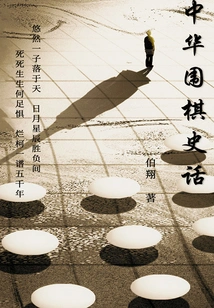
History of Chinese Go
by Boxiang
About This Novel
The period from the mid-Ming Dynasty to the early Qing Dynasty was the most glorious period in the history of Chinese Go, with numerous famous players and legends. This article is based on the nearly two hundred years of Go history from the Jiajing period of the Ming Dynasty to the mid-Qing Dynasty when Fan and Shi fought for hegemony. It is created in the form of a Ming and Qing story-telling novel, showing the changes in the Chinese Go world in the past two hundred years. In the middle of the Ming Dynasty, the three major chess schools of Yongjia, Xin'an and Jingshi were established and competed with each other for supremacy. First, Yongjia sent Bao Yizhong to defeat the capital, then the capital sent Li Fu to sweep across the south of the Yangtze River, and then Xin'an sent heroes to compete, and heroes emerged in large numbers. Just when the outcome of the three major sects was hard to decide, it was a master outside the three major sects, a man who did not want to be a chess player - Yangzhou Fang Zizhen, who won the name of the world's national player in these troubled times. At the end of the Ming Dynasty and the beginning of the Qing Dynasty, a generation of chess kings who were over 100 years old unified the three major sects and ended the troubled times in the chess world. However, at the time of the change of dynasties, the Go world suffered a catastrophe. Waiting for the world to decide, Zhou Lanyu, a young chess player who suddenly emerged from the army, launched an unprecedented ten-game chess hegemony against his predecessor who was over 100 years old. After Zhou Lanyu briefly unified the chess world, he suddenly disappeared, leaving an empty position for the world's best player, which made the heroes covet him. Unexpectedly, a younger young genius Huang Longshi emerged from nowhere and swept the world's chess players, creating a name for China's chess saint at a young age. What was even more unexpected was that Huang Longshi died young at the age of thirty. His disciple Xu Xingyou inherited the legacy of his mentor and continued the past, which finally gave birth to the peak era of Chinese ancient chess - Fan Xiping and Shi Xiangxia. The two great chess masters were born in the same era, starting the most brilliant competition for hegemony in the history of Chinese Go.
Official Sources
What Readers Think
Rating
Community(0)
Official(2)Scraped 2mo ago
It's like hearing his voice and seeing his person.
The author seems to have carefully read the chess records and has a good understanding of the stages of chess development. The joys, sorrows and joys of the chess player, as well as the ups and downs of the chess player's fate, are all vividly displayed on the page.
It is not the way for a chess master to follow chess, and it is also a sect for chess players to follow chess.
Rating
Community(0)
Official(2)Scraped 2mo ago
It's like hearing his voice and seeing his person.
The author seems to have carefully read the chess records and has a good understanding of the stages of chess development. The joys, sorrows and joys of the chess player, as well as the ups and downs of the chess player's fate, are all vividly displayed on the page.
It is not the way for a chess master to follow chess, and it is also a sect for chess players to follow chess.