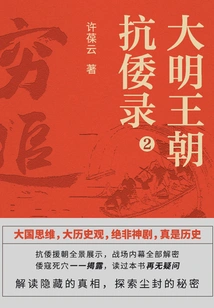
Record of the Ming Dynasty's Anti-japanese War 2: the Pursuit
by Xu Baoyun
About This Novel
Wanli was a prosperous period for the Ming Dynasty. During these more than 40 years, the Ming Dynasty fought against foreign enemies and won more than a hundred battles. Among them, only the three battles of suppressing the rebellion in Ningxia, pacifying Bozhou Yang Yinglong, and resisting Japanese aggression and aiding Korea were the most famous, known as the "Three Great Conquests of Wanli"! The reason why the "Three Major Campaigns" are tied is of course because these three battles were fought the most beautifully and won the most thoroughly. However, the "Battle to Resist Japan and Aid Korea" recorded in the history books does not look like a victory in any way. It can hardly match the battles of Ningxia and Bozhou. What is the reason? At this time, please be careful about one thing: Regarding the War to Resist Japan and Aid Korea, the comments given by Japanese historical materials, Korean historical materials, and Qing Dynasty historical materials are all wrong, confusing, and deviate from the facts. The history of China must be written by the Chinese, and the gaps in history must be filled by ourselves. This book is the result of seven years of work, and the purpose of its creation is to "rectify chaos." 90% Of the content is a new logical inference based on existing data. It concludes with "the Ming Dynasty achieved complete victory", launches a new interpretation of every historical event and every battle, and explains the Ming army's brilliant strategy, advanced tactics, and sophisticated weapons. The fact that siege tactics, cavalry tactics, infantry and artillery coordination were an era ahead of Japan, and that it was easy to annihilate Japanese pirates, promoted the power of the Ming army, exposed Japan's bad roots, promoted the Ming army's great victory in the battle against Japanese pirates, and satirized the stinginess and ingratitude of the Korean people. The content of this book is completely new, the conclusions are new, the argument is novel, the analysis is profound, the logic is clear, it conforms to public opinion, and it gives a sigh of relief to the entire country and nation. For the same historical event, the historical materials and data may be the same, but the "conclusion" is completely defined by people. The Japanese defined this war as "boasting", the Qing people defined it as "slandering the Ming Dynasty", and among us (before the completion of this book) no one has really given a strong definition to this important historical event. Therefore, whether there are novels or film and television works about "The Ming Dynasty's Resistance against Japanese Aggression and Aid Korea", there is a complete blank. Nowadays, anti-Japanese and anti-Korean sentiments are rising in China, and film and television works are all about "fighting Japan", but none of them mention the exciting event of "the Ming Dynasty resisted Japan and aided Korea." This is a strange thing, and it is also a great opportunity for the timely release of this book.
Official Sources
What Readers Think
Rating
Community(0)
Rating
Community(0)