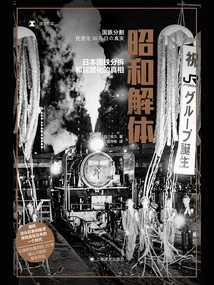
The Disintegration of Showa: the Truth About the Splitting and Privatization of Japan National Railways (translated Documentary)
About This Novel
The collapse of the national railway giant ended an era in postwar Japan. It records the last 20 years of the Showa era and was nominated for the Shiroyama Saburo Award. After the war, the National Railways started its journey again as a public enterprise, but it was still unable to get rid of the "shackles and fetters" of the state. At the same time, it was also restricted by the product of post-war democratization policies-the powerful labor union organization. The disputes between the political circles and the management who clung to the power of the National Railways and refused to let go, the battles between the management and the unions, the factional struggles within the management, the "work-to-work duels" between the unions that turned from hatred to hatred... Friendship and unity, secret fighting, betrayal, betrayal, self-preservation and resentment, etc., Many complex factors were entangled together, which eventually led to the disintegration of the National Railways organization. Not only that, the disintegration of the 115-year-old "Japanese State-owned Railways" also led to the disintegration of the National Labor Party, the General Commentary, and the Socialist Party, which were in charge of postwar politics. The "55-year system" as the postwar Japanese political system also fell apart. It can be said that the "split-up and privatization of National Railways" was the biggest political and economic event in the post-war Showa era.
Official Sources
What Readers Think
Rating
Community(0)
Rating
Community(0)
