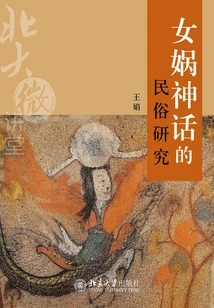
Folklore Research on Nuwa's Myth
by J
About This Novel
Peking University Micro Lecture Hall is a popular science lecture held by Peking University for students. It invites professors, famous experts, academicians, etc. From various disciplines to explain the content in an authoritative yet easy-to-understand manner.
Official Sources
What Readers Think
Rating
Community(0)
Official(2)Scraped 1mo ago
See you again on the sofa
Not many people read this kind of book seriously.
Folklore and Mythology
The author divides this book into three parts: the non-historical nature of myth, the non-literary and non-textual nature of myth, and the phenomenon research and process research in folklore research. In the first part, the author uses the similarity of myths to prove that it has ahistorical characteristics. In the second part, the author explains the difference between myths and texts using the argument that myths are oral narratives rather than creations and that myths are subjective and arbitrary. Finally, when it comes to phenomenon research, the author's point of view is "in folklore research, other forms of expression other than text research should not be ignored." This is similar to the four types of historical materials in history, which can be mutually confirmed on the basis of separation. Regarding process research, I deeply agree with the view that "culture is preserved in the process of communication and application." The death of any culture lies in the lack of successors. This is true for language and writing, folk skills, and historical inheritance. After reading it for the first time, there are some omissions and it is not accurate. I just want to comfort myself. Don't blame me if you don't like it.
Rating
Community(0)
Official(2)Scraped 1mo ago
See you again on the sofa
Not many people read this kind of book seriously.
Folklore and Mythology
The author divides this book into three parts: the non-historical nature of myth, the non-literary and non-textual nature of myth, and the phenomenon research and process research in folklore research. In the first part, the author uses the similarity of myths to prove that it has ahistorical characteristics. In the second part, the author explains the difference between myths and texts using the argument that myths are oral narratives rather than creations and that myths are subjective and arbitrary. Finally, when it comes to phenomenon research, the author's point of view is "in folklore research, other forms of expression other than text research should not be ignored." This is similar to the four types of historical materials in history, which can be mutually confirmed on the basis of separation. Regarding process research, I deeply agree with the view that "culture is preserved in the process of communication and application." The death of any culture lies in the lack of successors. This is true for language and writing, folk skills, and historical inheritance. After reading it for the first time, there are some omissions and it is not accurate. I just want to comfort myself. Don't blame me if you don't like it.
