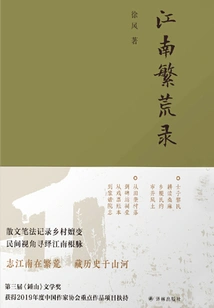
Records of the Prosperity and Desolation in the South of the Yangtze River
by Xu Feng
About This Novel
The scenery of Jiangnan, a pot, a tea, a temple, a monument, a ballad, a person's worldly feelings, have been circulated for thousands of years and turned into a cultural context, and the cultural values of scholars, farmers, industry and commerce continue to this day. Hidden between history and mountains and rivers, from the Spring and Autumn Period through the Six Dynasties, along the Tang and Song Dynasties to the Ming and Qing Dynasties, literati came and went frequently, and Jinshi came and went frequently; there are Tianlang villages, steles, ancestral halls, township regulations and folk conventions to maintain the dignity of writing, family inheritance and the tradition of farming and reading, and the changes of the times are imprinted on the face of the countryside. Xu Feng, the author of "China's Good Books", has lived in the south of the Yangtze River for a long time. Over the years, he has visited the countryside and mulberry trees, read through the classics and local chronicles, and tells us what the south of the Yangtze River is from an inside perspective. In "The Prosperity and Desolation of Jiangnan", his latest masterpiece of prose, he combs the origins of the humanities of Jiangnan in a simplistic way; he captures people and events at critical moments in history, and tells the story of perseverance and prosperity in the process of evolution. The trilogy of "The Sapphire Case", "Slow Voice" and "Feng Man Lou" progresses step by step, examining the cultural phenomena of the Jiangnan region in detail, and deeply describing the traditional spirits such as customs, feelings, chivalry, courage, generosity, and benevolence hidden among the people. In the end, an indelible spiritual map of Jiangnan will be left to the lost people in reality and those who will return home in the future.
Official Sources
What Readers Think
Rating
Community(0)
Rating
Community(0)